Tree Roots in Your Sewer Line? How Camera Inspection Finds Them
If you live in South Florida and you have mature landscaping, tree roots in the sewer line aren’t a rare problem—they’re one of the most common causes of recurring clogs and backups. Roots don’t need a big hole to get in. They only need moisture, a tiny gap at a joint, or a hairline crack—then they grow year-round.
The challenge is that root intrusion is underground, so homeowners often treat the symptom (a clog) without seeing the cause. A sewer camera inspection (often called a video camera inspection) is how you confirm whether roots are involved, how severe the intrusion is, and what fix will actually last.
Why roots target sewer lines
Roots are naturally drawn to:
- moisture
- nutrients
- warmer soil zones
Sewer lines provide all three. The risk is amplified by:
- year-round growth (no winter dormancy)
- dense urban landscaping
- older pipes with more joints and weak points
- sandy soil that can shift and open small gaps over time
The telltale signs of root intrusion
Root intrusion can look like “regular drain problems” at first. Common signs include:
- recurring clogs (especially in toilets)
- slow drains across multiple fixtures
- gurgling sounds
- backups that return weeks after snaking
- a pattern of problems during heavy water use (laundry + showers)
If this sounds familiar, the fastest way to confirm is a sewer camera inspection.
What a sewer camera inspection shows when roots are the cause
A camera inspection gives you live, recorded footage inside the pipe. Root intrusion typically appears in stages:
Stage 1: hairline roots at joints
Early roots often look like thin fibers entering at a joint. At this stage, the pipe may still drain “okay,” but debris begins to catch.
Stage 2: a root web catching debris
The camera shows paper and waste snagging on a growing web. This is where symptoms become recurring.
Stage 3: thick root masses (partial blockage)
At this stage, the pipe may still allow a small “tunnel” of flow, but a single heavy-use day can push it into a full backup.
Stage 4: structural damage
When roots are accompanied by cracks, separation, or offset joints, simply clearing roots may not be enough—because the entry point remains open.
Why snaking often “works” temporarily (and why it comes back)
A snake can punch through roots and create a temporary path, but it often:
- leaves roots attached to the pipe wall
- doesn’t remove buildup that roots cling to
- doesn’t fix the joint/crack that let roots in
That’s why homeowners sometimes feel like they’re paying for the same clog over and over.
Fix options (what actually lasts)
The best fix depends on what the camera shows. In general:
Option A: Hydro jetting (best for early to moderate roots)
Hydro jetting uses high-pressure water to remove roots and buildup more thoroughly than snaking. It’s often the first “lasting” solution when:
- the pipe is structurally sound
- roots are present but not tied to a collapse or major separation
- buildup is contributing to the problem
Option B: Targeted repair (when there’s a clear entry point)
If the camera reveals a joint separation, crack, or offset at a specific distance, repairing that section prevents roots from re-entering as quickly.
Option C: Replacement planning (for severely deteriorated cast iron)
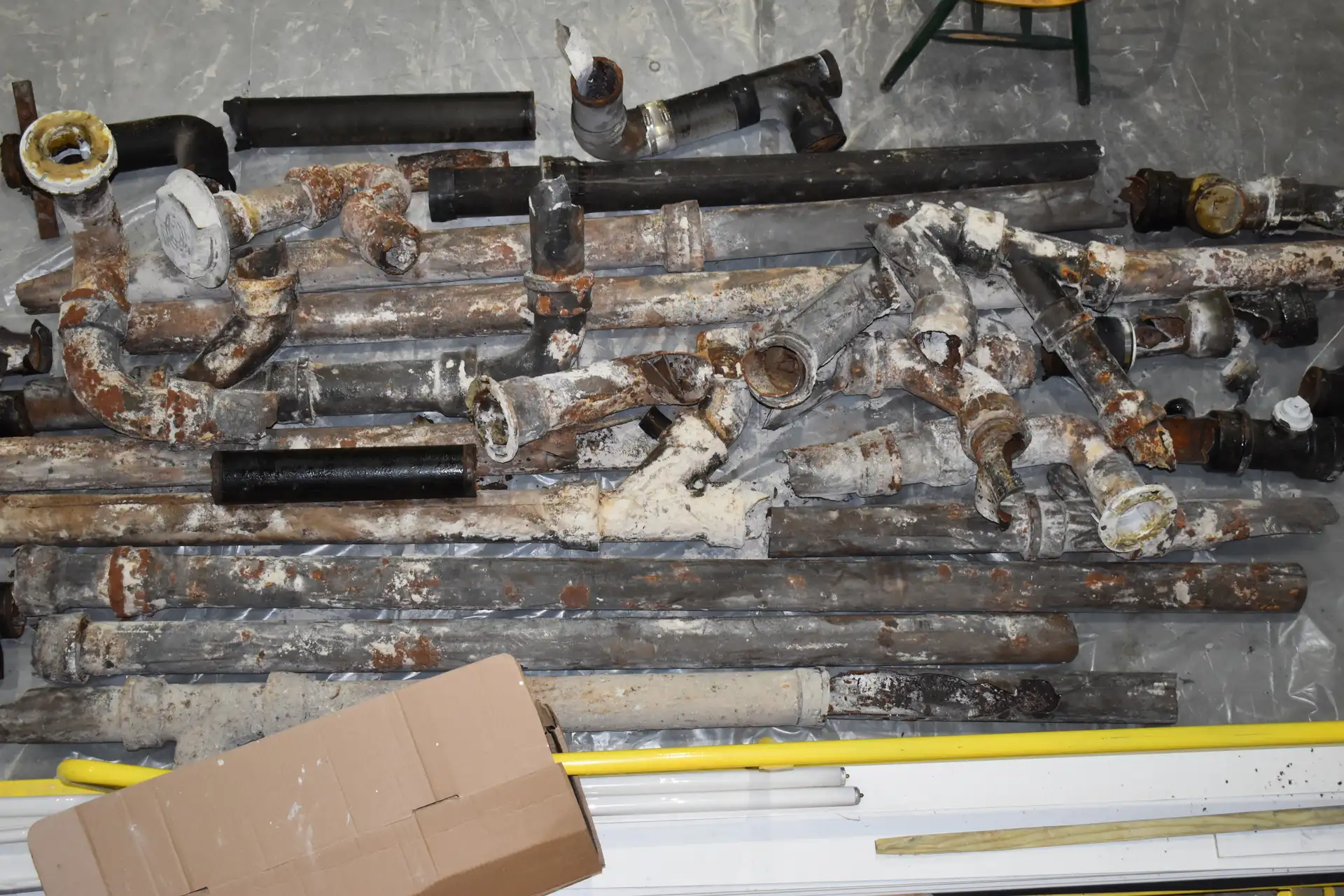
In older Miami homes, root intrusion often happens alongside cast iron corrosion. If the pipe is heavily scaled, cracked, or collapsing, replacement may be the most cost-effective long-term path. Learn about cast iron pipe replacement to understand the decision factors.
Option D: Preventive maintenance (to reduce recurrence)
If your property has high root risk, your long-term plan may include:
- periodic hydro jetting
- re-inspections on a schedule
- avoiding planting aggressive trees directly over sewer paths
Root intrusion treatment comparison (what lasts longest)
Not every “root fix” is equal. Use the camera findings to choose the right level of intervention.
| Approach | What it does | Best for | Limitations |
|---|---|---|---|
| Snaking / root cutting | Opens a path through the blockage | Short-term relief | Often leaves roots attached; doesn’t fix entry point |
| Hydro jetting | Removes roots + scours buildup off pipe walls | Early–moderate intrusion in a structurally sound line | Roots can return if the pipe/joint is open |
| Targeted repair | Fixes the crack/joint where roots enter | Repeat root problems at a known location | Requires access and repair work |
| Replacement / major rehab | Removes failing pipe sections entirely | Collapsed, severely corroded, or repeatedly compromised lines | Higher scope and cost, but often the most permanent |
In many properties, the “best” plan is a combination: camera → hydro jetting → repair the entry point if needed.
What to avoid (common mistakes that make root problems worse)
- Repeated snaking with no inspection: if the clog returns, you need to know why it returns.
- Relying on chemicals as a primary solution: some products can damage aging pipe materials or create a false sense of security while roots continue growing.
- Ignoring the entry point: if the camera shows a separated joint or crack, clearing roots alone won’t stop re-entry.
- Waiting for a backup: the mess and emergency costs usually dwarf the cost of a planned fix.
How to reduce root risk going forward
You can’t always change your landscaping, but you can reduce risk:
- avoid pouring grease and food waste down drains (roots love buildup)
- keep a maintenance schedule if the property has recurring history
- use camera footage as a baseline and track changes over time
If roots are a recurring issue, it’s often worth reviewing the sewer line’s full condition and repair history through sewer line services.
FAQs
Can tree roots completely block a sewer line?
Yes. Roots can grow into dense mats that trap debris and eventually stop flow completely—often causing a backup into the home.
Is hydro jetting better than snaking for roots?
Often, yes. Hydro jetting removes roots and buildup more thoroughly. Snaking can create a temporary path but may leave roots attached and doesn’t fix entry points.
How do I know if roots are the real cause?
A sewer camera inspection shows roots directly in the line and helps determine severity, location, and whether the pipe has damage that needs repair.
Is “video camera inspection” the same thing?
Most of the time, yes. Many homeowners use “video camera inspection” as a synonym for a sewer camera inspection because the plumber records video from inside the pipe.
Get a sewer camera inspection for root intrusion
If clogs keep coming back and you suspect roots, don’t keep guessing. A camera inspection shows exactly what’s happening, where it’s happening, and what fix will actually last.
Schedule here: Sewer Camera Inspection.
Need Professional Help?
Our licensed plumbers are ready to help with your sewer camera inspection needs.