Sewer Camera Inspections for Older Homes: Common Issues We Find
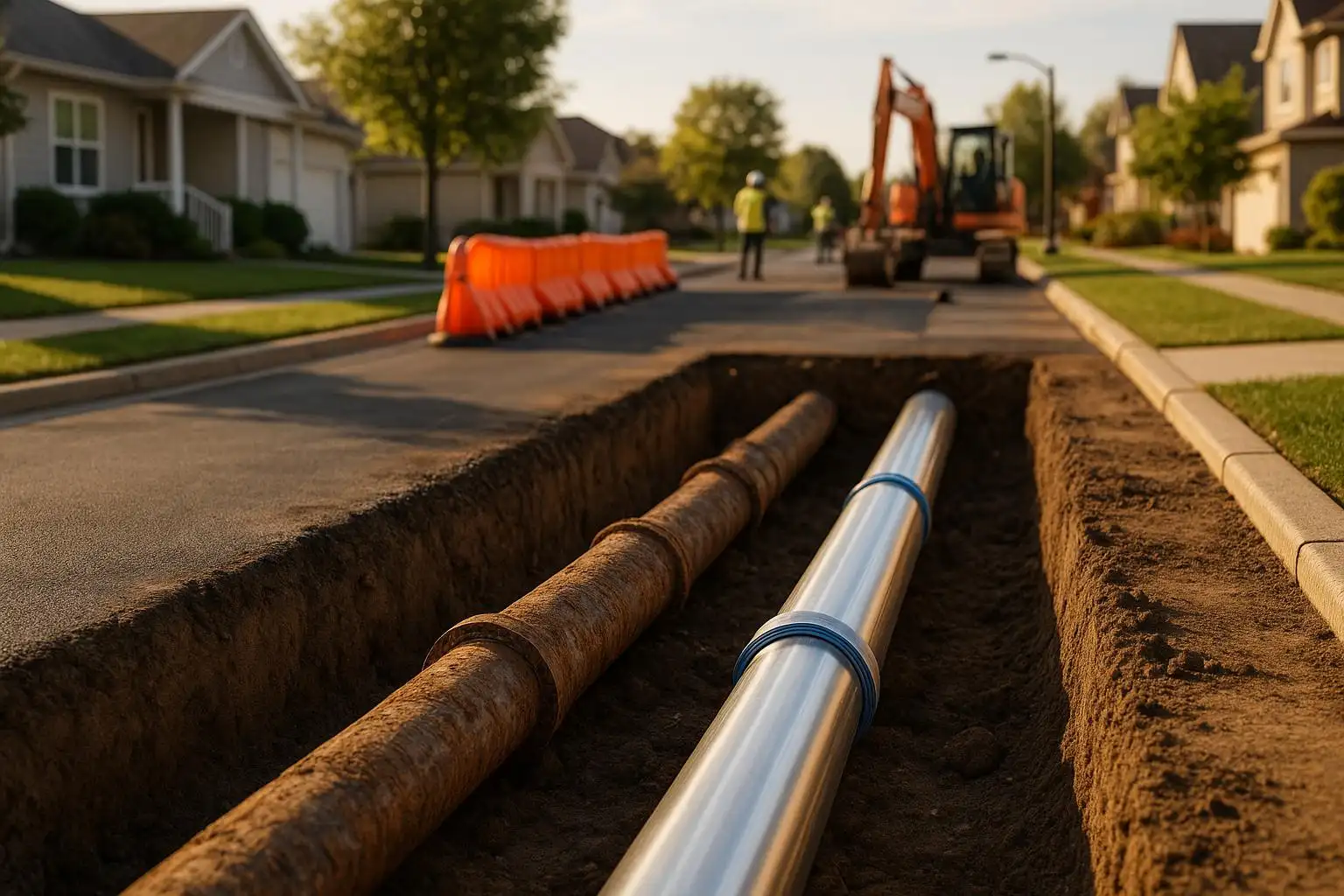
Older homes have character—until the sewer line becomes the most expensive “surprise” on the property. The tricky part is that sewer deterioration happens underground, out of sight, and symptoms often show up late.
That’s why a sewer camera inspection is one of the best tools for older homes. It provides real footage from inside the line (many homeowners call this a video camera inspection) so you can see the condition, not just guess from symptoms.
If you want the step‑by‑step process, start here: What to Expect During a Sewer Camera Inspection (Step-by-Step).
Why older homes are higher risk
Older sewer lines tend to have more risk because of:
- aging materials (often cast iron)
- decades of grease/soap/mineral buildup
- more joints and transitions (more entry points for roots)
- soil movement over long time horizons
Even if your home “has been fine,” a camera often reveals early signs of failure long before the first backup.
Common pipe materials in older homes (and what the camera can tell you)
A camera inspection helps identify material and condition. Here’s a simplified guide:
| Material | Common era | Typical issues | What it looks like on camera |
|---|---|---|---|
| Cast iron | Mid‑1900s–1970s | scaling, corrosion, cracking, collapse | rough interior, flaking rust, narrowed diameter |
| Clay | Older neighborhoods | root intrusion at joints, cracks | joint gaps, root tendrils, fractures |
| Orangeburg | 1940s–1970s | deformation, collapse | oval/warped pipe, severe restriction |
| Early PVC/ABS | 1970s–1980s | joint issues, offsets | misalignment, separation at transitions |
You don’t need to memorize this—the point is that material changes the plan. A camera inspection tells you whether cleaning makes sense, or whether you’re cleaning a line that’s structurally failing.
The most common things we find on sewer cameras in older homes
1. Cast iron corrosion and scale (the “pipe shrinking” effect)
Cast iron doesn’t just crack—it often scales. The interior gets rough and narrows over time, which leads to:
- chronic slow drains
- frequent clogs that return quickly
- reduced flow capacity during heavy water use
Camera signs include flaky rust, rough texture, and reduced diameter. If the line is significantly deteriorated, you may need to consider cast iron pipe replacement to prevent collapse.
2. Root intrusion at joints
Older pipe systems have more joint points and more opportunities for roots to enter. On camera, roots often appear:
- as hairline tendrils at a joint
- as a thick mat catching debris
- alongside a crack that roots widened
Early intrusions may be cleared with hydro jetting. But if roots are recurring, the camera helps determine whether the pipe needs repair, lining, or replacement.
3. Offset joints and separation from soil movement
Over decades, ground movement can cause:
- joints to separate (gaps)
- segments to offset (one pipe lip higher than the next)
Even small offsets can create a “hook” that catches paper and waste, leading to repeat clogs.
4. Pipe bellies (standing water)
A “belly” is a low spot where water stands instead of draining. In older properties, bellies can form from:
- settling
- improper repairs
- long-term soil movement
On camera you’ll see a persistent water line and sediment. Bellies are a major reason older homes get “mystery clogs” that never fully go away.
5. Hidden patchwork repairs and mixed materials
Older homes often have a history: a partial replacement, a patched section, a reroute, or a questionable transition. The camera can reveal:
- mixed materials (cast iron into PVC)
- sharp transitions that catch debris
- repair points that are now weak links
How to interpret results (don’t panic—prioritize)
Not every finding means you need full replacement tomorrow. We typically sort results into:
Green: monitor and maintain
- minor buildup
- no structural defects
- good slope and flow
Yellow: plan a fix soon
- recurring roots
- moderate scale reducing diameter
- small cracks
- minor offsets
Red: high risk of backup or failure
- severe root masses
- deep corrosion with holes/thinning
- partial collapse
- major offsets or separated joints
For red findings, you may need sewer line service to repair or replace damaged sections.
What to ask for if you’re buying an older home
If you’re in a transaction (or evaluating a property you just inherited), a sewer camera inspection helps you answer:
- Is the line functional today—and will it stay that way?
- Are there signs of impending collapse?
- Is there evidence of prior repairs or partial replacement?
- Are roots a maintenance problem or a structural problem?
You should also request the video file and a brief written summary with distance markers. Documentation matters.
Location example (how to keep blog intent while supporting city pages)
This post is meant to be location-agnostic—because older-home sewer problems look similar across many regions. But local availability, pricing, and common materials can vary. Use your city page for that.
Example: Miami homeowners can confirm local service details here:
The best maintenance plan for older homes
If your camera inspection shows a line that’s still structurally serviceable, the goal becomes keeping it that way:
Consider proactive cleaning for root/buildup risk
For many older properties, periodic hydro jetting helps control roots and remove buildup before it turns into a full blockage.
Build an inspection interval based on risk
Older homes with mature trees often benefit from inspection every 1–2 years. Homes with newer sections or low root risk may be fine with 2–3 year intervals.
Keep documentation
Footage and notes help:
- track changes over time
- support insurance and real estate discussions
- plan repairs with less guesswork
FAQs
Are cast iron sewer lines common in older homes?
Yes. Many homes built before the mid‑1970s used cast iron for sewer and drain lines, and those systems often show scaling and corrosion after decades of use.
Can a sewer camera inspection tell me if I need replacement?
It can show the condition clearly—corrosion, cracks, bellies, offsets, roots—and help determine whether maintenance, targeted repair, or replacement planning is the best next step.
Is “video camera inspection” different from sewer camera inspection?
Usually, it’s just different wording. Both refer to using a waterproof camera to record the inside of the sewer line for diagnosis.
Should I get a camera inspection even if I haven’t had a backup yet?
If the home is older, has mature trees, or you can’t verify sewer history, an inspection can catch risks early—before the first backup forces urgent decisions.
Schedule a sewer camera inspection
Older homes can be incredible—but the sewer line is one of the most expensive systems to “find out the hard way.” A camera inspection replaces uncertainty with evidence, so you can protect your home and plan smart.
Schedule your inspection here: Sewer Camera Inspection.
Need Professional Help?
Our licensed plumbers are ready to help with your sewer camera inspection needs.