How a Sewer Camera Inspection Saves You Thousands on Repairs
Most sewer disasters don’t happen “out of nowhere.” They happen because a small, hidden problem—roots, corrosion, a sagging pipe—keeps getting treated like a routine clog until the line finally fails.
A sewer camera inspection is one of the few plumbing services that can directly reduce your risk and total spend over time. In areas with older cast iron and high root pressure, it’s often the difference between a planned repair and an emergency cleanup.
Below is exactly how an inspection saves money, what it prevents, and how to use the results to make smarter decisions. (And if you’ve heard it called a video camera inspection, that’s the same concept: recorded video from inside the pipe.)
The real cost of “guess and repeat”
When the problem is underground, homeowners often fall into a cycle:
- Slow drains show up
- The line gets snaked
- Things improve for a few weeks
- The symptoms return
- The next service call is more urgent (and more expensive)
The issue isn’t the cleaning—it’s the lack of diagnosis. Without a camera, you don’t know whether you’re dealing with:
- roots that keep re‑growing
- a belly holding debris
- an offset joint snagging paper
- failing cast iron shrinking the pipe diameter
The four ways a sewer camera inspection saves you money
1. It prevents emergency pricing (and emergency decisions)
Emergency sewer events often come with:
- premium scheduling
- limited repair options
- immediate disruption to the home or business
When you know what’s happening ahead of time, you can plan repairs at normal rates and choose the approach that best fits your property.
If you need the inspection itself, start here: sewer camera inspection.
1.5. It gives you leverage (documentation changes the conversation)
Recorded footage and distance markers turn “I think” into “here’s what’s happening.” That can help you:
- get apples-to-apples repair quotes
- make smart decisions in real estate negotiations
- avoid paying for work that doesn’t address the real failure point
2. It stops you from paying for the wrong fix
Snaking a line can punch a hole through a soft blockage, but it can’t:
- smooth out a corroded cast iron interior
- fix an offset joint
- eliminate a belly
- prove the line is structurally sound
A camera inspection tells you whether the problem is primarily:
- flow-related (buildup/roots) → cleaning and maintenance
- structural (damage/offset/collapse) → repair planning
3. It helps you repair small issues before they become big ones
In many cases, the first “real” sign of failure is a backup—because the line fails underground long before you can see it. A camera finds:
- early root intrusion
- early corrosion and scaling
- small cracks at joints
- sagging sections before they fully trap the line
Catching these early can allow targeted repairs instead of broad replacements.
4. It protects high-value assets (your floors, cabinets, and foundation)
The cost of sewer failure isn’t just pipe work. It can include:
- water/contamination cleanup
- drywall removal
flooring replacement - cabinet damage
- mold risk and remediation
The inspection is often the cheapest way to avoid a cascading damage chain.
What the camera commonly finds (and what it costs if ignored)
Root intrusion
Roots enter through joints and cracks. Early roots may be cleared with hydro jetting. If ignored, they can:
- trap debris
- create repeat clogs
- crack the pipe further
- eventually cause a full blockage and backup
Cast iron deterioration (common in older homes)
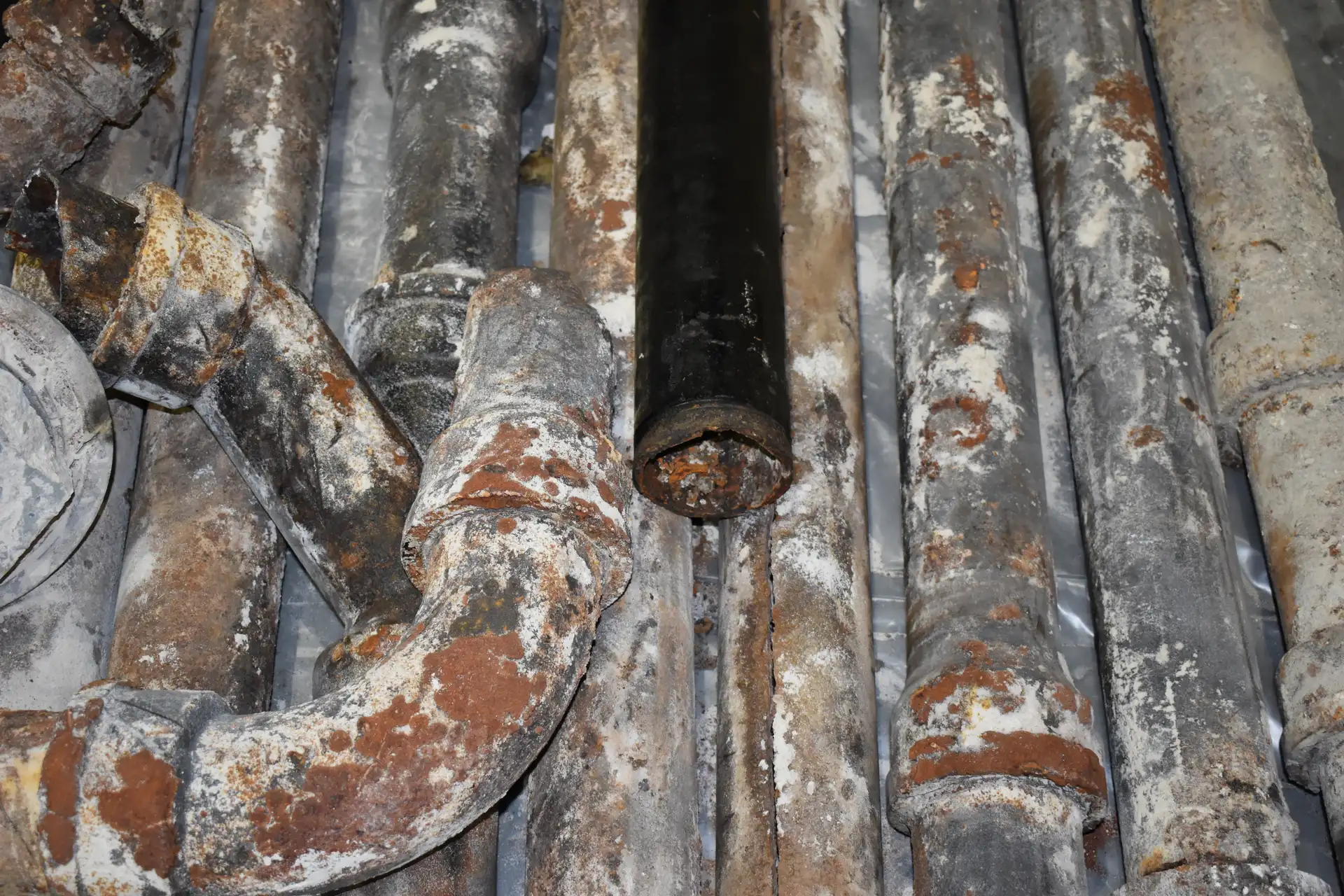
Cast iron doesn’t fail instantly—it degrades. The inside becomes rough and scaly, narrowing the pipe. Over time, it can crack or collapse. If the camera shows advanced damage, you may need to explore cast iron pipe replacement.
Pipe bellies (sags with standing water)
Bellies are expensive because they create “forever clogs.” Even after cleaning, debris settles back into the low spot. The camera reveals:
- standing water line
- sediment piles
- the repeat clog zone
Offset joints and separations
Shifting soil can misalign pipe sections. Offsets create snag points that catch paper and waste. A camera helps locate the offset so repairs are targeted instead of exploratory.
A realistic cost comparison
These ranges vary, but the pattern is consistent:
| Action | Typical outcome | Typical cost impact |
|---|---|---|
| Repeat snaking without diagnosis | Symptom relief, no root cause | Ongoing service calls |
| Camera inspection early | Identify cause + plan | Inspection cost + targeted fix |
| Wait for a backup | Emergency response + disruption | Higher total spend |
Even a single avoided emergency call can cover multiple inspections.
How to turn inspection results into a money-saving plan
An inspection is only valuable if it changes what you do next. Here’s how to use it:
If the line is structurally sound but restricted
You’ll typically:
- schedule hydro jetting (especially for roots/buildup)
- set a re‑inspection cadence based on age/trees
- adjust habits (grease disposal, maintenance)
If the camera finds a localized defect
You’ll typically:
- plan a targeted repair
- verify the repair with a follow‑up camera run
- prevent repeat clogs and hidden leakage
If the line is broadly failing
You’ll typically:
- plan replacement on a schedule that works for you
- avoid the “collapse in the worst possible week” scenario
- reduce the risk of property damage from backups or leaks
Why environment matters (example: high root pressure areas)
In some regions, the baseline risk is higher because of factors like:
- mature landscaping and year‑round root growth
- sandy soil that shifts more easily
- a large inventory of older housing stock
- high water tables and heavy rain events
That means “it’s probably fine” is a riskier bet than it is in many other regions.
FAQs
How does a sewer camera inspection actually save money?
It saves money by identifying the real cause early—roots, bellies, offsets, corrosion—so you can choose the correct fix and avoid emergency backups and repeat service calls.
Is a sewer camera inspection the same as a video camera inspection?
Yes. Many homeowners use “video camera inspection” as a synonym for the same process: running a waterproof camera through the sewer line and recording the footage.
Should I do a camera inspection before hydro jetting?
Often, yes—especially if the problem is recurring. The inspection helps confirm whether hydro jetting is appropriate and whether there’s a structural issue that needs repair instead of repeated cleaning.
How often should I get my sewer line inspected?
Many homes benefit from an inspection every 2–3 years, and more frequently for older homes with mature trees or a history of backups.
Get clarity before the emergency happens
If your drains are slow, clogs keep coming back, or your home is older, a camera inspection is one of the most cost-effective ways to protect your property and your budget.
Schedule here: Sewer Camera Inspection. It’s not just “seeing inside the pipe”—it’s turning an invisible problem into a solvable plan.
Need Professional Help?
Our licensed plumbers are ready to help with your sewer camera inspection needs.