Miami Rental Turnover Plumbing Checklist for Landlords and Property Managers

Miami Rental Turnover Plumbing Checklist for Landlords and Property Managers
A rental turnover plumbing checklist that Miami owners can actually use is not about turning every vacant unit into a remodel. It is about catching the failures that generate the most annoying first-week calls: a toilet that keeps running, a sink that drains slowly, a water heater that cannot keep up, or a shutoff valve that nobody can move when something starts leaking.
That matters even more in Miami-Dade, where single-family rentals, condos, small multifamily buildings, and mixed-use properties all deal with heavy humidity, frequent occupancy changes, and plumbing systems that are not always forgiving when a small issue gets ignored. A careful turnover walk-through helps you separate easy visual checks from problems that should go straight to a licensed plumber.
If you manage multiple units or tenant spaces, Hernandez Plumbing says it works with property management companies across Miami-Dade and Broward and offers priority service, consolidated billing, and dedicated account management for property managers through its commercial plumbing repair page.
A turnover checklist works best when it ends with a clear handoff: quick visual checks first, then a licensed team when signs point to a recurring or building-level plumbing issue.
Why turnover plumbing checks matter before move-in day
Turnover is the one moment when you can test a unit without someone trying to shower, cook, or get to work. Use that quiet window well. The U.S. Environmental Protection Agency says the average household's leaks can waste more than 9,300 gallons of water per year, and the U.S. Department of Energy says water heating accounts for about 18% of home energy use. That means the problems you miss at turnover often show up later as the exact complaints tenants hate most: unexplained water bills, weak hot water, and "it smells weird under the sink."
The goal is not to diagnose every possible plumbing defect from a five-minute glance. The goal is to answer three practical questions before keys change hands:
- Is anything obviously leaking, running, backing up, or corroding right now?
- Will a tenant be able to use toilets, sinks, showers, and hot water on day one without a callback?
- If something looks questionable, is it a maintenance item or a licensed-plumber problem?
Use this quick decision table as you walk the unit:
| Area | Quick turnover check | Call a plumber when |
|---|---|---|
| Toilet | Flush once, wait, listen for hissing or refill noise | It keeps running, ghost flushes, or will not shut off cleanly |
| Sink / tub drain | Run water for a minute and watch how fast it clears | You get slow drainage, gurgling, odor, or backup |
| Water heater / hot taps | Run hot water at more than one fixture | Water stays cold, runs out too fast, leaks, or the heater makes odd noise |
| Shutoff valves / supply lines | Look for corrosion, active drips, swelling hoses, stuck handles | A valve will not move, a line is rusted, or water appears around fittings |
This table is intentionally boring. Good turnover plumbing is boring. What costs money is the surprise call three days after move-in.
Kitchen and bathroom checks that catch easy callbacks
Bathrooms and kitchens generate the fastest tenant complaints because they expose the highest-frequency plumbing problems. Start there.
Toilets
Hernandez Plumbing's running-toilet page lists constant running, ghost flushing, hissing sounds, water rippling in the bowl, and higher water bills as common warning signs. Do not just flush and walk away. Flush, let the tank refill, and then stand there for another 30 to 60 seconds.
If you still hear the toilet refilling, or you see rippling water in the bowl after the tank should be quiet, you likely have a problem worth handling before move-in. According to EPA WaterSense, old or worn flappers can silently leak thousands of gallons a year. Hernandez Plumbing's own problem page says a running toilet can waste up to 200 gallons per day.
That does not mean every toilet needs a full rebuild during turnover. It does mean you should not hand a unit to a new tenant with a toilet that "mostly works." If you want the company's symptom list in one place, see their running toilet problem page.
Sinks, tubs, and showers
Run water long enough to make the drain do real work. A drain that looks acceptable with a quick splash can still fail once a tenant uses it for an actual shower or dish session.
Watch for the symptoms Hernandez Plumbing lists on its clogged-drain page:
- slow drainage
- gurgling
- bad drain odors
- water backing up
- multiple drains affected
The "multiple drains affected" note is especially important. One slow bathroom sink may be a localized cleanup job. Slow drainage in more than one fixture, especially when paired with odor or gurgling, is a stronger signal that the issue goes deeper than hair at the stopper.
Avoid the temptation to dump chemical drain cleaner into a vacancy just to make the problem disappear for a showing. Hernandez Plumbing explicitly advises against chemical drain cleaners because they can damage pipes and create hazardous conditions. For turnover triage, that is the right mindset: if the drain needs chemicals to behave for one day, it is not really fixed. See Hernandez Plumbing's clogged drain page for this symptom set.
Under-sink cabinets and exposed fixture connections
Open every sink base cabinet. This is where small leaks tell on themselves.
Look for:
- staining on the cabinet floor or wall
- swollen particle board
- rust at supply line nuts
- white mineral crust around shutoffs
- musty odor that stays even after the unit is cleaned
You do not need a moisture meter to make this first pass. You do need to avoid rationalizing away damage with "maybe the cleaner spilled something." Turnover is the right time to write down what you see, take photos, and decide whether it belongs on a punch list or a plumber's schedule.
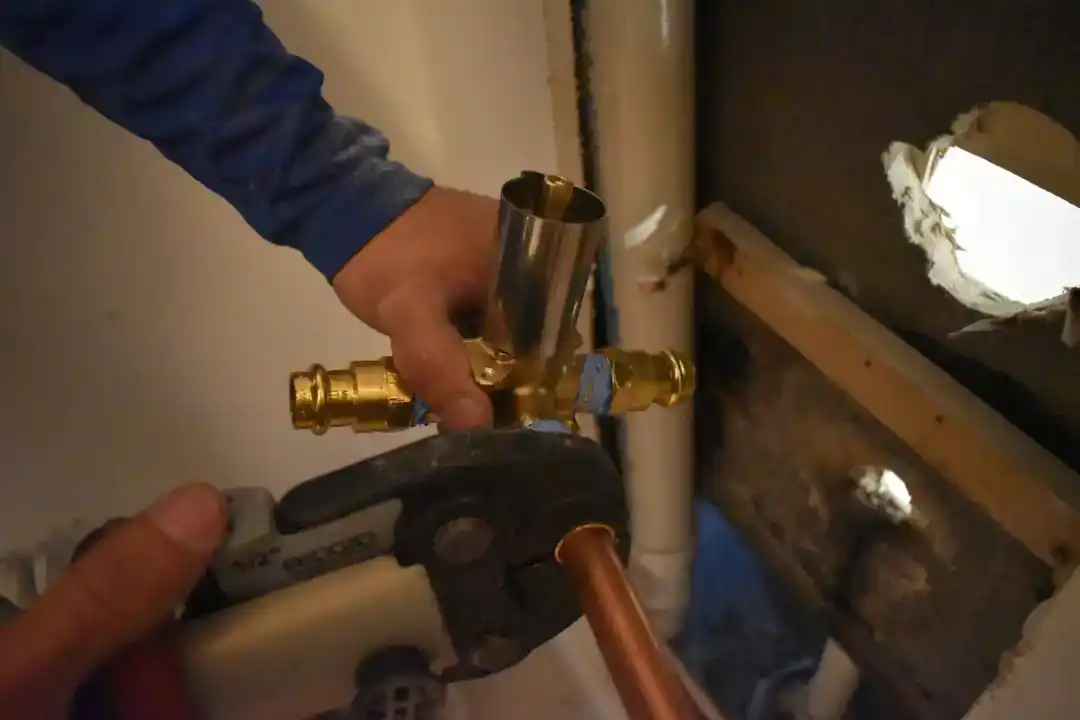 A visual check is only the first layer. Corrosion, failed shutoffs, and questionable repairs are the kinds of findings that should move from checklist mode to licensed-plumber mode.
Water heater, shutoff, and supply-line checks
Hot water issues create a different kind of turnover problem: the unit may seem "fine enough" until the tenant tries to shower, run dishes, and use a second fixture in the same hour.
The Department of Energy notes that water heating is one of the biggest energy costs in a home, so a weak or failing heater is not just a comfort problem. It is also a cost and efficiency problem. Hernandez Plumbing's no-hot-water page says common warning signs include:
- no hot water at any faucet
- hot water running out quickly
- water not hot enough
- strange noises from the water heater
- water heater leaking
During turnover, run hot water at more than one fixture - not necessarily all at once, but enough to see whether recovery feels reasonable. Then look directly at the heater area.
Check for:
- active dripping at fittings
- rust or mineral buildup around connections
- staining in the drain pan or floor area
- signs that the unit has been patched repeatedly instead of maintained
If the unit goes cold, Hernandez Plumbing advises a few safe first checks: look for a tripped breaker, check whether a gas pilot light is out, and do not keep resetting components that repeatedly fail. Use their no hot water page for that symptom tree.
Shutoff valves deserve their own turnover moment too. You do not want to discover a frozen angle stop only after a toilet supply line starts spraying. If a shutoff handle looks heavily corroded, seized, or fragile, do not force it just to prove a point. Note it and schedule the repair. A stuck valve is exactly the sort of small issue that becomes a large one during a tenant emergency.
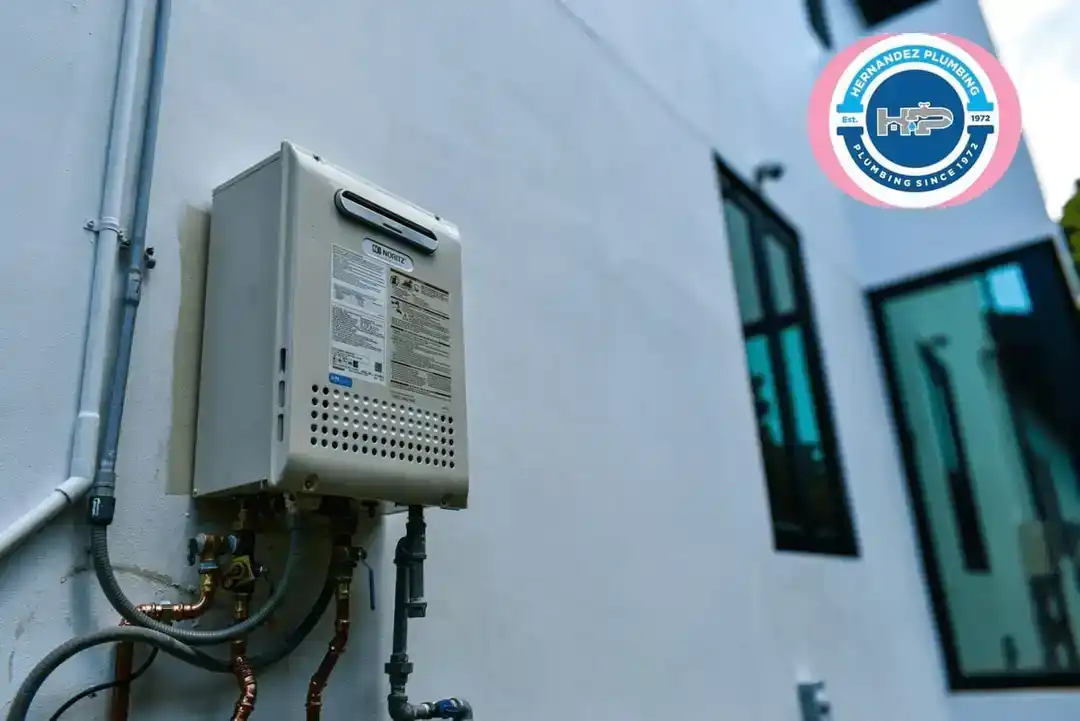 Hot-water complaints rarely feel small to a new tenant. A turnover check should confirm both water-heater performance and the condition of the visible supply connections around it.
Drain, sewer, and odor problems worth catching before a tenant reports them
Some turnover plumbing issues do not show up as obvious leaks. They show up as smell, noise, or "something seems off."
Start by running water in the kitchen sink, lavatory sinks, shower, and tub long enough to prime traps and move water through the branch drains. Listen for gurgling after the water stops. Smell around floor drains, shower drains, and sink cabinets. Pay attention to anything that suggests the problem is bigger than one fixture.
Red flags include:
- repeated odor from the same drain after cleaning
- slow drainage in more than one room
- bubbling or gurgling after toilet flushing
- standing water or backup at the lowest fixture
- a history of "it always clogs in the same place"
Those patterns matter because Hernandez Plumbing's drain page says recurring clogs can point to deeper blockages, tree root intrusion, or pipe deterioration. In a rental, that distinction matters operationally. You do not want to hand off a unit with a "temporary win" from a plunger if the main complaint will return as soon as normal tenant use resumes.
This is also where property type matters. A single-family rental has a different risk profile from a condo or mixed-use building with shared systems nearby. On its Miami commercial page, Hernandez Plumbing emphasizes high-volume systems, public restrooms, grease-related drain issues, rooftop equipment exposure, and coordination around business hours. For small multifamily owners and property managers, that is the right mental model: some drain and odor issues are not just apartment-level annoyances; they are system-management issues.
When landlords or property managers should call a licensed plumber
Turnover checklists save time only when they tell you when to stop doing checklist work.
Call a licensed plumber when you find:
- a toilet that keeps refilling or ghost flushing after a basic adjustment
- more than one slow or backing-up drain
- drain odor that returns quickly after cleaning
- no hot water, inconsistent hot water, or visible water-heater leakage
- corroded supply lines or shutoff valves you do not trust
- signs the issue may involve shared risers, common lines, or building scheduling constraints
This is especially true for commercial and mixed-use properties. Hernandez Plumbing's Miami commercial page says local jobs often involve shared risers, PRVs, grease interceptors, after-hours coordination, and scheduling around occupancy. That is not a handyman-style "tighten something and see" environment. It is a planning environment.
If you manage tenant spaces, restaurants, offices, or larger multifamily buildings, the company's Miami commercial plumbing page lays out the kinds of systems and scheduling challenges it says it handles in the city. For broader service context - including maintenance contracts and property-manager support - the main commercial plumbing repair page is the cleaner starting point.
When you call, have these details ready:
- unit number or suite number
- which fixtures failed the turnover check
- whether the issue is active right now or intermittent
- whether other units or nearby fixtures show similar symptoms
- whether access must happen after hours
That last item matters. Hernandez Plumbing says it can schedule commercial work after hours or overnight to reduce disruption. If your turnover schedule is tight, that is the sort of operational detail worth confirming up front rather than assuming.
Need plumbing help in Miami-Dade?
If a vacant unit is showing toilet leaks, repeat drain issues, weak hot water, or shutoff-valve trouble, fix it before the tenant has to make it your emergency.
Hernandez Plumbing's site says the company works with property managers, offers maintenance contracts for commercial properties, and provides 24/7 emergency service. You can use the published contact page for scheduling and current contact details, or call 305-428-3782 directly as listed on the site.
The smartest turnover plumbing checklist is the one that ends with fewer callbacks, fewer "surprise" leaks, and a cleaner move-in week for everyone involved.
This article is for general education only and is not legal, code, or habitability advice. Property requirements can vary by building, lease, and municipality. Confirm the current service details and scheduling options on the official Hernandez Plumbing website before booking work.
Need Professional Help?
Our licensed plumbers are ready to help with your plumbing repair needs.