5 Temporary Fixes for Leaky Pipes
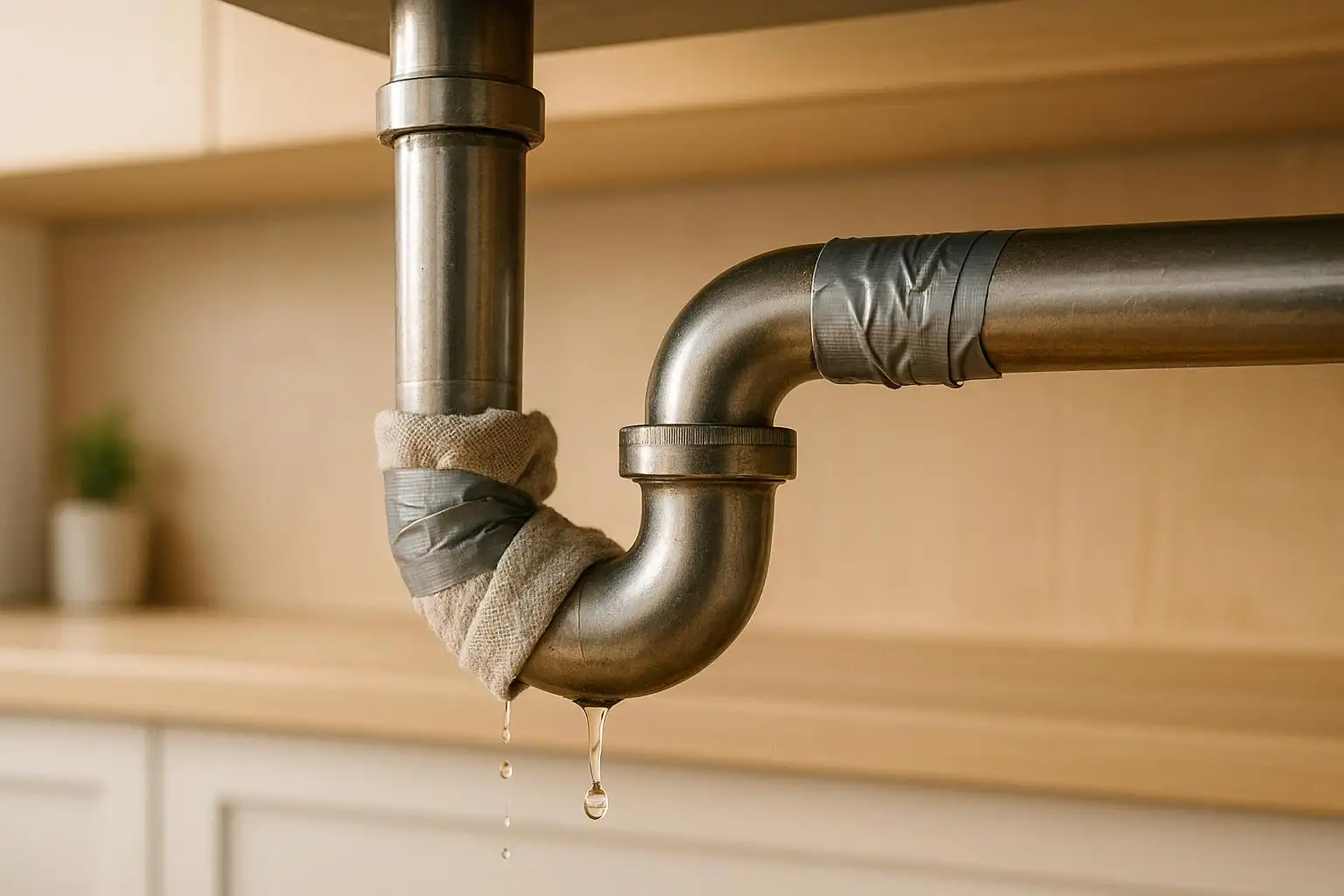
A leaky pipe can waste thousands of gallons of water and lead to costly damage if not addressed quickly. Understanding the common causes of pipe leaks can help you prevent future issues. Here are 5 temporary fixes you can use to control leaks until a plumber arrives. Having the right DIY plumbing tools on hand makes these fixes easier and more effective:
- Epoxy Putty: Easy to apply and works on metal and plastic pipes. Sets in minutes but is only a short-term fix.
- Pipe Clamp with Rubber Gasket: A metal clamp with a rubber seal that stops leaks on various pipe materials.
- Self-Fusing Silicone Tape: Creates a waterproof seal by sticking to itself. Works on most pipe types and handles extreme temperatures.
- Rubber Hose and Hose Clamp: A DIY solution using a rubber patch and hose clamps for a quick seal.
- Fiberglass Repair Sleeves: Hardens into a durable seal, effective for high-pressure leaks.
Key Tip: Always turn off the water supply and dry the area before applying any fix. These methods are temporary, so contact a professional plumber for a permanent solution.
| Fix | Ease of Use | Materials | Durability | Cost |
|---|---|---|---|---|
| Epoxy Putty | Simple | Metal, plastic | Short-term (hours/days) | $5–$15 |
| Pipe Clamp + Gasket | Moderate | Metal, plastic, cast iron | Weeks/months | $5–$20 |
| Silicone Tape | Simple | Most pipe types | Temporary | $5–$10 |
| Rubber Hose + Clamps | Moderate | Metal, plastic, cast iron | Weeks | $6–$10 |
| Fiberglass Sleeves | Moderate | Metal, plastic, PVC | Temporary | $13–$50 |
Act fast to prevent further damage, but remember: these are stopgap measures. For recurring leaks or major issues, call a plumber immediately.
The ULTIMATE Leaky Copper Pipe Fix Guide | GOT2LEARN
1. Epoxy Putty for Quick Repairs
Epoxy putty is a handy, temporary fix for pipe leaks. It’s simple to use, requiring no special tools or plumbing know-how. When you spot a leak and need to act fast, this versatile solution can help you buy time until a more permanent repair is possible.
Ease of Application
Using epoxy putty is straightforward. First, clean the pipe and roughen the surface with sandpaper. Then, mix equal amounts of resin and hardener – don’t forget to wear gloves during this step. Once mixed, press the putty into the crack or hole and smooth it out. You’ll need to work quickly, as you have about 5–10 minutes before it begins to set. While it can stick to both wet and dry surfaces, a dry surface usually ensures better adhesion.
Once applied, the putty forms a strong bond with the pipe, making it a reliable short-term solution.
Pipe Material Compatibility
Epoxy putty is compatible with a variety of materials commonly found in household plumbing. It adheres effectively to metals like copper, brass, and other non-ferrous materials. It also works well on plastic pipes, including PVC, ABS, and CPVC. Additionally, it can bond with steel, making it a practical option for older galvanized pipes. That said, while it performs well on plastic, it tends to deliver more consistent results on metal pipes.
Durability and Temporary Effectiveness
The putty sets in just a few minutes and fully cures in about an hour, creating a semi-permanent seal that can manage small leaks. However, it’s not a long-term solution. Over time, the material may weaken or crack, leading to potential leaks again. As Bennett Cloud from Plumbing Contractors notes:
"Using epoxy putty isn’t a permanent solution, however, and you should contact a plumber to prevent your pipes from leaking again."
Epoxy putty is a great stopgap measure, but it’s always wise to follow up with professional repairs to ensure your plumbing system stays in good shape.
2. Pipe Clamp with Rubber Gasket
A pipe clamp with a rubber gasket offers a quick and reliable way to seal damaged pipes. This solution involves a metal band that wraps around the pipe, pressing a rubber gasket tightly over the leak to create an instant seal. It’s especially useful for larger leaks that might be too extensive for putty-based fixes.
Ease of Application
Start by turning off the water supply and cleaning the damaged area. Choose a clamp that’s appropriately sized to cover the leak completely. Position the rubber gasket over the damaged section, then secure the clamp by tightening its fasteners evenly. Once installed, restore the water flow and release any trapped air in the system. The entire process typically takes just 10–15 minutes. This method works with a wide range of pipe materials, which we’ll cover next.
Pipe Material Compatibility
Pipe clamps with rubber gaskets are incredibly versatile and can be used on nearly all common plumbing materials. They are effective on steel, cast iron, copper, plastic (PVC/ABS), fiberglass, and aluminum pipes. Some clamps even feature a full circumferential gasket for enhanced sealing. For older homes with cast iron pipes and caulked joints, specialized bell joint clamps are available to handle these specific configurations.
Durability and Temporary Effectiveness
While pipe clamps are easy to use and often reliable, they are intended as a temporary fix until a permanent repair can be made. The combination of the metal band and rubber gasket can hold up for weeks or even months under the right conditions. However, it’s essential to monitor the repair. If the leak persists, it might mean the clamp wasn’t tightened enough or the gasket isn’t correctly positioned. Adjustments may solve the issue, but if the problem continues, it’s best to consult a professional plumber for a long-term solution.
Cost and Accessibility of Materials
Pipe repair clamps are budget-friendly and widely available at hardware stores, making them a must-have for emergency repairs. Since leaks tend to happen when you least expect them, it’s a good idea to keep a variety of clamp sizes on hand to match common residential pipe diameters. Their low cost and easy availability make pipe clamps a practical first response while you arrange for a permanent fix.
3. Self-Fusing Silicone Tape
Self-fusing silicone tape is a clever solution for quick pipe repairs. It doesn’t rely on adhesives but instead sticks to itself, forming a waterproof seal around the damaged area.
Easy to Use
Using self-fusing silicone tape is simple and doesn’t require any special tools. Start by identifying the leak and shutting off the water supply. Stretch the tape slightly as you wrap it around the leak, overlapping each layer by half its width. This creates a strong, watertight seal. Once wrapped, turn the water back on to ensure the repair holds. This method works well on different types of pipes.
Works on Many Pipe Materials
This tape is compatible with a variety of pipe materials, including copper, PVC, steel, cast iron, ABS, and ceramic. It also adheres to surfaces like glass, rubber, and concrete, making it a versatile option for different plumbing setups. High-quality tapes are designed to withstand extreme temperatures. For instance, Nashua Stretch & Seal Self Fusing Silicone Tape performs in conditions from -65°F to 500°F, while Wrap & Seal Pipe Burst Tape can handle up to 392°F. This temperature flexibility makes it reliable for both hot water pipes and outdoor pipes exposed to freezing weather.
Reliable for Temporary Fixes
Though it’s meant as a temporary fix, self-fusing silicone tape can hold up well under the right conditions. It creates a flexible, waterproof seal that adjusts to the natural expansion and contraction of pipes caused by temperature changes. This flexibility helps prevent cracking or loosening, making it a dependable option for emergency repairs in a pinch.
Affordable and Easy to Find
Self-fusing silicone tape is budget-friendly and easy to find at hardware stores or online. Its low price and availability make it a practical quick-fix option while waiting for professional repairs. Plus, with its long shelf life, keeping a roll in your emergency repair kit ensures you’re prepared for unexpected leaks.
4. Rubber Hose and Hose Clamp Assembly
When you’re in a pinch, the rubber hose and hose clamp method can be a lifesaver for patching up a leaky pipe. It’s a quick and accessible temporary fix that uses materials you might already have lying around in your toolbox or garage. By wrapping a rubber patch around the damaged section and securing it with hose clamps, you can create a seal that holds until you can arrange for a more permanent repair.
Ease of Application
You don’t need to be a plumbing expert to pull this off. Start by assessing the size of the leak and cutting a rubber patch that extends a few inches beyond the damaged area. Place the patch over the leak, then slide one or two hose clamps over it. Tighten the clamps evenly with a screwdriver or wrench, but be careful not to overdo it – over-tightening can damage the pipe or create additional weak spots.
Pipe Material Compatibility
This method is versatile and works with a wide variety of pipe materials. Whether your pipe is made of steel, copper, aluminum, cast iron, plastic, or even asbestos, the flexible rubber patch can conform to its shape. The stainless steel hose clamps ensure consistent pressure, regardless of the material underneath.
Cost and Accessibility of Materials
One of the biggest advantages of this fix is how budget-friendly it is. Adjustable hose clamp kits, covering sizes from 1/4 inch to 2 inches, typically cost around $5.98. If you need something more specific, pipe repair clamps for smaller pipes (3/8-inch to 3/4-inch) are available for $5.99 to $8.99. These materials are widely available at most hardware stores, and in a pinch, you can even cut up an old garden hose to use as the rubber patch.
Durability and Temporary Effectiveness
While not a long-term solution, this method can hold up surprisingly well for weeks or even months, depending on the pipe’s condition and the water pressure. The constant tension from the hose clamps helps maintain the seal, even as pipes expand and contract with temperature changes. That said, this is strictly a stopgap measure – you’ll need to plan for a professional repair or replacement as soon as possible.
5. Fiberglass Repair Sleeves
Fiberglass repair sleeves provide another quick fix for leaky pipes, offering an effective yet temporary solution until professional help can be arranged. These sleeves work by forming a solid barrier that hardens into a durable seal, capable of handling substantial water pressure. They typically consist of a fiberglass cloth combined with a resin and catalyst mixture that cures within minutes. For example, the FiberWeld 1" Pipe Repair Cast can withstand water pressures up to 500 PSI.
To use, the fiberglass cloth is wrapped around the damaged section of the pipe, and the resin mixture is applied. Once cured, the sleeve creates a strong and protective seal. Many kits also include epoxy putty to enhance the seal’s strength and add extra protection against water leaks.
Ease of Application
Applying fiberglass repair sleeves requires careful preparation to ensure success. The pipe must be thoroughly cleaned and dried to remove dirt, rust, and other contaminants, as this ensures proper adhesion. Since the resin cures quickly after mixing with the catalyst, you’ll need to work fast. Safety goggles are essential to protect your eyes during the process.
Durability and Temporary Effectiveness
Once applied, the fiberglass sleeve hardens quickly, forming a strong seal that can handle typical household water pressures. However, it’s important to remember this is only a temporary fix. Scheduling a professional repair is essential to ensure long-term reliability.
Pipe Material Compatibility
Fiberglass sleeves are versatile and work well on a wide range of pipe materials, including metal, plastic, composite, and PVC. The flexible fiberglass cloth adapts to different pipe shapes and sizes, while the resin forms a strong bond with most surfaces.
Cost and Accessibility of Materials
Fiberglass repair kits are widely available and cater to various repair needs and budgets. Basic options, like the FiberWeld 1" Pipe Repair Cast, are priced around $12.99, while more advanced kits with high-strength fiberglass wraps can cost up to $51.19. For smaller repairs, fiberglass fabric sleeves start at approximately $1.13 per linear yard. Another option, the Bondo 8 oz. Fiberglass Resin Repair Kit, includes resin, hardener, and fiberglass materials and is available at stores like Home Depot for about $22.99.
When to Call a Professional Plumber
Quick fixes might work for minor plumbing issues, but some problems demand professional expertise to avoid expensive repairs and prevent serious water damage to your home.
Recurring leaks and system-wide problems are a major red flag. If leaks keep coming back after repairs or if you’re dealing with low water pressure, mysterious running water sounds, or unexplained puddles in your yard, the issue could involve corroded pipes or larger plumbing failures. These aren’t problems that a DIY approach can easily solve. As plumbing professionals explain:
"DIY pipe repair may be effective for minor leaks when someone is experienced or comfortable with plumbing work. However, pipe leaks can cause significant damage if they aren’t addressed correctly, so it’s a good idea to call in a professional for major issues or when the leak’s source is unclear."
Signs of extensive water damage – like water stains on walls, ceilings, or floors, as well as musty odors – often point to hidden leaks that have been silently wreaking havoc over time. Did you know the average household loses about 10,000 gallons of water every year due to leaks? Even a single leaky pipe can waste over 3,000 gallons annually. If you’re noticing these signs, it’s time to move beyond temporary fixes.
Safety concerns should never be ignored. If you detect the smell of raw sewage or a rotten egg-like odor, act immediately. Open windows and doors to ventilate the area and call a professional plumber right away. These odors could indicate sewer gases, which contain harmful chemicals like ammonia, methane, and carbon monoxide, all of which pose serious health risks with prolonged exposure. Similarly, leaks near electrical wiring or gas lines create dangerous hazards that require urgent professional attention.
When these issues arise, it’s clear that professional repairs are not optional – they’re essential. If you’re in Miami, FL, Hernandez Plumbing offers 24/7 emergency services to handle urgent plumbing needs. Their skilled technicians use advanced leak detection tools and carry a wide range of parts, allowing them to complete 91% of repairs on the first visit. Plus, they provide clear, upfront pricing with no hidden fees and back their work with a worry-free warranty on both parts and labor.
Conclusion
Leaky pipes require quick action, and these five temporary fixes – epoxy putty, pipe clamps, self-fusing silicone tape, rubber hose assemblies, and fiberglass repair sleeves – can serve as a stopgap while you arrange for professional repairs. Addressing leaks promptly can help you avoid costly repairs and prevent significant water damage. Even minor leaks can waste hundreds of gallons of water each month, driving up your utility bills and straining water resources. These solutions aren’t permanent, but they can hold things together until your plumbing is fully repaired.
It’s important to remember that temporary fixes are just that – temporary. If the leak worsens or the quick fix fails, don’t wait. Call a professional plumber right away to prevent additional damage.
For homeowners in Miami, Hernandez Plumbing has been a dependable name since 1972. Weston residents dealing with leaks can get fast help with our leaky pipe repair in Weston service. With 24/7 emergency services, transparent pricing, and expertise in leak detection, water line replacement, and cast iron pipe repairs, they're a go-to option for permanent solutions.
Scheduling regular plumbing inspections can also help catch small leaks before they turn into major headaches.
FAQs
How can I tell if my temporary fix for a leaky pipe isn’t working and needs professional help?
If your quick pipe fix is starting to fail, you might notice constant leaks, worsening water stains, or a noticeable drop in water pressure. Other red flags include water pooling near the repair site or repair materials, like tape or putty, beginning to peel, crack, or break down. You might also hear unusual noises coming from your plumbing or see a sudden spike in your water bill – both of which can point to bigger problems.
These warning signs mean your temporary fix isn’t cutting it and could lead to more serious damage if left unchecked. To avoid further complications, it’s a good idea to call a professional plumber as soon as possible.
How can I choose the best temporary fix for a leaky pipe based on the type of pipe material in my home?
When dealing with a leaky pipe, the best temporary fix depends on the pipe’s material and the type of leak you’re facing.
For PVC or metal pipes, epoxy putty is a solid choice. It sticks to different surfaces and forms a strong, reliable seal. If you’re working with copper pipes, rubber or silicone tape is ideal because it can flex along with the pipe’s natural expansion and contraction. For smaller leaks, pipe clamps or repair wraps can work across most pipe materials. However, for larger leaks, you might need something sturdier, like a pipe sleeve or epoxy putty for added durability.
Before choosing a fix, take a close look at the size and location of the leak. These details will help you decide which solution is most likely to hold until a permanent repair can be made. And if you’re unsure about handling it yourself, reaching out to a professional plumber, like Hernandez Plumbing, can save you time and ensure the job is done correctly.
Can temporary fixes like epoxy putty or silicone tape handle high-pressure pipe leaks until a plumber arrives?
Temporary fixes like epoxy putty and silicone tape can be useful for managing small to moderate leaks, but they’re not built to withstand high-pressure situations. Epoxy putty is handy because it can bond to wet surfaces and works well for minor leaks. However, it’s not a long-term solution and may fail if the water pressure is too strong. Similarly, silicone tape can quickly seal low-pressure leaks, but it’s not dependable for larger or high-pressure problems.
These quick fixes are meant to reduce damage temporarily while you arrange for a professional plumber to evaluate and repair the issue. For serious leaks, it’s always a good idea to call a licensed plumber right away to ensure the problem is resolved safely and permanently.
Need Professional Help?
Our licensed plumbers are ready to help with your plumbing repair needs.