Water Heater Pan Full of Water in Miami? What to Check First
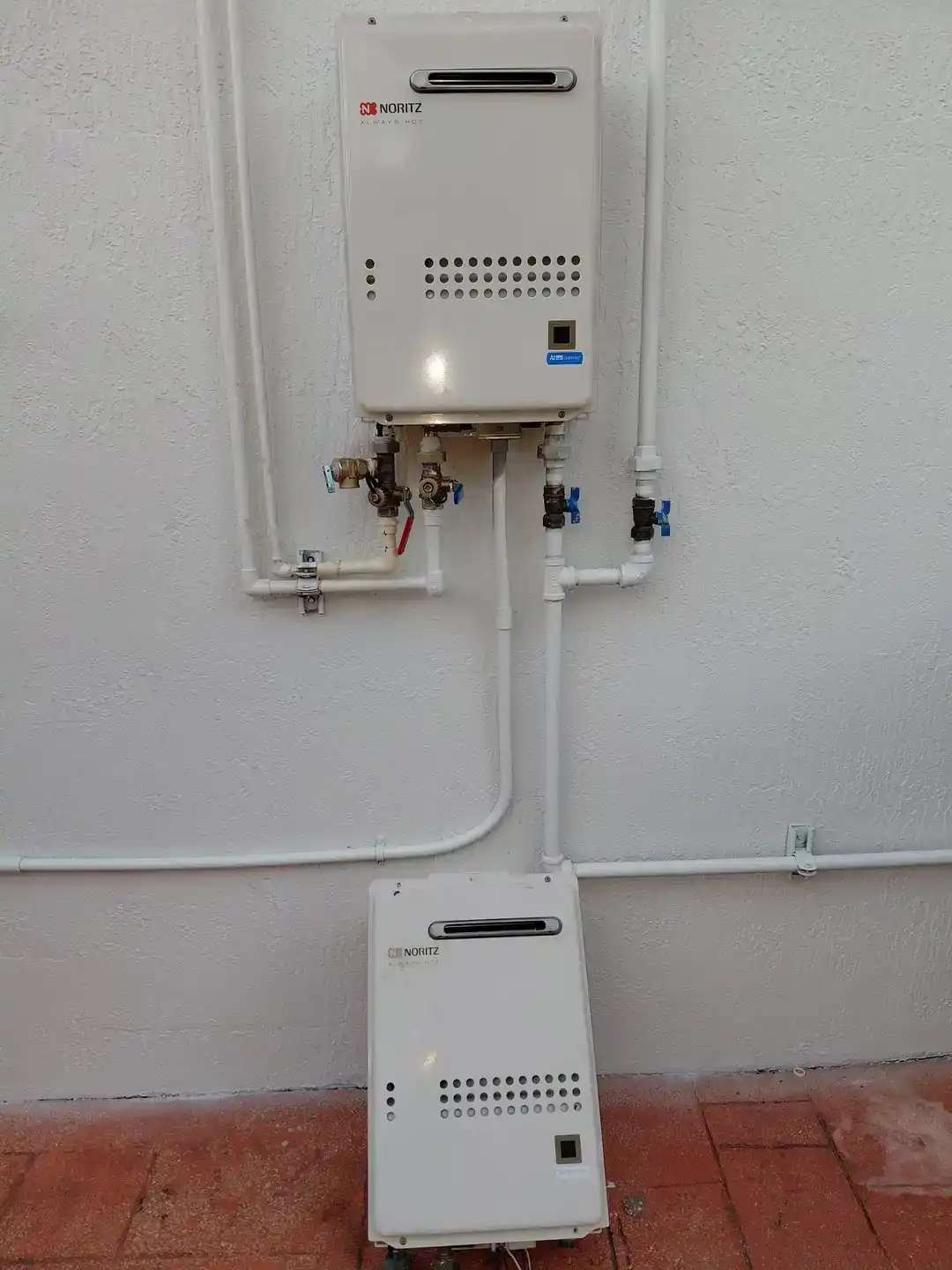
Water Heater Pan Full of Water in Miami? What to Check First
Water in the pan is not the diagnosis. It is the clue that tells you where to look next.
Why a full water heater pan deserves a closer look
If you find a water heater pan full of water in your Miami home, you are usually trying to answer one urgent question before anything else: is this a small repair, or is the heater already on its way out?
That is the right question, but the wrong first assumption is easy to make. A pan full of water does not automatically mean the tank has failed. Hernandez Plumbing's water heater leak page says some leaks start at connections or the temperature and pressure relief valve, while other leak patterns point to the tank itself. Whirlpool's homeowner support guidance adds another wrinkle: sometimes a small amount of water in or near the pan is simply condensation, especially when a heater is working through cold incoming water or heavy use.
That is why this symptom deserves a calmer checklist instead of a panic purchase. The pan is there to catch water, buy you a little time, and give you a visible warning. Your job is to figure out whether the water is coming from normal-but-temporary moisture, a repairable component, or a tank problem that has crossed into replacement territory.
Miami homes make that judgment call even trickier because water heaters often sit in garages, utility rooms, closets, or other spaces where moisture, humidity, and storage clutter can hide the true leak path. Hernandez Plumbing's broader water heater services page and its water heater guide both frame the same core reality: leaks, rust, noise, age, and inconsistent hot water are not isolated nuisances. They are connected clues.
This guide is built to help you separate those clues without pretending you can diagnose every heater from one puddle. It focuses on what usually puts water in the pan, what you can check safely, what patterns change the answer fast, and when it makes more sense to call a licensed plumber than to keep guessing.
What usually puts water in the pan
A drain pan is a catch basin, not a diagnosis tool. Water gets there for several different reasons, and the difference matters because the next step for each one is different.
| What you notice first | What it often points to | Why it matters |
|---|---|---|
| Thin puddle after startup or a heavy hot-water run | Condensation | Usually temporary, but still worth confirming before you ignore it |
| Moisture at the hot or cold connections | Loose fitting or connection leak | Often repairable if caught early |
| Water dripping from the T&P discharge pipe | High pressure or thermal expansion | The valve may be doing its job, but the underlying pressure issue still needs attention |
| Rust, seepage, or water appearing from the lower tank body | Tank corrosion or failure | Often means replacement, not a small repair |
| Repeated refilling of the pan plus no hot water or rusty water | Bigger system trouble | The heater may be nearing the end of its useful life |
The first possibility people tend to miss is condensation. Whirlpool says a small puddle in the drain pan can show up when the tank is full of cold water, during heavy use, or when incoming water is especially cold. On a gas unit, it may even create a sizzling sound when droplets hit the hot burner. That does not mean every pan with water is harmless. It means you should not jump straight from "water in the pan" to "tank is dead" without checking where the fresh moisture is starting.
The second common source is the easiest to overlook because it can travel before it drips. Water beginning at the inlet or outlet connections may work its way down the jacket or piping before it lands in the pan. That is why Whirlpool recommends drying the area first and then using fresh paper towels against the connections to see where new moisture returns.
The third source is the one homeowners often misread as a simple bad valve. If water is coming from the T&P discharge pipe, Whirlpool's support guidance says high water pressure is a common reason. The same guidance says a thermal expansion tank is often needed in closed systems and that replacing the T&P valve alone almost never solves repeated dripping. In other words, the valve may be warning you about the system pressure, not failing on its own.
The fourth source is the one nobody wants to see: water that appears to be coming from the tank body or lower portion of the heater. Hernandez Plumbing's leak page is direct on this point. A leak from the bottom of the tank usually indicates the inner tank has rusted through and the unit must be replaced.
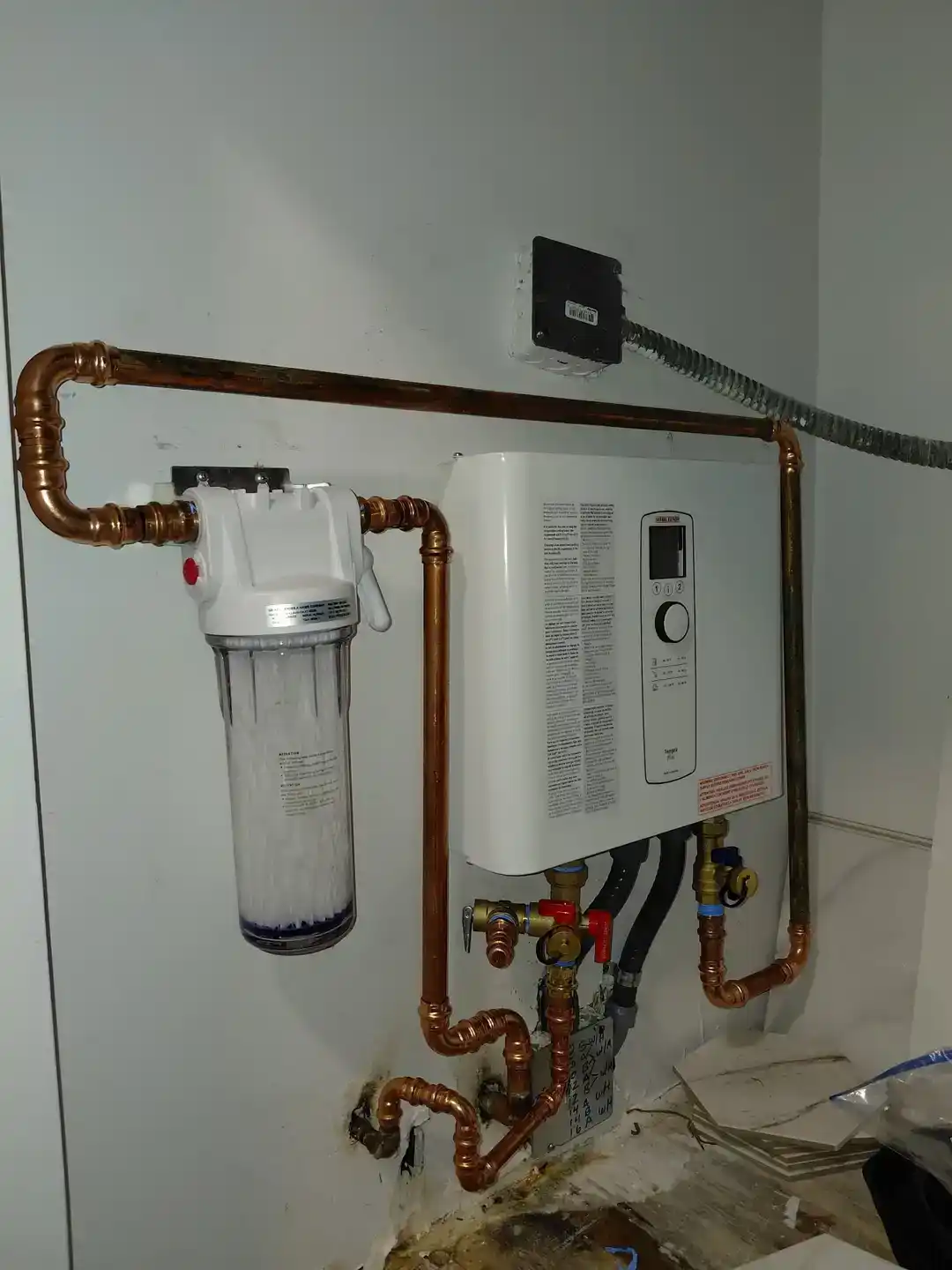 Visible fittings, shutoffs, and discharge piping matter because the pan only tells you where the water finished, not where it started.
A useful rule of thumb is this: a one-time light puddle can be observed; a pan that keeps refilling needs an explanation. If the pan is full again after you dry the area and stop active water use, you are no longer looking at harmless leftover moisture.
Safe first steps before you start touching valves
The goal of your first check is not to repair the water heater. It is to make the area safer, slow the damage, and gather enough information to describe the problem accurately.
Start with the basics Hernandez Plumbing publishes on its leak page:
- Shut off power or gas if you can do it safely. For electric models, that means the breaker. For gas models, that means the gas control or valve. If you smell gas, stop there, leave the area, and handle it as an emergency rather than a troubleshooting exercise.
- Shut off the cold water supply valve feeding the heater so the tank is not continuing to refill while you are trying to inspect it.
- Clear the area around the unit. Boxes, paint cans, stored towels, and shelving clutter hide leak paths and make slip hazards worse.
- Clean up standing water in the pan area or on the floor so you can tell whether new water is appearing.
- Dry the visible connections and discharge pipe with paper towels, then check again after a short wait.
That last step matters more than it sounds. Once everything is dry, the leak often becomes easier to identify. A damp paper towel at the top connection tells a different story from fresh water appearing at the T&P discharge pipe. Both are different again from moisture that seems to come from the underside of the tank.
A few things are worth not doing:
- Do not cap or plug the T&P discharge pipe. Whirlpool explicitly warns against that because the valve is a safety device.
- Do not assume a new relief valve is the answer if the discharge pipe keeps dripping. Pressure and thermal expansion often sit upstream of the visible symptom.
- Do not force corroded handles, fittings, or connections just to prove you can move them. A tired valve can turn a manageable leak into a larger one.
- Do not keep treating a recurring puddle as a nuisance if it keeps returning after you dry the heater area.
This is also the point where confidence matters. If you are not sure whether you are looking at a gas control, a supply valve, or an electrical issue, stop after the safe shutoff steps and hand the rest to a plumber. A good service call starts with the right description, not with a homeowner taking unnecessary risks.
Top leak clues vs. bottom leak clues
Where the water begins is the fastest shortcut to the likely answer.
When the leak looks higher than the pan
If the fresh moisture returns first at the top of the heater, at the piping, or near the discharge piping, you may be dealing with a repairable component problem instead of a dead tank.
The common high-start clues are:
- wet hot or cold water connections,
- mineral buildup or rust stains near fittings,
- moisture around the T&P valve area,
- and discharge dripping from the T&P pipe.
That last clue deserves its own category because it changes how you think about the heater. According to Whirlpool's T&P valve guidance, repeated discharge usually means the home's water pressure is too high or the system is dealing with thermal expansion. Whirlpool says plumbing codes cap household pressure at 80 psi, with 50 to 60 psi commonly recommended. That means the water heater may be the first place you see the symptom even if the real issue includes a pressure-reducing valve, expansion tank, or other system condition.
A. O. Smith's technical bulletin adds another useful distinction. It says intermittent weeping or dribbling from the relief valve is often pressure-related, while large, sporadic discharge of very hot water points to temperature actuation and a thermostat malfunction. Both need attention. They are just different problems.
When the pan keeps filling from below
If you dry everything, wait, and the water appears to be coming from the tank seam, lower jacket, or underside of the heater, the conversation usually gets more serious.
Hernandez Plumbing's leak page says a leak from the bottom usually means the inner tank has rusted through. A. O. Smith is similarly blunt about tank-side seepage: if the seeping is at the spud, the tank condition is not repairable and the heater should be replaced.
That is why the combination of clues matters more than any single one:
- water from the bottom area,
- rust-colored hot water,
- age over 10 years,
- repeated loss of hot water,
- and corrosion visible on or around the tank body.
Put those together and you are not looking at a casual "monitor it for a few weeks" situation. You are looking at a heater that may already be past the point where a small repair makes financial sense.
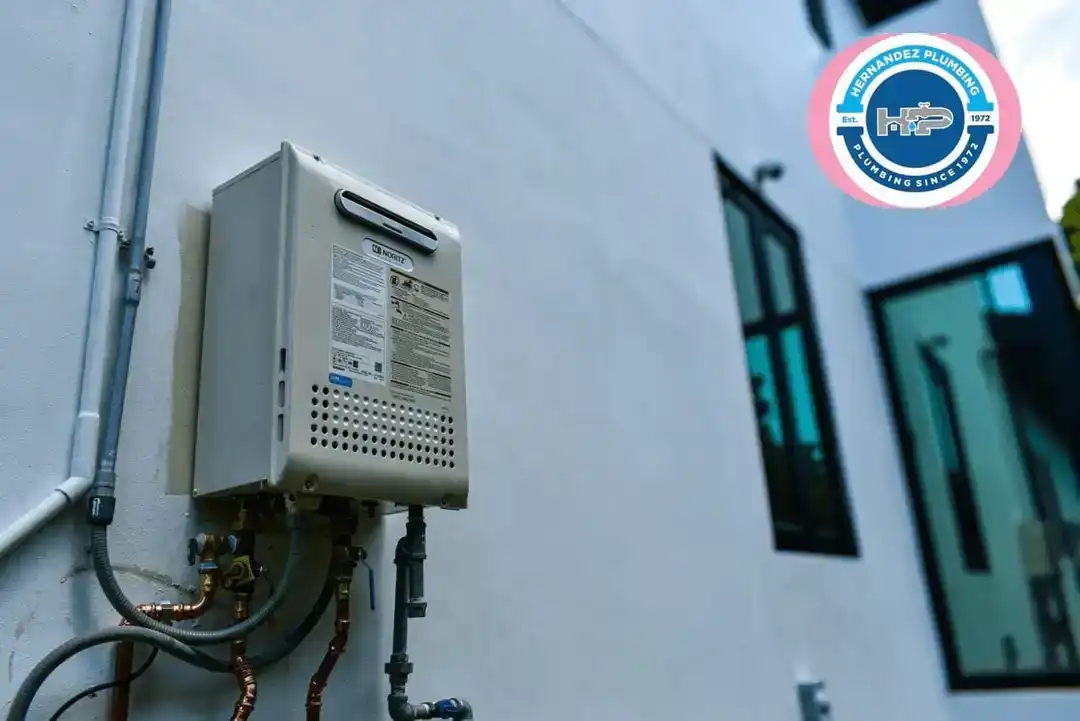 Once moisture is paired with rust, age, or repeated no-hot-water complaints, the question shifts from "Can I dry this up?" to "Is repair still realistic?"
There is one more clue homeowners often overlook: noise. Whirlpool says condensation on a gas unit can create sizzling, while Hernandez Plumbing's guide says popping or rumbling usually points to sediment buildup. Noise does not diagnose the leak for you, but it does tell you whether the heater may be dealing with more than one issue at the same time.
When pressure, age, or corrosion change the answer
Some water-heater pan situations stay in the repair lane. Others cross into replacement faster because of the bigger context around the leak.
Pressure changes the conversation
A pan that fills because the T&P valve is discharging is not just a pan problem. It is often a pressure problem. High pressure can stress not only the water heater but also dishwashers, washing machines, ice makers, and the rest of the home plumbing. That is why a discharge line that keeps dripping should be treated as a system warning, not as something to hide or route out of sight.
If you have noticed banging pipes, repeated relief-valve discharge, or earlier-than-expected appliance leaks, it is worth telling the plumber that the home may have a pressure issue. That single detail can keep the appointment from getting framed as "replace the heater and hope" when the smarter fix may involve expansion or pressure control too.
Age changes the math
Hernandez Plumbing says standard tank heaters usually last 8 to 12 years, while tankless models often run 15 to 20 years. That does not mean an 11-year-old tank must be replaced or that an 8-year-old tank cannot fail. It does mean a leaking older tank deserves more skepticism than a newer heater with one wet fitting.
A practical version of that rule looks like this:
- Newer heater, water only at a connection or valve: repair may be realistic.
- Older heater, water from the bottom, rust, and recovery problems: replacement becomes much more likely.
- Any age heater with repeated T&P discharge: repair may involve pressure management, not just the heater body.
Corrosion and maintenance matter more in Miami than people think
Miami homeowners do not need a lecture about humidity, but they do need the plumbing version of that truth. Hernandez Plumbing's humid-climate article says high moisture speeds corrosion, creates condensation on cooler surfaces, and adds stress to components such as pressure relief valves and electrical connections.
That does not mean humidity alone filled your pan. It does mean the local environment can make minor moisture events look more common and can also make neglected components age less gracefully.
Maintenance changes that picture. The Department of Energy's storage water heater guidance says periodic maintenance can extend the heater's life and may include flushing the tank, checking the T&P valve, and inspecting the anode rod. That kind of routine care will not resurrect a rusted-out tank, but it does improve the odds that a loose connection or sediment issue is caught before it becomes a floor problem.
A simple escalation checklist helps here. Move quickly toward professional service if the pan full of water is paired with any of these:
- rust or corrosion on the tank body,
- repeated T&P discharge,
- no hot water or sharply reduced hot water,
- rusty hot water,
- age over 10 years on a tank heater,
- or water returning soon after the area has been dried and the visible fittings checked.
When Hernandez Plumbing is worth calling
A good water-heater service call is not just about stopping the leak. It is about answering the next question honestly: repair, replacement, or a pressure-related fix outside the tank itself.
Hernandez Plumbing positions its residential water-heater work around tank, tankless, and heat-pump systems for homes, condos, apartments, and townhomes across Miami-Dade and Broward. That matters because a "full pan" call can land in more than one lane:
- a repairable connection leak,
- a relief-valve discharge tied to pressure or thermal expansion,
- maintenance-related sediment and wear,
- or a tank that has simply reached the end of the line.
That is when the handoff matters more than another round of guessing. If the pan keeps filling, the tank is older, the leak source is unclear, or the heater is losing hot-water performance at the same time, use Hernandez Plumbing's contact page or water-heater service resources to book a licensed evaluation.
When you call, give the clearest description you can:
- whether the water starts at the top, side, discharge pipe, or bottom,
- whether the pan refills after you dry it,
- whether you have rusty water or no hot water,
- and roughly how old the unit is.
That information helps the plumber arrive thinking about the right fork in the road from the start.
The best takeaway is simple: treat a full pan as a signal, not as the diagnosis itself. Sometimes the answer is a fitting, a valve, or a pressure problem. Sometimes the answer is replacement. What makes the difference is how the water behaves, where it starts, and what other clues are showing up around the heater.
This article is for general education only. For model-specific instructions or safety concerns, confirm details with the manufacturer and a licensed plumber before you rely on any one troubleshooting step.