How to Check a Plumber's Florida License Before a Miami Water Heater, Repipe, or Sewer Job
If you want to check a plumber's license in Miami before approving a water heater replacement, a whole-house repipe, or a sewer-line job, the most important step is not scrolling reviews for another 20 minutes. It is confirming that the license, the business name, and the job scope all line up before the work starts.
That is the real intent behind many “check plumber license Miami” searches. Homeowners are not usually hunting for trivia. They are trying to avoid hiring the wrong company for work that can involve permits, inspections, hidden pipe conditions, and expensive follow-up if the first scope is wrong.
That matters more on bigger plumbing projects because the consequences are bigger too. A faucet repair gone sideways is frustrating. A water heater installed without the right permit path, a repipe signed under the wrong business name, or a sewer replacement quoted without clear inspection steps can get expensive, slow, and confusing fast.
Florida gives homeowners a real way to do this homework. The state's DBPR license lookup lets you search by name or license number, and Miami-Dade's permit guidance explains when local permit questions should change how you vet the job. Hernandez Plumbing's own service pages add the practical Miami layer: bigger projects such as water heater work, repiping, and plumbing repair often involve permits, inspections, or both.
This guide is built for that exact moment. Not the emergency where water is already pouring across the floor, but the decision point just before you sign, schedule, or hand over a deposit.
For bigger plumbing work, the useful question is not only “Are they licensed?” It is “Does the live state record, business name, and permit path match the job I am about to approve?”
Why license verification matters more on bigger plumbing jobs
A homeowner does not need the same vetting process for every plumbing call. If you have a simple fixture issue, you still want a legitimate pro, but the risk profile is not the same as it is on work that touches the water heater, major supply lines, drain lines, a slab, or a sewer lateral.
Miami-Dade's permit page draws that line clearly. The county says that altering or repairing a regulated plumbing system, including replacing a hot water heater or gas appliance, generally requires a permit in the county process for unincorporated properties. Hernandez's Miami residential water-heater page adds the local service reality: permits come up on water heater installations, repiping, and sewer-line work, and the team says it handles those permit applications.
That is why license verification matters most when the job has at least one of these characteristics:
- it changes or replaces a major component,
- it will likely require a permit or inspection,
- it affects the whole house rather than one fixture,
- it could open walls, slab, or yard,
- or it is expensive enough that rework would hurt.
Hernandez frames its own larger-scope work that way. Its About Our Team page says larger projects get a dedicated account lead so scope, permits, and finish work stay coordinated. Its repiping page says Florida permits are required and that permit applications plus inspections are part of the workflow. Its water-heater page says code details such as hurricane strapping, TPR discharge routing, and drain-pan setup matter on inspection.
In plain English, the license check is not paperwork theater. It is your first filter for whether the contractor can lawfully take the job, whether the business name on the quote matches the state record, and whether you are about to hire someone who understands the approval path instead of improvising it at your house.
What the Florida DBPR lookup can and cannot prove
Florida's DBPR lookup is useful, but it is not magical. It can confirm core facts. It cannot replace a written scope, a permit conversation, or common sense.
DBPR's own guidance says you can verify a license by name or by license number, and that the search results show the licensee's name, profession, address, and license status. That gives homeowners a strong first screen before they focus on price.
It also gives you something worth saving. Take a screenshot of the result, keep the written estimate, and note the date you ran the search. If the company name changes later, if a permit question comes up, or if you end up comparing two near-identical business names, you will want the original record in front of you instead of a half-remembered search result.
A practical way to read the result is this:
| What you see in the DBPR record | Why it matters before hiring | What it does not prove by itself |
|---|---|---|
| License status | Confirms whether the credential is active or otherwise usable at the moment you check it | It does not prove the quote is fair or the scope is correct |
| Profession / license type | Helps confirm you are looking at a plumbing contractor record rather than some other trade | It does not prove that this exact project has been sized or diagnosed correctly |
| Licensee name | Lets you match the person or qualifier tied to the license | It does not prove the business on the truck is the same business on the contract |
| Business name shown on the record | Helps you catch mismatches between the quoted company and the qualified entity | It does not prove permits have already been pulled |
| Address / jurisdiction clues | Helps confirm you are not mixing up similar contractor names | It does not replace checking local permit rules |
That last row is where many homeowners get tripped up. They search a number, see an active record, and assume the rest of the paperwork must be fine. Sometimes it is. Sometimes the license is active, but the business name on the proposal is not the same entity tied to the record you found.
Florida DBPR's business-information page is very explicit here. If a contractor is doing business through a corporation, LLC, partnership, or other entity, that business must be approved and qualified. The name of the approved business entity appears on the individual's license. DBPR also says that a business-name search should show the individual contractor who qualifies that business and recommends repeating the check using the individual's name.
That is the detail readers are usually most annoyed to learn too late. The state lookup is not only about whether someone is licensed. It is also about whether the business asking for your signature is the same business the licensed individual is authorized to qualify.
How to match the license number, business entity, and job scope
The cleanest verification workflow is short enough to do before you call back for scheduling.
- Search the license number if it is listed on the company's site, estimate, or footer.
- Search the contractor's individual name.
- Search the company name under the business or organization field.
- Compare the records against the proposal, invoice header, and permit promises.
- Ask one more question: does the state credential fit the actual job I am hiring for?
The state fit matters because DBPR separates contractor types. On the construction-industry page, DBPR says certified contractors can contract in any Florida jurisdiction, while registered contractors can contract only in the jurisdictions where the registration applies. The same page also lays out what a plumbing contractor's scope actually covers: sanitary drainage, storm drainage, public or private water supply systems, and water or sewer lines all live inside the plumbing-contractor lane.
That gives homeowners a much better checklist than simply asking, "Are you licensed?"
Ask instead:
- Is this a plumbing-contractor license, not another trade?
- Is it active today?
- Does the business name on the proposal match the qualified entity on the license?
- If a different business name is being used, who is the qualifying individual?
- Is this contractor acting under a certified statewide credential or a jurisdiction-limited registration?
- Does the scope on my quote look like plumbing work that belongs under that credential?
If those answers come back fuzzy, slow the job down. A confident contractor should not need to guess at the qualified business name, whether the credential is statewide or local, or whether the quoted work belongs under plumbing versus another trade. By the time an estimate reaches your inbox, those details should already be routine.
Those are especially useful questions when a quote starts to bundle several things together. A water-heater replacement may also include gas, venting, drain-pan, or finish-work questions. A repipe may include access holes, restoration, and multiple fixture reconnections. A sewer job may include camera diagnosis, excavation, slab repair, or inspection scheduling.
The point is not to become your own permit reviewer. The point is to make sure the contractor talking about the work is presenting a license and business identity that make sense for that work.
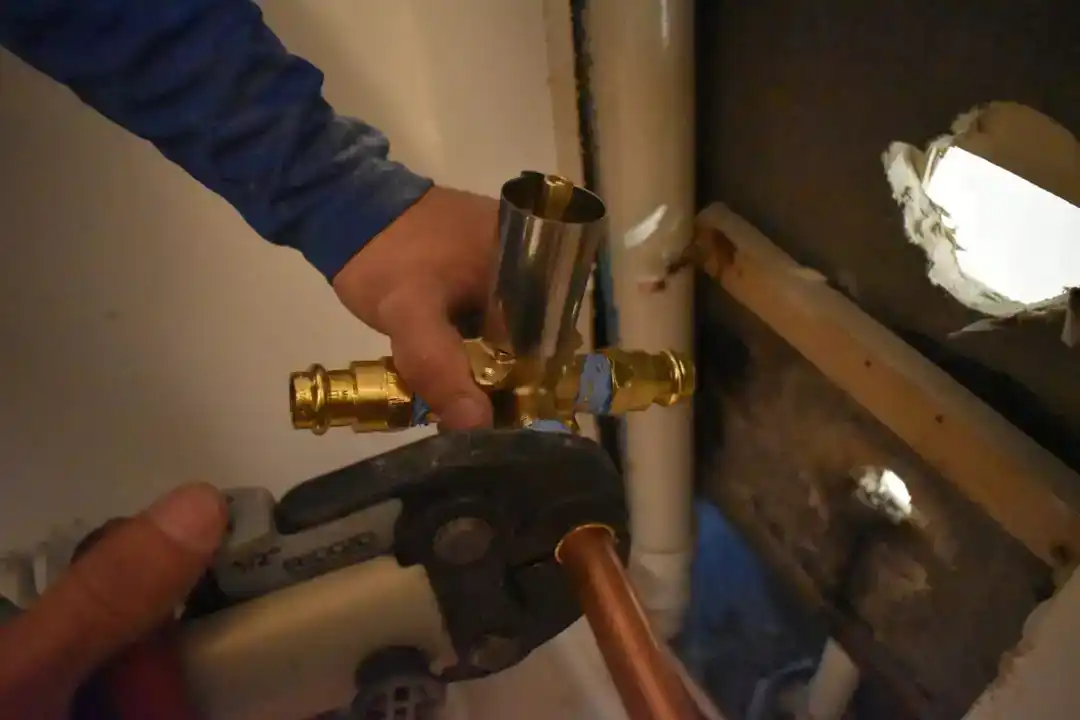 When a quote covers repiping or larger supply-line work, match the live license record to the business name on the proposal before you focus on timeline or price.
When Miami-Dade or city permit rules should change your questions
Permit questions become more important the moment the job is bigger than a routine small repair.
Miami-Dade's permit guidance explains two things homeowners should remember. First, the county's published online process is for folios that start with 30 in unincorporated Miami-Dade. Second, each municipality inside Miami-Dade has its own Building Official who issues permits within city limits. That means a homeowner in the City of Miami, Coral Gables, Miami Beach, Hialeah, or another municipality should not assume the unincorporated county workflow is the whole answer.
In practice, that means your hiring questions should become more specific, not more technical.
Ask:
- Which jurisdiction is issuing this permit for my address?
- Who is pulling the permit: your company or someone else?
- Will the permit be issued in the same business name that appears on the contract?
- What inspections should I expect before final payment?
- If the job expands after opening a wall or yard, what changes in scope or permit path should I expect in writing?
Those questions also protect you from a common paperwork blur. Homeowners often hear, “Yes, permits are included,” without learning whether the correct jurisdiction has been identified, whether the permit holder is the same company on the proposal, or whether another business will actually pull the permit. It is much easier to sort that out before work starts than after an opening has already been cut in the wall, slab, or yard.
This is where Hernandez's own pages provide useful real-world context. Its water-heater page says permits and inspections are handled on installations. Its repiping page says permit applications and scheduling inspections are part of the service. Its Miami residential water-heater page says permits are required for water-heater installs, repipes, and sewer-line work. Those are exactly the kinds of jobs where permit answers should be clear before day one.
The Miami-Dade plumbing-permits page shows why the conversation can get more detailed on sewer work. The county says sanitary-line replacement uses plumbing category 25 and also requires a standard slab-cut repair detail plus a special-inspector form for trench backfill and slab repair. You do not need to memorize category numbers to hire a plumber. You do need to notice when a contractor talks about full sewer replacement as if it were no different from clearing a stoppage.
Water-heater work deserves the same attention for a different reason. Hernandez's water-heater page says Miami-Dade inspectors expect details such as hurricane strapping, approved TPR discharge routing, and a proper drain pan. That is not trivia. It is a reminder that even "simple replacement" work can still involve code and inspection expectations that a licensed contractor should already understand.
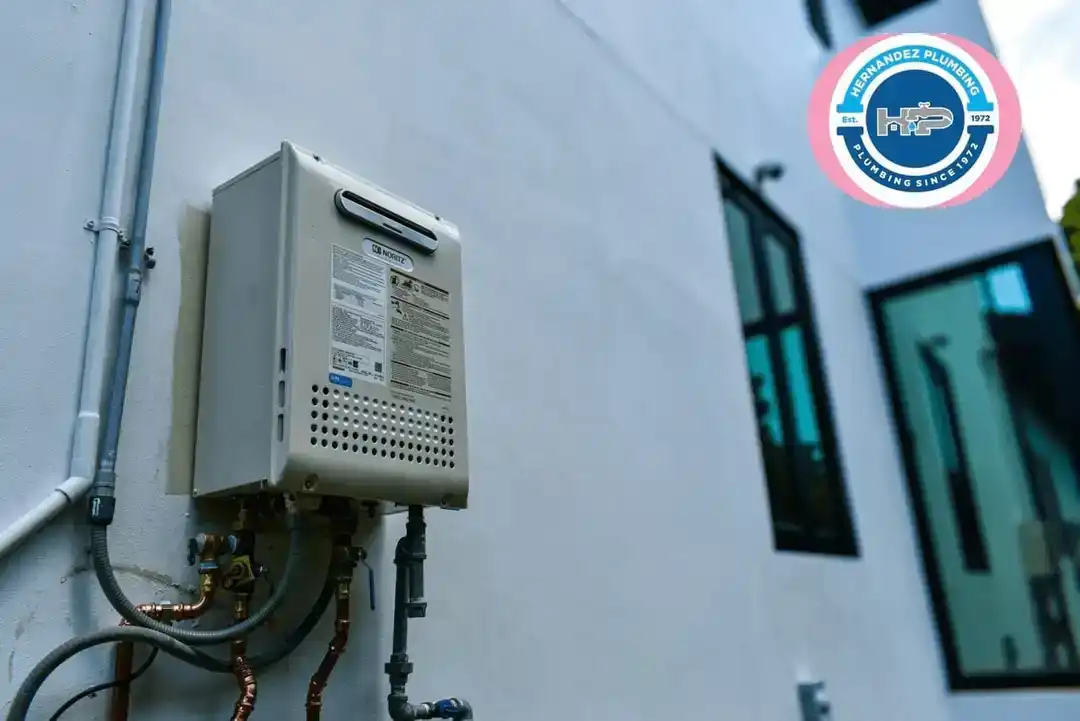 Water-heater replacements can look straightforward on paper, but the permit and inspection details still matter before the old unit comes out.
Red flags before you approve the work
A state lookup can help you avoid obvious mismatches, but the strongest warning signs usually show up when you compare the record to the quote and the conversation.
Here are the red flags worth slowing down for:
- The business name on the estimate does not match the qualified entity you found through DBPR, and no one can explain the difference clearly.
- The contractor wants a permit-heavy job to stay vague about who is pulling the permit.
- The scope sounds large, but the proposal stays too loose to tell whether the price covers diagnosis, permit steps, inspections, restoration, or only the visible repair.
- The company talks about inspections as optional when the work obviously affects a regulated plumbing system.
- The sales pitch outruns the diagnosis.
- The contractor asks you to ignore the record because "everybody does it this way."
Another quieter warning sign is a proposal that sounds precise on materials but vague on process. You may see a tank size, a pipe material, or a line-repair price, yet get no clarity on permit responsibility, inspection timing, restoration limits, or what happens if the diagnosis changes after access is opened. That is exactly the moment to ask for the missing language before approving the start date.
That last one matters more in Miami than homeowners sometimes expect because so many bigger plumbing calls start from symptoms, not certainty. A recurring backup may need sewer line service after camera confirmation, not another blind reset. A low-pressure house may need repair or repiping, not another fixture swap. A water-heater quote may need a real permit conversation if the unit is moving, changing fuel, or failing inspection-sensitive details.
The safest pattern is simple: diagnosis first, written scope second, permit questions third, approval last.
Hernandez makes that same sequence part of its own repair messaging. Its plumbing-repair page says the team diagnoses first, quotes upfront, then repairs copper, PVC, PEX, and cast iron with licensed technicians rather than flipping the call through a lead broker. Whether you hire Hernandez or someone else, that order of operations is the healthier one.
And if the contractor cannot explain the permit path or the qualified business name before you sign, that is not a small communication issue. It is the warning.
When Hernandez Plumbing is a sensible next call
If you are already doing the homework, Hernandez gives homeowners several easy things to verify.
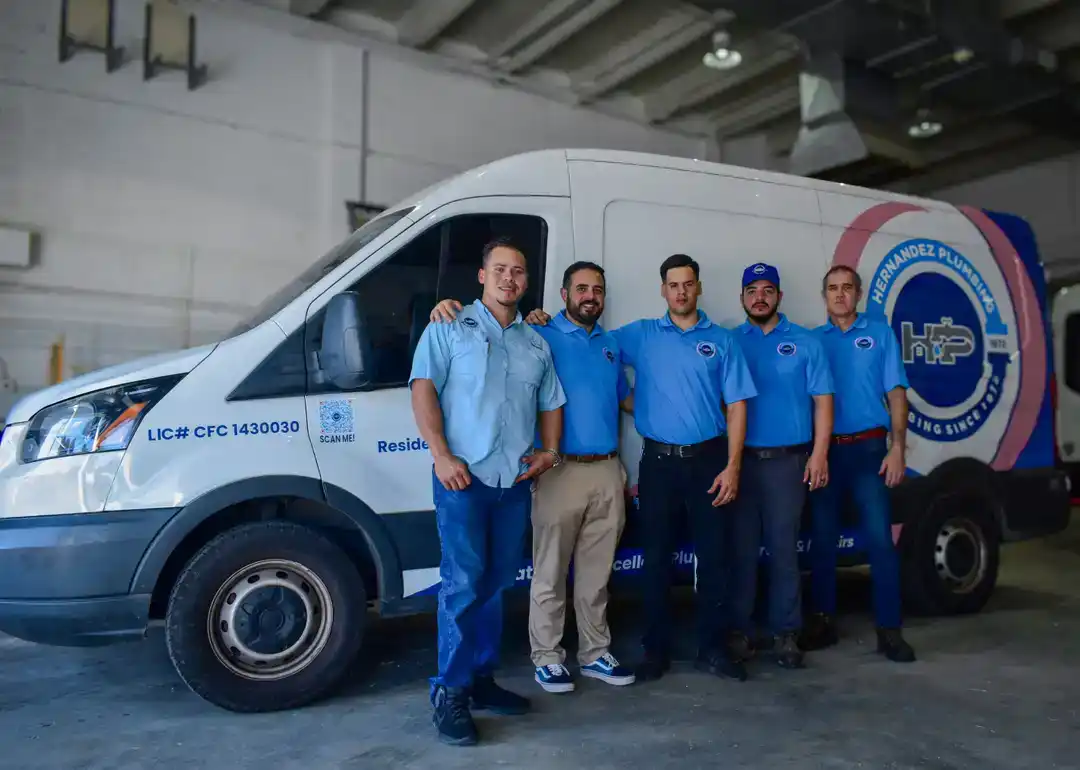
Its homepage says the company is licensed and insured, lists Florida contractor license CFC 1430030, and describes Hernandez as a family-owned Miami plumbing company serving Miami-Dade from Doral since 1972. Its about page says larger projects get permit and scope coordination. Its water-heater and repiping pages say permit applications and inspections are part of those service lines. That makes Hernandez a sensible next call when you do not want a vague answer on who is licensed, who is showing up, and how the paperwork fits the job.
It is also a practical option when the project is already moving beyond comparison-shopping mode. If the house has an active leak, no hot water, a repipe decision, or a sewer diagnosis that needs to become a real scope, there is value in talking to a company whose public record, service pages, and estimate flow are all saying the same thing.
That does not mean skipping your own verification. It means the verification should be easy to complete. Check the state record. Match the business name. Ask the permit questions. Then decide whether the contractor sounds like someone ready to own the whole job instead of only the sales conversation.
If you want that conversation with Hernandez, start with the About Our Team page or schedule service through the company contact path. If you are comparing providers, keep the same checklist beside every quote. The right contractor should not be irritated that you used it.
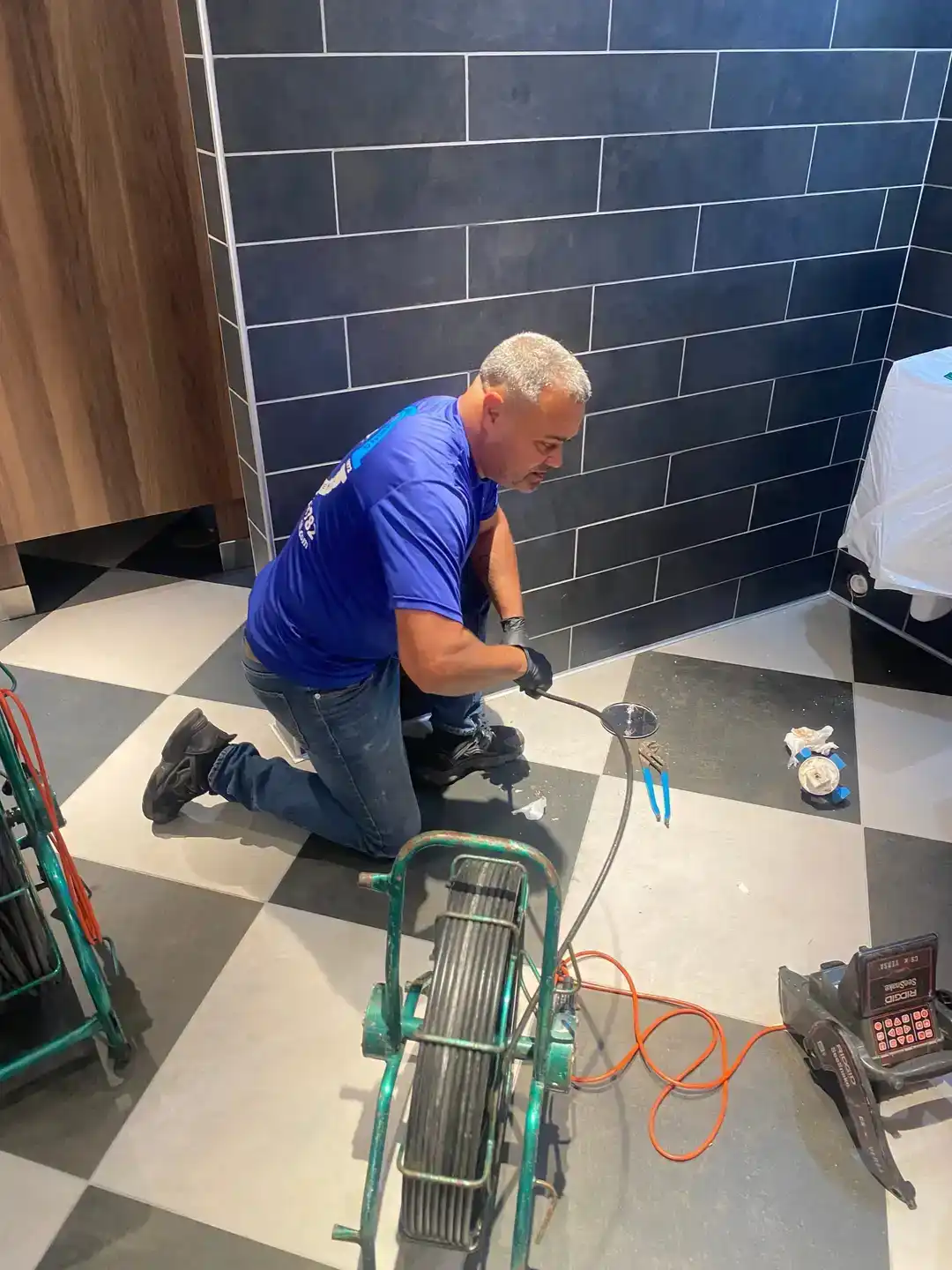 Once a plumbing project involves whole-house systems, hidden lines, or sewer access, the contractor's licensing story, permit story, and diagnostic story should all agree.
This article is general educational guidance, not legal advice. Verify current license status through Florida DBPR and confirm permit requirements with the correct Miami-Dade or municipal building department before approving project-specific work.