Ultimate Guide to Thermal Imaging for Plumbing Leaks
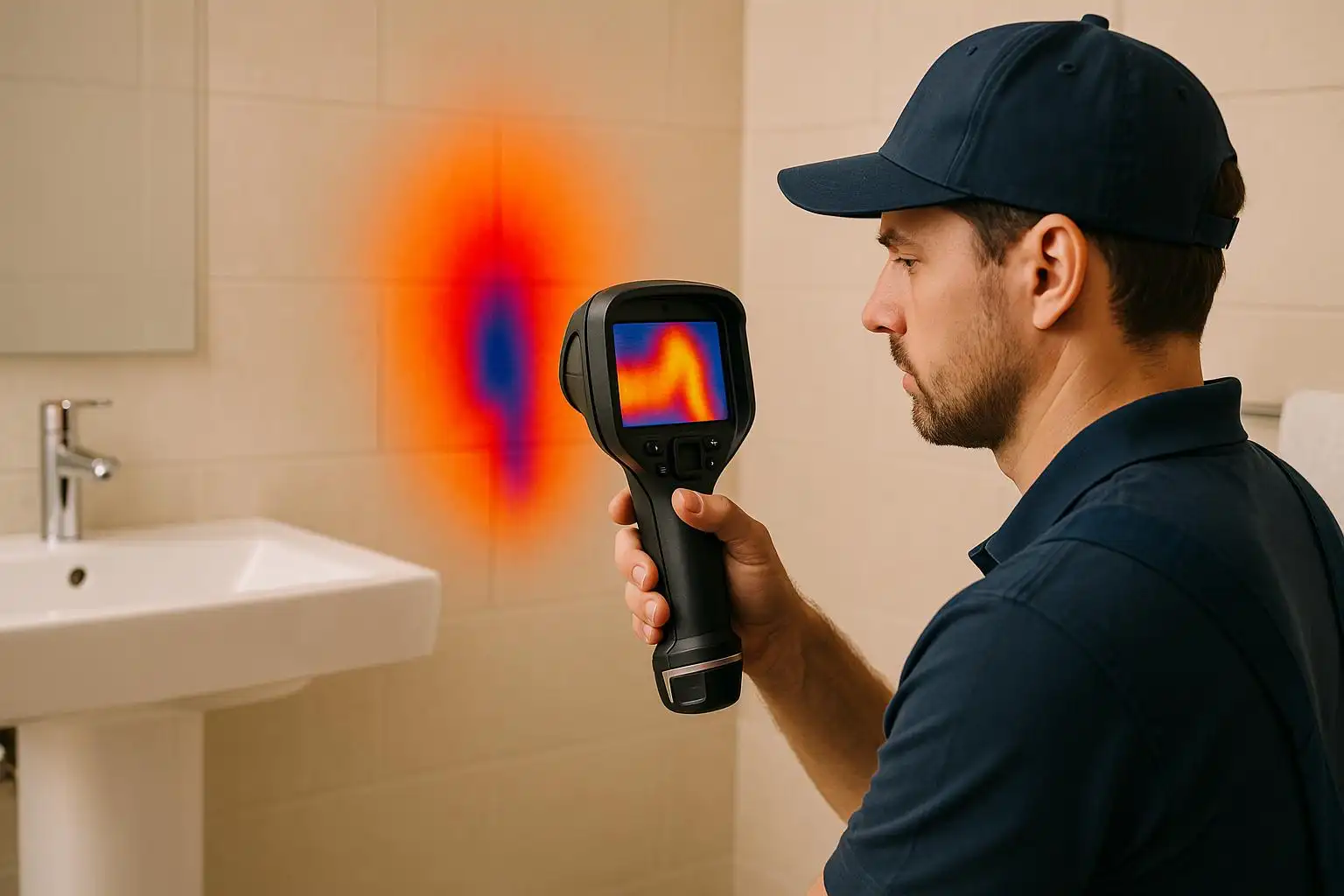
Thermal imaging is a game-changer for finding plumbing leaks without tearing into walls or floors. Using infrared cameras, it detects temperature changes caused by water leaks, saving time and money on repairs. Our leak detection services use advanced thermal imaging technology to pinpoint hidden leaks. Here's what you need to know:
- How It Works: Thermal cameras detect heat patterns. Cold water leaks appear cooler, while hot water leaks show as warmer spots.
- Why It Matters: Early detection prevents costly damage, mold growth, and high water bills.
- Tools: Options range from affordable smartphone attachments to high-end professional cameras.
- Challenges: Accuracy depends on factors like humidity and proper interpretation of thermal images.
- When to Call a Pro: Complex leaks or unclear results often require expert help.
In Miami, Hernandez Plumbing offers advanced thermal imaging services, ensuring precise leak detection and repair. Whether you’re a homeowner or business, this technology helps protect your property while reducing repair costs.
Why Plumbers Are Obsessed With Using Thermal Cameras – 5 Reasons
How Thermal Imaging Finds Plumbing Leaks
Thermal imaging is a powerful tool for spotting plumbing leaks by identifying subtle temperature changes caused by water escaping from pipes. When water interacts with building materials, it creates temperature patterns that thermal cameras can detect. Let’s dive into how these scans work and the environmental factors that can influence their accuracy.
Understanding Thermal Imaging Scans
Thermal imaging cameras are designed to pick up differences in temperature, making them ideal for detecting leaks. When water leaks, it creates noticeable temperature signatures that stand out in thermal images as either cooler or warmer spots, depending on the type of leak.
- Cold water leaks: These show up as cooler areas in the thermal image, often appearing in shades of blue or green. This cooling effect happens because as the water evaporates, it absorbs heat from surrounding materials.
- Hot water leaks: In contrast, leaks from hot water pipes appear as warmer zones, typically in yellow or red hues. The heat from the escaping water spreads to nearby materials, and changes in temperature along the pipe’s path can help pinpoint the leak’s source.
The accuracy of leak detection depends heavily on the camera’s thermal sensitivity. Because moisture causes only slight temperature differences, devices with high sensitivity (low NETD) are crucial for capturing these variations clearly.
Reading Thermal Images
Interpreting thermal images involves identifying patterns that indicate the presence and movement of moisture. Different types of leaks create distinct thermal signatures:
- Wall leaks: These often appear as triangular patterns, starting narrow at the leak’s source and widening as water spreads downward due to gravity.
- Ceiling leaks: These show up as irregular shapes with varying temperature zones, reflecting how water moves through ceiling materials and insulation.
- Flooding and wicking: These create vertical patterns as water travels upward into insulation and wall studs.
- Pipe and crack leaks: These often follow irregular paths along pipes or structural cracks, tracing the path of least resistance.
To improve detection, professionals adjust the thermal image’s level and span, usually narrowing it to a range of 18°F to 36°F (10°C to 20°C). This adjustment enhances the visibility of small temperature differences.
Environmental Factors That Affect Accuracy
Environmental conditions play a big role in the effectiveness of thermal imaging by influencing thermal contrast – the temperature difference between the leak and its surroundings. Stronger contrasts make leaks easier to detect, while weaker contrasts can obscure them.
- Humidity: High humidity can scatter infrared radiation, causing a "thermal washout" that blurs essential details in the image. Under such conditions, detection ranges can shrink by 25–30% compared to environments with humidity levels below 30%. Humidity can also cause condensation on the equipment, further reducing performance.
- Ambient temperature: When the surrounding temperature is close to that of the leaked water, it reduces thermal contrast, making leaks harder to spot.
To counter these challenges, professionals often run hot water through pipes before scanning. This creates a stronger temperature difference, making leaks more visible in the thermal image.
These factors highlight the precision and expertise required to use thermal imaging effectively, setting the stage for the next section on practical scanning techniques.
Tools for Thermal Leak Detection
Choosing the right tools can uncover hidden leaks and help you avoid expensive repairs. The market offers a variety of thermal imaging devices, each suited to different budgets and levels of expertise. Knowing the options can help you pick the best tool for your specific needs.
Types of Thermal Imaging Devices
Handheld thermal cameras are a popular choice among both professionals and DIY users. These devices come with specialized sensors, built-in displays, and user-friendly controls. They also allow you to save images directly to internal memory or SD cards, making them practical for ongoing use.
Smartphone attachments are a more affordable and portable option. These compact devices connect to your phone via the charging port and use your phone’s screen as the display. While they’re easy to carry and cost less, they typically have lower resolution and sensitivity compared to standalone handheld cameras. They’re ideal for occasional use or quick inspections.
Professional-grade infrared cameras sit at the top of the thermal imaging spectrum. These devices offer the highest resolution, superior sensitivity, and advanced features like temperature measurement tools, customizable color palettes, and detailed reporting capabilities. They’re designed for commercial applications and in-depth leak investigations, providing the accuracy required for demanding tasks.
Once you’ve chosen a device type, evaluating key features will help ensure effective leak detection.
What to Look for in a Thermal Imaging Tool
- Thermal resolution: This impacts the clarity of your thermal images. Higher resolution means sharper detail, which is crucial for locating small leaks. A resolution of at least 160 x 120 pixels works for most tasks, but 320 x 240 pixels or higher is better for pinpointing precise leak locations.
- Temperature sensitivity: Measured as NETD (Noise Equivalent Temperature Difference), this indicates how small a temperature change the device can detect. For leak detection, go for a sensitivity of 0.1°F (0.05°C) or better to identify subtle temperature shifts caused by leaks, even in less-than-ideal conditions.
- Temperature range: Your device should handle the temperatures you’re likely to encounter. For residential and commercial plumbing, a range of 32°F to 180°F (0°C to 82°C) is typically sufficient. Some devices offer multiple ranges, letting you adjust sensitivity based on the situation.
- Data storage and connectivity: Look for devices that save images in standard formats like JPEG. Wi-Fi connectivity is another helpful feature, enabling you to share images with clients or colleagues instantly. Advanced models may include cloud storage or mobile apps for remote analysis.
- Battery life: A critical factor for extended inspections. Professional-grade cameras often last 4-6 hours on a single charge, while smartphone attachments may drain your phone battery faster. Consider models with replaceable batteries or external power options for longer sessions.
By focusing on these features, you can select a device that meets your needs and ensures reliable results.
Comparison Table of Thermal Imaging Tools
The table below offers a quick comparison of the main types of thermal imaging devices:
| Device Type | Resolution Range | Price Range | Best For | Limitations |
|---|---|---|---|---|
| Smartphone Attachments | 80×60 to 206×156 | $200-$500 | Occasional use, basic detection | Lower sensitivity, drains phone battery |
| Handheld Cameras | 160×120 to 320×240 | $1,000-$5,000 | Regular use, detailed inspections | Higher cost, may require training |
| Professional-Grade | 640×480 and higher | $5,000-$25,000+ | Commercial applications | Expensive, complex to operate |
Your choice depends on how often you’ll use the device and the level of accuracy you need. For homeowners, smartphone attachments are a practical option for occasional leak checks. Handheld cameras strike a balance for professionals who need consistent accuracy without the complexity of high-end systems. Professional-grade models are best for those requiring advanced precision and detailed reporting in challenging environments.
When making a decision, don’t just focus on the upfront cost. Factor in total ownership costs, including training, software updates, and calibration. The priciest tool isn’t always the right fit if it exceeds your needs or requires a steep learning curve to operate effectively.
Best Practices for Using Thermal Imaging
Thermal imaging is a powerful tool for detecting temperature differences, which can help identify leaks. However, getting accurate results requires more than just pointing the camera at a surface. Since thermal imaging highlights temperature variations rather than directly showing moisture, understanding this distinction is key to interpreting the results correctly. Misreading the patterns could lead to missed leaks or incorrect conclusions.
Step-by-Step Guide to Leak Detection
To start, adjust your thermal camera settings for optimal results. Fine-tune the level and span of your thermal image to capture a range of 10°C (about 50°F) to 20°C (roughly 68°F). This narrower range makes subtle temperature changes more visible, as default auto-scaling might obscure the details that indicate water presence.
Approach the inspection systematically. Rushing through the process increases the risk of overlooking the faint temperature signatures that signal leaks.
- For walls, moisture tends to create triangular patterns as water moves downward.
- On ceilings, water often forms irregular shapes, reflecting its path through insulation layers.
- In cases of flooding, water can rise into insulation and studs due to capillary action, resulting in unexpected patterns.
Leaks from hot water pipes are generally easier to spot because the temperature contrast is more pronounced, especially in cooler surroundings. Look for distinct warm areas on your thermal display. As you scan, take note of both warm and cool spots, tracing the moisture’s path. Water often travels along the path of least resistance, which means the visible signs may not align directly with the source of the leak.
For larger areas, divide the space into sections and inspect systematically. Begin near known fixtures or pipe runs, then expand outward from there.
When to Call a Professional
After completing a thorough scan, assess whether you’ve pinpointed the leak’s source or if uncertainties remain. While thermal imaging tools are now more accessible to homeowners, some scenarios call for professional expertise. Complex or unusual patterns often require the trained eye of an expert to differentiate between active leaks, old water damage, or environmental factors that may distort the image.
Hidden plumbing systems, such as pipes embedded in concrete slabs or walls with multiple layers, can be particularly challenging. These situations often demand advanced equipment and techniques to locate leaks accurately. Professionals not only have access to higher-grade thermal cameras but also complementary tools like moisture meters and acoustic detectors to confirm findings.
If your scan reveals multiple potential leak sources, a professional can help prioritize the areas needing immediate attention. This avoids unnecessary demolition and ensures that repairs target the most critical issues.
For insurance claims, many companies require detailed reports from certified professionals. These reports provide an accurate analysis and include recommendations, which can streamline the claims process.
If you’re using a basic thermal imaging device, such as a smartphone attachment or an entry-level handheld camera, and find it difficult to get clear readings, it might be time to upgrade. Professional-grade equipment offers better sensitivity and precision, especially in challenging conditions.
Commercial properties with complex plumbing systems – spanning multiple floors or involving specialized equipment – are another case where professional services are invaluable. The intricate nature of these systems, combined with the higher stakes of potential damage, makes expert analysis essential.
Finally, when time is critical, calling a professional can save you from escalating repair costs. Professionals can quickly identify and address leaks, helping to mitigate water damage before it worsens. While mastering thermal imaging takes practice, their expertise ensures swift and accurate results.
sbb-itb-d8d3ac2
Pros and Cons of Thermal Imaging
Thermal imaging has proven to be a game-changer in identifying plumbing leaks, thanks to its ability to detect temperature differences in affected areas without invasive methods. However, like any technology, it comes with its strengths and challenges.
Key Benefits of Thermal Imaging
Thermal imaging stands out for its ability to locate leaks efficiently and without causing damage. Here are some of its main advantages:
- Non-invasive detection: No need to cut into walls, floors, or ceilings to find hidden leaks.
- Speed and efficiency: Scans large areas quickly, pinpointing multiple potential leaks in one go.
- Early detection: Identifies leaks before they cause visible damage, saving time and money on repairs.
- Visual documentation: Creates clear, visual evidence that can be used for insurance claims or planning repairs.
- Cost-saving potential: Minimizes demolition and reduces disruption to the property.
Challenges and Limitations
Despite its benefits, thermal imaging isn’t without its drawbacks. Some of the challenges include:
- Environmental factors: High humidity or extreme ambient temperatures can interfere with accuracy.
- Interpretation skill required: Distinguishing between active leaks, old damage, and other anomalies demands expertise.
- Equipment costs: High-quality thermal cameras can be expensive to purchase or rent.
- Material limitations: Struggles to detect leaks behind certain materials or in deeply embedded pipes.
- Risk of false readings: Heat from sunlight, HVAC systems, or air currents can sometimes lead to misleading results.
Comparison Table: Pros and Cons
| Advantages | Disadvantages |
|---|---|
| Non-invasive and quick | Accuracy can be affected by the environment |
| Detects leaks early | Requires skilled interpretation |
| Covers large areas efficiently | High cost of professional equipment |
| Provides visual documentation | Limited detection behind specific materials |
| Reduces property damage | Susceptible to false readings |
While thermal imaging offers a non-invasive and efficient way to detect leaks, factors like environmental conditions and the need for expertise can influence its effectiveness. For a professional evaluation, consider reaching out to Hernandez Plumbing in Miami, FL.
Local Expertise: Hernandez Plumbing in Miami, FL
In Miami, having local experts on your side makes all the difference when it comes to resolving leaks effectively. Hernandez Plumbing combines advanced thermal imaging technology with years of experience to deliver reliable solutions for both residential and commercial properties.
Hernandez Plumbing’s Thermal Imaging Services
Using cutting-edge thermal imaging, Hernandez Plumbing can detect leaks with pinpoint accuracy. Their skilled technicians carefully analyze thermal images to locate hidden leaks in water lines and plumbing systems, ensuring no issue goes unnoticed.
Additional Plumbing Services Offered
Beyond leak detection, Hernandez Plumbing provides a range of essential plumbing services. These include water line and cast iron pipe replacements, water heater repairs, and drain cleaning. This comprehensive approach ensures that any problems identified during leak detection are addressed quickly and effectively.
Why Choose Hernandez Plumbing?
Hernandez Plumbing stands out for its transparent pricing and commitment to quality. They offer residential plumbing diagnostics at a special rate of $49 (down from $97) and provide 24/7 emergency support. With a 100% satisfaction guarantee and warranties on parts and labor, they ensure repairs comply with Miami’s building codes and deliver long-lasting results. Whether it’s a small fix or a major repair, their team is ready to help with professionalism and expertise.
Conclusion: Key Takeaways
Thermal imaging has revolutionized how plumbing leaks are detected, offering a way to uncover hidden water damage by identifying temperature changes behind walls and floors – without tearing anything apart. This guide has highlighted how this technology provides a thorough and less invasive approach to spotting leaks.
Modern thermal cameras can pick up even the slightest temperature differences, but factors like ambient temperature, humidity, and airflow can influence their accuracy. That’s why having a skilled professional interpret the results is so critical.
Catching leaks early is crucial. It helps prevent small issues from turning into major structural problems and expensive repairs.
For homeowners and businesses in Miami, professional thermal imaging services can be a game-changer in addressing water damage. By combining cutting-edge technology with expert plumbing know-how, leaks can be identified and repaired efficiently, all while adhering to local building codes and environmental factors.
Miami residents can trust Hernandez Plumbing to deliver effective solutions. Thermal imaging provides the clarity and information needed to make quick, well-informed decisions about plumbing repairs.
FAQs
How does thermal imaging detect plumbing leaks without damaging your property?
Thermal imaging is a game-changer for finding plumbing leaks. It works by picking up temperature differences on surfaces caused by leaking water. For instance, a leaking pipe might create noticeable cool or warm spots, depending on the environment and the nature of the leak. This technology allows plumbers to pinpoint leaks with precision – no need to tear apart walls or floors unnecessarily.
What’s great about this approach is that it’s completely non-invasive and highly efficient. Catching leaks early not only helps prevent bigger problems like mold or structural damage but also saves you money on expensive repairs. Plus, it reduces the hassle and interruptions to your home or business.
What environmental factors can impact the accuracy of thermal imaging for detecting plumbing leaks?
Environmental factors heavily influence the precision of thermal imaging when identifying plumbing leaks. Elements like ambient temperature, humidity, and airflow can impact how infrared radiation is captured. For instance, high humidity or rainy weather can interfere with infrared signals, making it more challenging to locate leaks accurately.
For the best results, thermal imaging should be conducted in dry weather with stable indoor temperatures. Additionally, ensuring the thermal imaging equipment is properly calibrated is crucial for dependable leak detection.
When should homeowners hire a professional for thermal imaging leak detection instead of trying DIY methods?
When leaks are tucked away behind walls, floors, or ceilings, or when accuracy is absolutely essential, it’s wise for homeowners to bring in a professional for thermal imaging leak detection. Experts use high-tech infrared cameras to spot even the slightest temperature changes caused by water leaks, making it possible to locate issues in those tricky, hard-to-reach spots.
DIY tools like moisture meters or dye tests can handle surface-level problems, but they often fall short when it comes to identifying hidden leaks. For a quick and precise diagnosis – especially in more complicated situations – turning to professional thermal imaging is the smartest move.
Need Professional Help?
Our licensed plumbers are ready to help with your leak detection needs.