Sewer Smell After Rain in Miami? What It Usually Means
Sewer Smell After Rain in Miami? What It Usually Means
Heavy rain does not create sewer trouble from nothing, but it can expose the weak point that was already there.
If you are dealing with a sewer smell after rain in Miami, the hardest part is not the smell by itself. It is the uncertainty that comes with it. Is this a simple drain-trap issue that the storm happened to expose, or is the house giving you an early warning that the drain or sewer system is under more stress than usual?
That distinction matters because Hernandez Plumbing's Miami sewer-backup page does not treat every odor the same way. The company points homeowners to a pattern of clues instead: sewage smell, gurgling drains, water in floor drains, multiple drains reacting at once, and backups that move beyond one fixture. In other words, the smell matters most when you can tell whether it is staying isolated or whether the rest of the system is starting to talk too.
The good news is that rain-related sewer odors usually fit into a few recognizable buckets. The article below is built to help you sort those buckets faster, with Miami-specific storm context and safer stop points before you keep "testing" the plumbing.
Why rain changes the diagnosis in Miami
In a dry week, a sewer odor can point to one type of problem. After a storm, the same odor has to be read differently.
Miami-Dade's Water and Sewer Department says residents should keep sanitary cleanouts sealed during and after storms because when the sanitary sewer system becomes inundated with flood waters, sewage can overflow from lower manholes into streets, properties, homes, and canals. That does not mean every bad smell after rain is a municipal overflow. It does mean heavy rain changes the plumbing context around your house, especially in a county where older homes, cast-iron drains, high humidity, and stormwater stress all overlap.
Hernandez makes that local context pretty explicit on its residential drain-cleaning coverage for Miami. The company calls out high humidity, frequent rain, flooding, and cast-iron deterioration as recurring residential plumbing pressures in Miami homes. That matters because a smell after rain can be the first sign that storm conditions are amplifying a weakness that was easy to ignore during normal weather.
The first helpful rule is this: rain can change pressure, saturation, and airflow around the drainage system, but it does not automatically tell you exactly where the failure is. Hernandez's drain-cleaning guide explains why. Home drains rely on gravity and proper venting. When venting is disrupted, when traps lose their seal, or when deeper lines cannot move wastewater the way they should, the symptom can show up as odor before it shows up as a full backup.
Dry floor drain or bigger sewer warning?
The easiest mistake is assuming the worst every time you smell sewage after a storm. The second-easiest mistake is assuming it is nothing.
The better question is where the odor is strongest and what else changes with it.
| What you notice first | What it often suggests | Why it matters |
|---|---|---|
| Odor is strongest at one rarely used floor drain, utility drain, or obscure corner | A dry trap or weak trap seal may be the simplest explanation | This can be a smaller fix if other fixtures are normal |
| Odor appears after rain but no fixtures are slow, gurgling, or backing up | Venting, trap seal, or localized odor path is still possible | The smell deserves attention, but it is not yet the same as a whole-house backup pattern |
| Odor is paired with gurgling, slow drains, or toilets reacting | A deeper drain or sewer issue moves higher on the list | The system is showing more than just smell |
| Odor is joined by water at a floor drain, visible backup, or wastewater | Treat it as a sewer emergency, not just an odor complaint | Safety and contamination move to the front of the conversation |
 Miami's wet season changes the plumbing context because the same smell can mean something very different after a storm than it does on a dry week.
That first bucket is the one homeowners often miss. EPA's single-family indoor-air guidance says sewer gas odors can come from drain traps that are dry because of infrequent use, and it notes that sinks and toilets are seldom the problem. The more common trouble spot is a floor drain in an obscure location. In plain language: if the smell is coming from a floor drain in a laundry room, utility area, or another drain that rarely sees water, a dry trap is not a silly explanation. It is one of the first things worth checking.
That said, do not stretch the "maybe it is only a dry trap" theory too far. EPA also says sewer-gas complaints call for checking venting, drain-line integrity, and blockages. If the smell lingers after you restore water to the suspect drain, or if the odor is moving beyond one isolated spot, you are no longer in the easy-answer category.
What other fixtures tell you
The fastest way to separate a storm-triggered odor from a deeper sewer problem is to watch how the rest of the house behaves.
Hernandez's sewer-backup guidance lists multiple drains backing up, sewage smell, toilets backing up, gurgling drains, and water in floor drains as its main warning signs. Its sewer-line service page adds more system-wide clues: slow drains throughout the house, gurgling, and sewage smells in or around the property.
Those clues matter because a true sewer issue rarely stays polite for long. A few examples make that easier to read:
- Smell near one unused drain and nowhere else: a trap or local vent-path issue is still very possible.
- Smell plus sink or shower gurgling: air and wastewater may be competing for space in the system.
- Smell plus water showing up at a floor drain: the conversation shifts away from nuisance odor and toward backup risk.
- Smell plus multiple slow fixtures: this stops being a one-room mystery and starts looking like a deeper drain or sewer problem.
EPA's homeowner wastewater guidance adds an important humility check here. Odor alone does not prove one exact cause, and it is not possible to diagnose the source remotely every time. EPA notes that odor can come from roof-vent conditions, obstructions, or even location-specific down-drafts. That is useful because it keeps homeowners from overcommitting to one explanation too early.
But uncertainty cuts both ways. If the smell is only a smell, keep troubleshooting carefully. If the smell is arriving with drainage symptoms, use the symptom pattern Hernandez already publishes rather than hoping rain will "pass through" the problem.
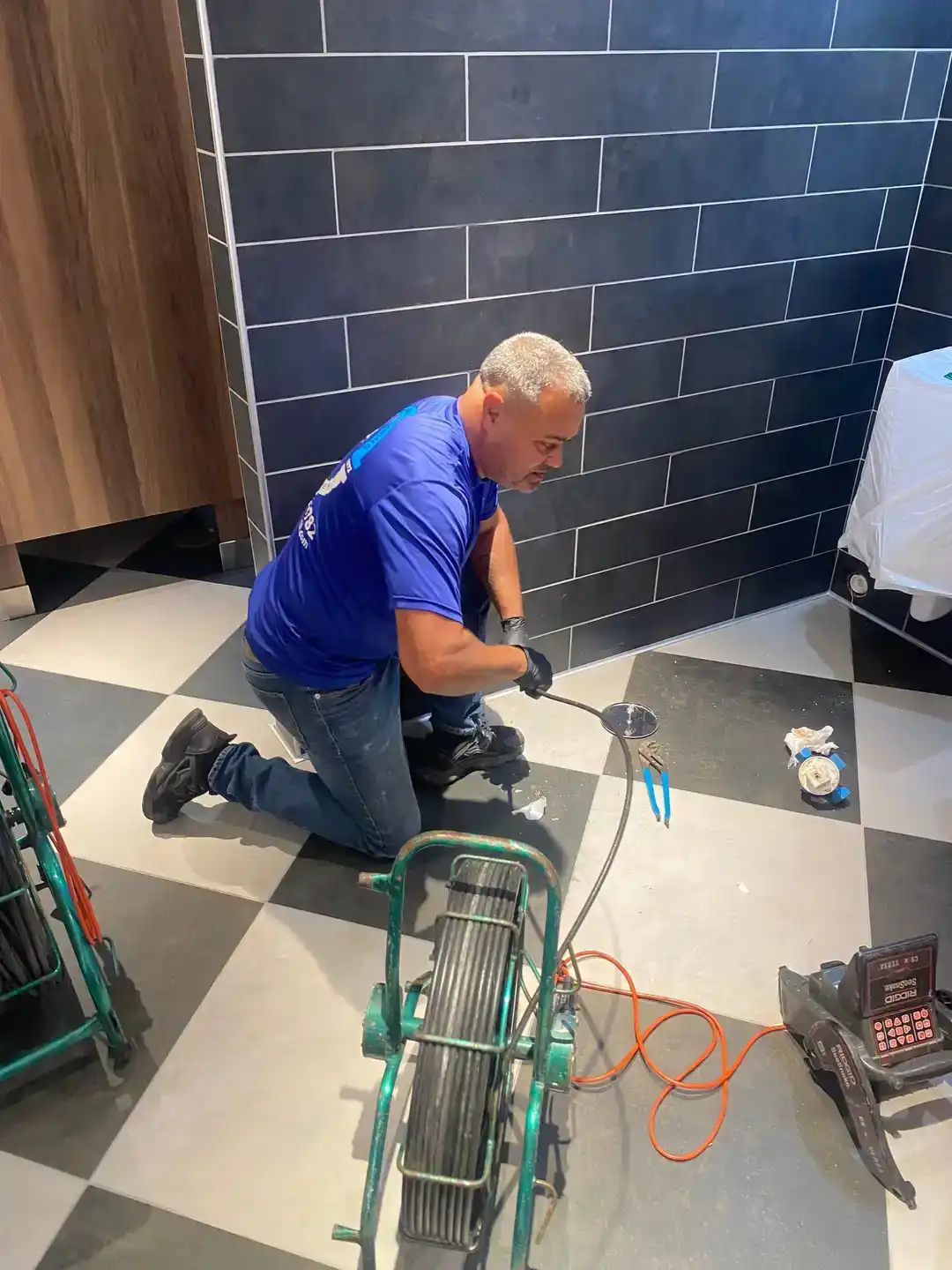 Cross-fixture clues matter because the blockage or line defect may sit farther down the system than the room where you first smell it.
What to check safely before you keep testing it
Once the odor shows up after rain, the goal is not to prove you can outsmart it by running more water through the house. The goal is to narrow the risk without turning a warning sign into a cleanup job.
Start with the low-risk checks:
- Check the obvious low-use drains first. If the smell is strongest at one floor drain or seldom-used utility drain, run water long enough to restore the trap seal and see whether the odor fades.
- Pay attention to the rest of the house. Flush once, run one faucet, or test one shower only if you are not already seeing backup signs. If gurgling, bubbling, or cross-fixture reactions appear, stop escalating the test.
- Keep sanitary cleanouts sealed during storm conditions. Miami-Dade WASD specifically says to keep sanitary cleanouts sealed when the sewer system is inundated.
- Do not lean on chemical drain cleaners. Hernandez's DIY drain snake article and residential drain-cleaning guidance both push homeowners away from chemical cleaners because they can damage pipes and complicate cleanup.
- Minimize water use if the problem looks larger than one drain. Miami-Dade WASD recommends residents reduce water usage after storms, and Hernandez tells sewer-backup customers to stop using all water when a backup pattern is underway.
Two safety lines matter more than the rest.
First, if sewage is actually involved, treat it like a contamination problem, not only a smell problem. The CDC cleanup guidance says to wear rubber boots, gloves, and goggles if sewage is involved.
Second, if sewage is overflowing outside the building or discharging into open ground or a storm drain, Miami-Dade says that should be reported to DERM. That will not fix your interior plumbing by itself, but it is the right local step when the problem crosses into an environmental discharge.
When professional drain cleaning, camera work, or emergency help makes sense
Some storm-related sewer odors stay in the "needs attention soon" lane. Others jump straight into the emergency lane.
Hernandez's service pages give a pretty practical dividing line:
- Drain cleaning makes sense when the odor is paired with slow drains, buildup, or a recurring clog pattern.
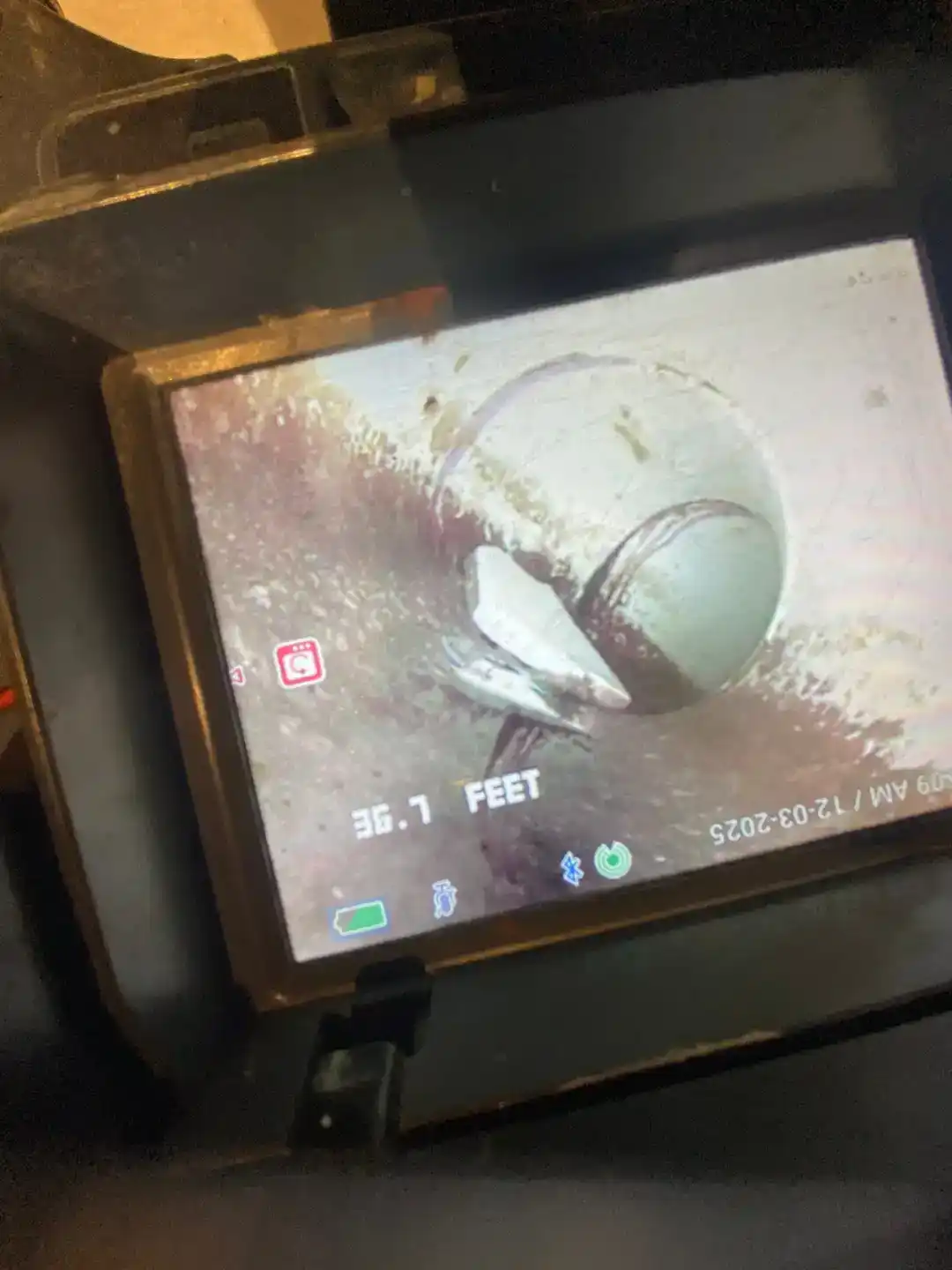
- Camera inspection makes sense when the smell keeps returning, when more than one fixture is involved, or when older cast-iron or deeper line issues are plausible.
- Emergency help makes sense when the odor is paired with wastewater, backups, flooding, or a whole-house reaction.
That sequence lines up with the live site. Hernandez says recurring clogs often point to deeper issues such as tree-root intrusion, pipe deterioration, or buildup that simple snaking cannot reach. The company also says its sewer-backup response often begins with clearing the immediate blockage, then using a sewer camera to confirm the root cause and decide whether more complete cleaning or repair is needed.
This is also where homeowners should know the limit of DIY. Hernandez's own drain-snake guide says a basic homeowner snake is not the right tool for main sewer lines, recurring clogs, or multiple drains backing up at once. If the house smells bad after rain and the symptom pattern is spreading, the faster move is usually diagnosis, not one more consumer tool.
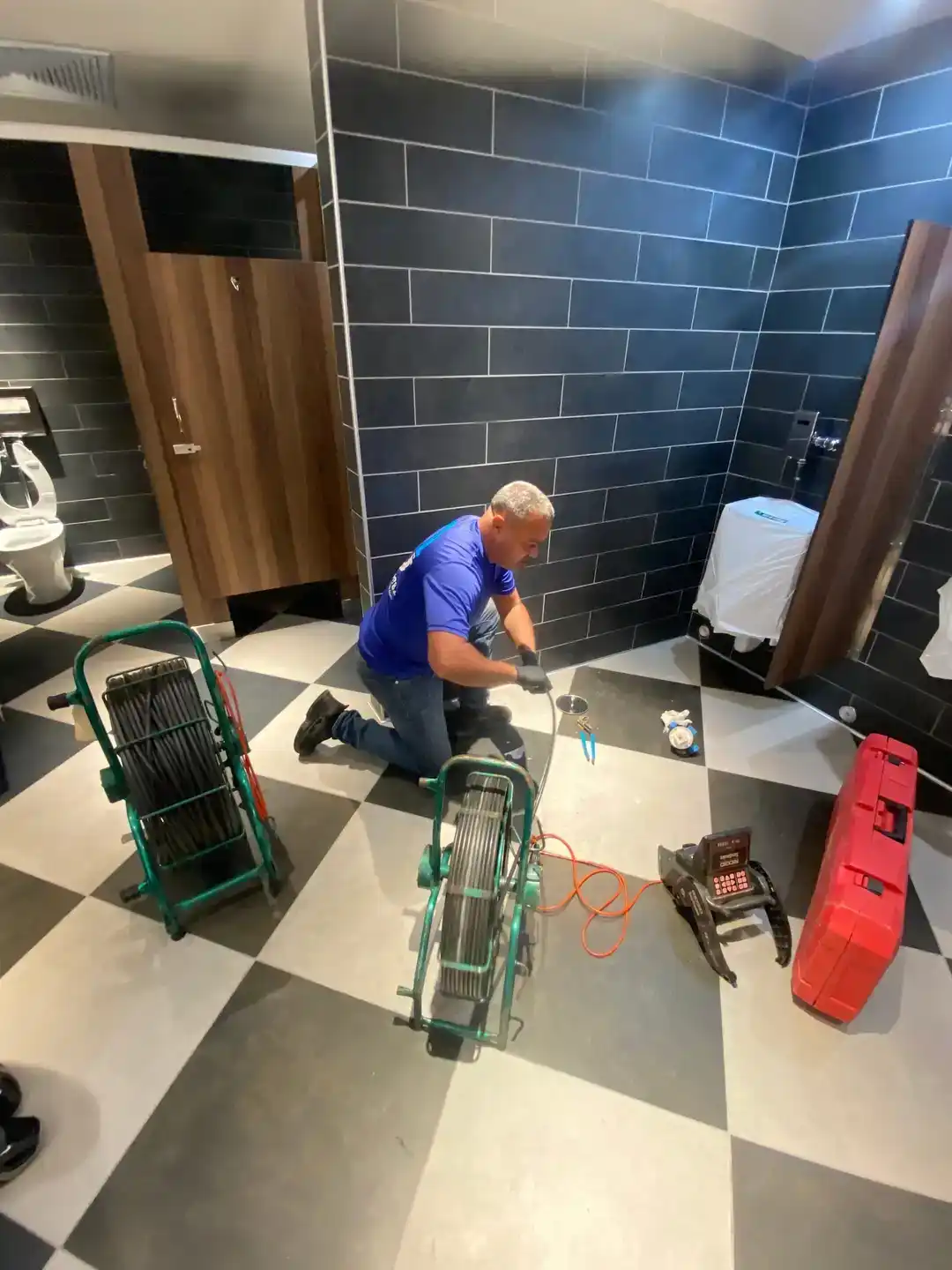 Once the odor is paired with backups, gurgling, or wastewater, the value is not another guess; it is finding the real cause.
When Hernandez Plumbing is worth calling
Hernandez Plumbing is worth calling when the storm-related smell stops behaving like a one-drain nuisance and starts behaving like a system warning.
Its residential drain-cleaning page says the team clears kitchen, bath, laundry, and main-line clogs with snaking, jetting, and camera verification when needed. Its emergency-plumbing coverage says the company responds around the clock and typically arrives within 30 to 60 minutes in the service area, while noting that severe weather can affect response times.
That gives you a reasonable handoff rule:
- Call soon if the smell keeps coming back after you restore an obvious trap seal.
- Call soon if the odor is paired with gurgling, slow drains, or a history of older cast-iron drain lines.
- Call urgently if water shows up at a floor drain, wastewater appears, or multiple fixtures start reacting together.
When you call, give the plumber details that actually shorten the diagnosis:
- Did the smell start only after heavy rain?
- Is it strongest at one low-use drain or more than one area?
- Are any fixtures slow, gurgling, or backing up?
- Is there visible water at a floor drain or cleanout area?
- Has this happened before, or only during storms?
That gives the visit a much better starting point than "the house smells bad." In many Miami homes, the smell after rain is not random. It is the system telling you whether you are dealing with a dried-out seal, a vent path problem, or a bigger sewer issue that finally chose a wet day to make itself known.
This article is for general education only. For sewage exposure, active backups, or repair decisions, confirm the next step with a licensed plumber and current Miami-Dade guidance.