Plunger Types: Which Works Best for Drains?
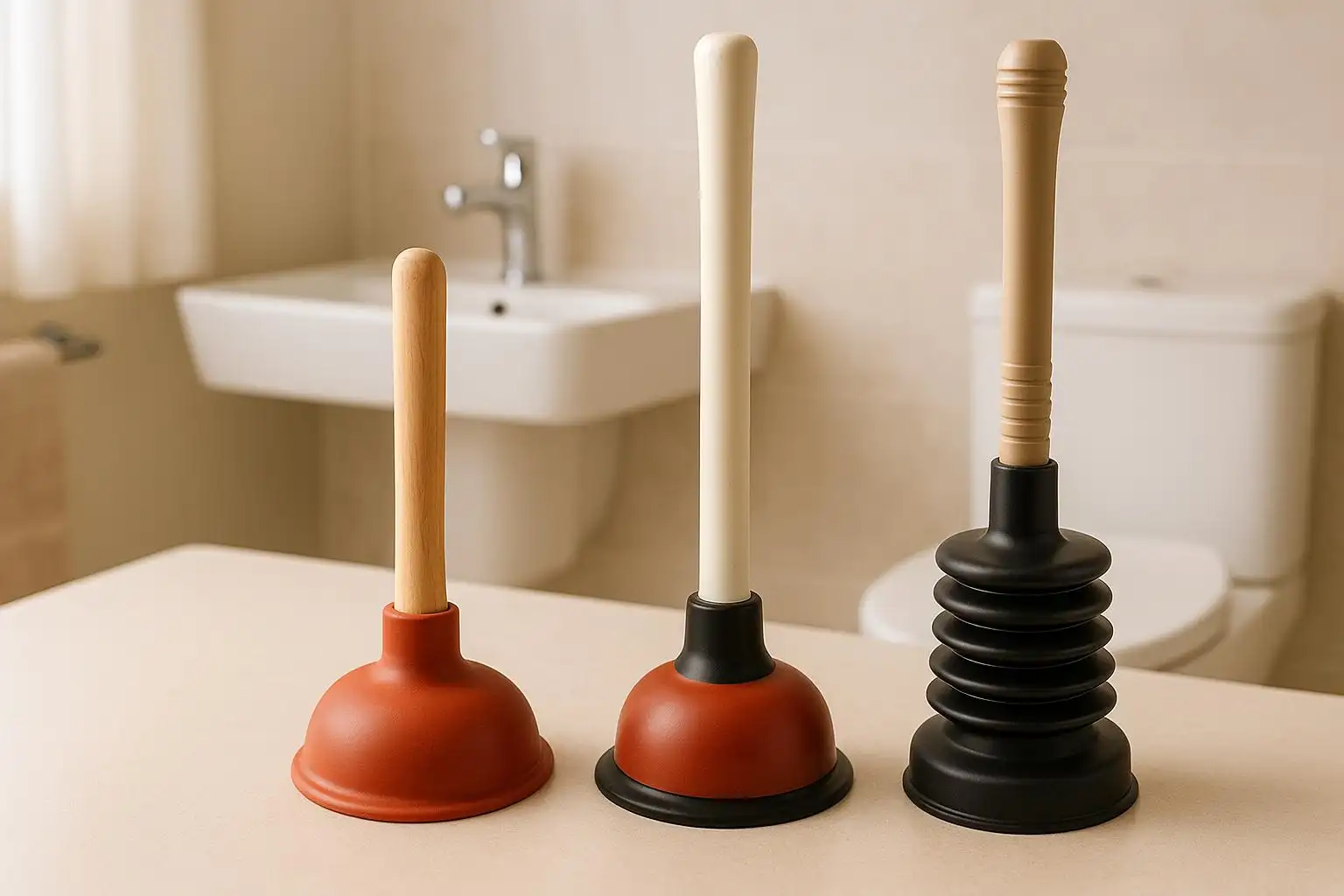
When it comes to clearing clogs, using the right plunger is key. Different plungers are designed for specific drain types, and choosing the wrong one can make the problem worse. Here’s a quick breakdown:
- Cup Plungers: Best for flat surfaces like sinks and bathtubs. Simple design but not effective for toilets.
- Flange Plungers: Ideal for toilets due to their extended rubber flap that seals curved drains. Can also work on sinks if needed.
- Accordion Plungers: Powerful option for stubborn toilet clogs. Requires more effort and care to use.
- Specialty Plungers: Designed for unique or severe clogs, often requiring professional expertise.
Key takeaway: Match the plunger to the drain type and clog severity. For toilets, go with a flange or accordion plunger. For sinks and tubs, a cup plunger works best. If plunging fails, it may be time to call for professional drain cleaning services.
Different Drain Plungers: Sink Plunger & Toilet Plunger Use
Cup Plungers: Basic Design
Cup plungers, often referred to as sink plungers, are the simplest type of plunger. Patented by John Hawley in 1876, this tool consists of a rubber cup attached to a handle, which is usually shorter than the handle of a toilet plunger.
The rubber cup works by creating an airtight seal over the drain. When you push down, it increases pressure in the pipe, and when you pull back, it creates suction. This push-and-pull action gradually breaks up clogs, helping to restore proper drainage.
Best Uses
Cup plungers are most effective on flat surfaces where the rubber cup can sit flush against the drain opening. They’re perfect for clearing clogs in kitchen sinks, bathroom sinks, bathtubs, and shower drains. The flat surface allows the cup to create a strong vacuum seal, which is essential for effective plunging. Licensed plumber Aaron Stickley explains:
"A sink plunger works well only on a flat surface, like a sink. The cup can lay flat over the drain, creating the vacuum to plunge and dislodge the sink clog properly".
When the cup forms a complete seal with the drain, it generates the suction needed to tackle common clogs caused by hair, soap residue, and food debris.
Limitations
While cup plungers shine on flat surfaces, their design makes them less effective on curved or uneven drains. For instance, the curved shape of a toilet bowl prevents the flat rubber cup from forming a proper seal. Aaron Stickley highlights this limitation:
"In a pinch, this plunger can potentially be used to clear clogs in other fixtures, such as a toilet, but it can be challenging to position the cup in a way that creates enough suction. It’s much better to have a plunger designed for toilets".
Additionally, cup plungers may struggle with severe clogs that require more force than their design can provide. They also depend on standing water to create an airtight seal; without enough water, their effectiveness decreases. Next, we’ll look at plungers designed specifically for curved surfaces.
Flange Plungers: Toilet Plungers
Flange plungers, often called toilet plungers, are designed with an extended rubber flap that creates a strong seal specifically for curved drains. This flap fits snugly into the toilet bowl, making it more effective at targeting clogs than standard cup plungers.
The extended flap not only ensures a tight seal but also boosts suction power. Its taller, narrower shape allows for easier insertion and directs pressure directly to the clog. Plus, this design prevents the plunger from flipping inside out during vigorous use. These features make flange plungers the go-to tool for resolving toilet clogs.
Primary Applications
Flange plungers are specially crafted for clearing toilet clogs, thanks to their ability to form a reliable seal in curved toilet bowls. While primarily intended for toilets, they can also be used on other curved drains that require a secure seal. However, their performance diminishes on flat surfaces, where cup plungers are more effective. Despite this limitation, flange plungers can still handle various drain types when needed.
Usage Notes
Flange plungers are versatile tools. By folding the extended flap into the cup, they can be temporarily adapted for use on sinks or tub drains. This flexibility makes them a handy option for households looking to rely on a single tool for multiple clogging issues. That said, they’re not as efficient on flat surfaces, so having both a flange plunger and a cup plunger on hand is a smart choice for tackling different types of clogs.
Accordion Plungers: High-Power Option
Accordion plungers, often called bellows plungers, are designed with a folded bellows structure that creates multiple chambers. When compressed and expanded, these chambers generate much more force compared to standard plungers. This design ensures a tighter seal and stronger suction, making it ideal for dealing with stubborn clogs.
The plunger’s hard plastic construction enhances its power but introduces some challenges. Unlike softer rubber plungers, the rigid material can make it harder to form an initial vacuum seal. However, this trade-off equips accordion plungers to handle heavy-duty clogs effectively.
Tough Clog Performance
Similar to flange plungers, accordion plungers are specially made for tackling toilet clogs, but they bring an added punch. Their accordion-style folds allow for greater plunging force, making them particularly effective against tough blockages that other plungers might struggle to clear. When you press down on the bellows, each fold compresses to build pressure, which is then released directly into the drain. This action creates a powerful vacuum seal, enabling the plunger to break through even the most stubborn clogs with fewer attempts. However, while they excel in toilets, they’re not suitable for flat surfaces like sinks .
Downsides
Despite their impressive power, accordion plungers have some drawbacks. They require firm, consistent pressure, which can be tiring and may increase the risk of scratching fixtures due to their hard plastic material . For those new to using this type of plunger, controlling its rigid structure can be tricky. Unlike rubber plungers, the hard plastic doesn’t provide much tactile feedback, making it harder to judge the right amount of force and movement needed .
Specialty Plungers: Specific Applications
Once you’ve explored high-power plungers, it’s worth considering tools designed for more challenging or unique clogs. These specialty plungers are built to handle situations where standard options fall short, such as unusual drain shapes, professional-grade tasks, or severe blockages.
Beehive and Tiered Plungers
Beehive plungers get their name from their distinctive shape: narrow at the top, wider in the middle, and tapering again at the bottom. They feature a flange designed to fit a wide range of toilet drains, making them versatile for various drain openings. Their contoured design allows them to seal effectively on both wide and narrow drains, addressing issues that standard plungers might struggle with .
Tiered plungers, on the other hand, use a multi-tiered structure with layers of different sizes stacked together. This design creates multiple sealing points, enabling the plunger to adapt to various drain sizes while generating strong suction through its layered vacuum effect. However, the ridges on these plungers can trap debris, making cleaning a bit more difficult.
Taze Plungers
Taze plungers are the go-to tool for heavy-duty plumbing issues. Often referred to as "plumber’s plungers", these tools consist of a straight steel rod paired with a disc that fits snugly inside the pipe. The steel construction ensures the rod remains rigid under the high pressure needed to clear major blockages.
These plungers are specifically designed to tackle sewer clogs that disrupt the entire plumbing system. Unlike localized clogs in individual fixtures like sinks or toilets, sewer blockages require a more robust solution, as they affect the entire network of pipes.
Taze plungers work by creating a high-pressure zone inside the pipe, either breaking up the clog or pushing it through. For this to work, the disc must form a tight seal against the pipe walls while the operator applies force to clear the obstruction.
Due to their complexity, taze plungers are typically used by professionals. If standard plungers or plumbing snakes can’t handle a stubborn clog, it might be time to call in experts, like the team at Hernandez Plumbing, who have the skills and tools to resolve these tough situations. When other methods fail, these specialized tools offer a powerful solution for even the most persistent blockages.
Plunger Type Comparison
Choosing the right plunger depends on the type of drain and the clog you’re dealing with. Each plunger design has its own advantages and limitations, making it better suited for specific situations.
Here’s a closer look at the main types of plungers and their pros and cons.
Cup plungers are the classic option and incredibly straightforward to use. Their simple design works best on flat surfaces like sinks and bathtubs, where they form a secure seal with minimal effort. However, they struggle with toilets because the curved shape of the bowl makes it hard to create a proper seal.
Flange plungers are more adaptable thanks to their fold-out flap. This feature allows them to work well on both toilets and flat drains. The flange molds to different drain shapes, making them a versatile choice. That said, they’re less effective on flat surfaces unless the flange is tucked inside the cup.
Accordion plungers are the go-to for dealing with stubborn toilet clogs. Their design generates strong vacuum pressure, making them highly effective for tough blockages. However, this power comes with a trade-off – they require more physical effort. Additionally, their rigid plastic material can make it tricky to form a seal initially.
Specialty plungers are tailored for unique situations where standard plungers fall short. For instance, taze plungers are designed for large pipes in commercial settings. While they excel in specific applications, they’re often more complicated to use and may require professional expertise.
Below is a quick comparison of these plunger types:
Comparison Chart
| Plunger Type | Best Applications | Ease of Use | Power | Main Drawbacks |
|---|---|---|---|---|
| Cup Plunger | Sinks, bathtubs, flat drains | Very easy | Good for minor clogs | Ineffective on toilets |
| Flange Plunger | Toilets; versatile for most drains | Easy | Good overall | Less effective on flat surfaces |
| Accordion Plunger | Tough toilet clogs | Difficult | Highest pressure | Requires effort; hard to seal |
| Specialty Plungers | Unique drain shapes; professional use | Varies | High for specific needs | Limited versatility; often needs expertise |
How to Choose the Right Plunger
Picking the right plunger depends on the type of drain, the severity of the clog, and how comfortable it is to use.
Start by identifying your drain type. Different drains require specific plungers due to their design and the typical blockages they encounter. For sinks, tubs, and showers – which have flat surfaces – a cup plunger works best because it creates a strong seal around the drain opening. Toilets, on the other hand, are better suited for a flange plunger, thanks to its soft rubber flap that forms a tight seal. Need something versatile? A flange plunger can also work on sinks and tubs if you fold the flange back into the cup.
Next, think about the severity of the clog and how comfortable the plunger feels to use. For small blockages caused by things like hair, grease, or food particles, a cup plunger usually does the trick. For tougher clogs, especially in toilets, an accordion plunger might be your best bet – it can generate more force, though it requires extra effort and care to avoid pipe damage. If you anticipate needing a lot of force, choose a plunger that’s easy to grip and handle. While accordion plungers can deliver more power, they can also be harder to use for extended periods. Balancing these factors ensures you clear the clog effectively without causing additional issues.
For hygiene, always use separate plungers for sinks and toilets.
Finally, know when it’s time to call in the pros. If plunging doesn’t solve the problem or you notice signs like strange odors, gurgling sounds, recurring clogs, discolored water, low water pressure in multiple fixtures, or water stains on floors or ceilings, it’s time to seek professional help. In Miami, Hernandez Plumbing offers 24/7 professional drain cleaning services to tackle even the toughest blockages.
Choosing the right plunger not only saves time and effort but also helps prevent further damage. If you do need to consult a professional, explaining what you’ve already tried can help them diagnose and resolve the issue more quickly.
Conclusion
Picking the right plunger makes all the difference when it comes to tackling clogs effectively. Cup plungers are ideal for flat surfaces like sinks and tubs. Flange plungers, on the other hand, are perfect for toilets and versatile enough for sinks too – just fold the flange back when needed. For those stubborn blockages, accordion plungers pack extra force, though they require a bit more effort to use.
Using the right tool for the job not only saves time but also helps avoid unnecessary strain or potential damage to your plumbing. Plungers work by creating pressure and suction, but they’re only effective when you achieve a proper seal around the drain opening.
If plunging doesn’t do the trick and the clog persists – or if you’re dealing with multiple clogged drains, odd gurgling sounds, standing water with unpleasant odors, or frequent blockages – it’s time to bring in a professional. Pay attention to your drain’s performance and any unusual noises before calling for help. For tough clogs that home remedies can’t fix, reach out to Hernandez Plumbing for 24/7 drain cleaning services. They’re ready to handle even the most stubborn blockages.
FAQs
When should I use a plunger, and when is it time to call a plumber for a clog?
A plunger works well for dealing with minor clogs in toilets or sinks. However, if the clog persists after a few attempts, the water level starts rising, or the blockage feels deeper and more difficult to clear, it’s time to contact a professional plumber. They have the right tools and knowledge to tackle stubborn clogs safely, without causing harm to your plumbing system.
What happens if you use the wrong type of plunger on a drain?
Using the wrong plunger can cause more harm than good. It might damage your pipes, make the clog worse, or fail to seal properly, leaving you with an ineffective tool. In some cases, what starts as a minor issue could turn into a major plumbing headache that demands professional help.
The key to avoiding these problems? Choose the right plunger for the task. A cup plunger is ideal for flat surfaces like sinks, while a flange plunger is specifically made for toilets. If you’re not sure which one to use or facing a stubborn clog, it’s a smart move to call a professional plumber for guidance.
Can you use a flange plunger on a kitchen sink, or is it only meant for toilets?
A flange plunger is mainly crafted for toilets, thanks to its extended rubber flange that forms a snug seal with the curved shape of toilet drains. That said, you can also use it on a kitchen sink by folding the flange into the cup. To get the best outcome, make sure the plunger creates a solid seal over the sink drain before you start plunging. While it’s adaptable, a standard cup plunger often works better on flat surfaces like sinks.
Need Professional Help?
Our licensed plumbers are ready to help with your drain cleaning needs.