PEX vs. Copper: Which Is More Energy-Efficient?
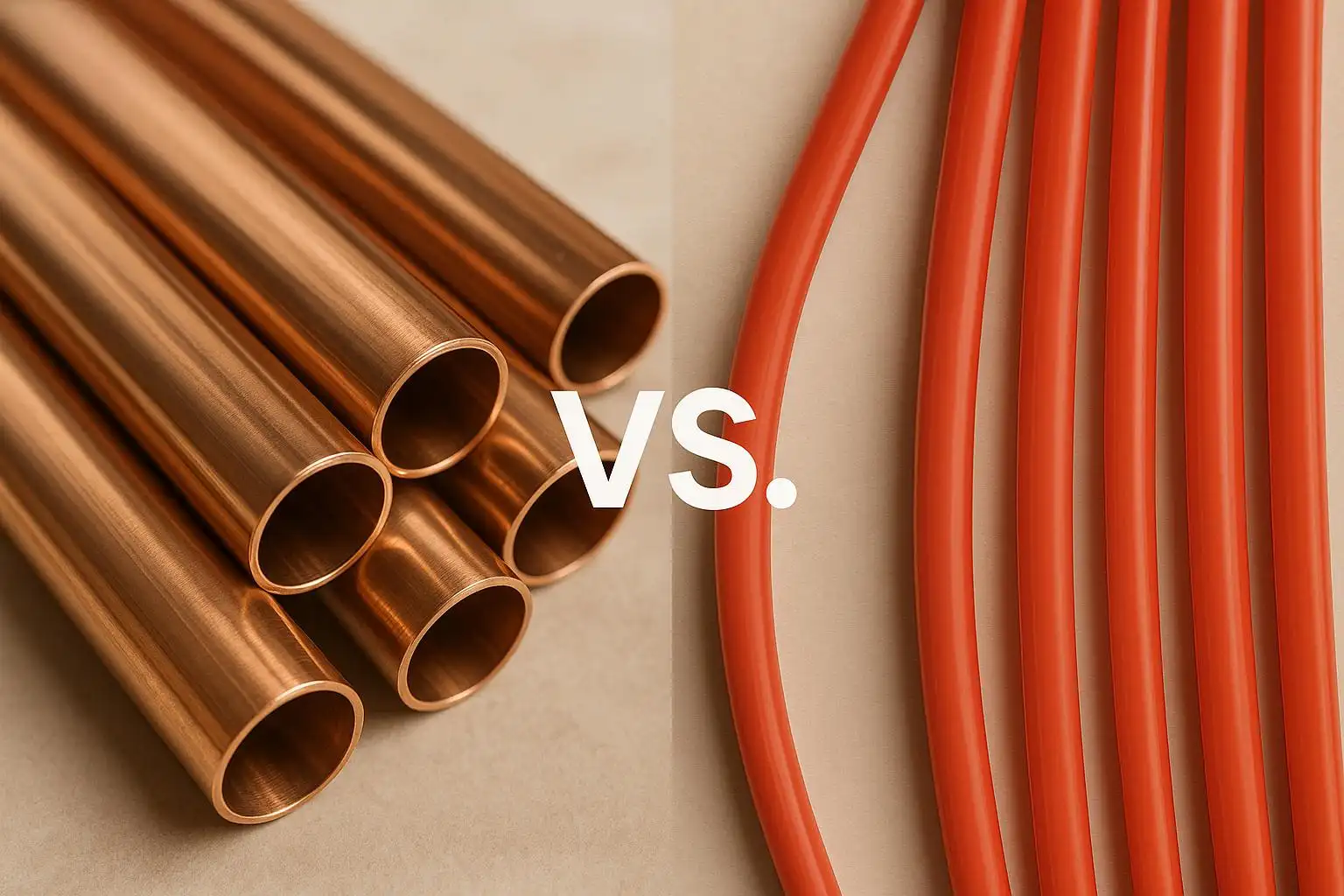
When it comes to plumbing, PEX (cross-linked polyethylene) and copper are two of the most common options. But if your priority is energy efficiency, PEX is the better choice. Here’s why:
- PEX retains heat better due to its low thermal conductivity, reducing energy loss in hot water lines by up to 15% compared to copper.
- Copper’s high thermal conductivity causes it to lose heat quickly, requiring 15% more energy to maintain water temperature.
- PEX is also cheaper to install, costing 4–6 times less than copper for materials and requiring less labor.
Key takeaway: PEX saves energy, lowers utility bills, and costs less upfront, making it ideal for indoor plumbing in warm, humid climates like Miami. Copper, however, may be better for outdoor or high-temperature applications due to its UV and fire resistance. Our repiping services can help you upgrade to modern materials that best suit your home's needs.
Quick Comparison
| Feature | PEX | Copper |
|---|---|---|
| Heat Retention | Excellent (low loss) | Poor (high loss) |
| Energy Usage | Lower (saves energy) | Higher (more energy) |
| Cost (per foot) | $0.50–$2.00 | $2.00–$10.00 |
| Installation | Easier, fewer joints | Labor-intensive |
| Durability | 30–50 years | 50–70+ years |
| Corrosion Resistance | High | Moderate to Low |
| UV Resistance | Poor | Excellent |
| Fire Resistance | Poor | Excellent |
For most indoor applications, PEX offers better energy savings and lower costs, while copper’s durability and outdoor suitability make it a good alternative for specific needs. Always consult a local professional for advice tailored to your project.
PEX vs Copper Pipes | Ask This Old House
Energy Efficiency: Heat Retention and Thermal Performance
The thermal properties of plumbing materials play a key role in water heater energy consumption. PEX and copper pipes differ notably in their ability to retain heat, which can directly influence your energy bills. Let’s explore how PEX’s insulating qualities stack up against copper’s heat-conducting nature.
PEX: Built-In Insulation Minimizes Heat Loss
PEX pipes naturally help retain heat. Thanks to their cross-linked polyethylene structure, they have low thermal conductivity, meaning they keep the heat in the water rather than allowing it to escape into the surrounding air. In fact, PEX can reduce heat loss by up to 15% compared to copper pipes. Additionally, the smooth inner surface of PEX reduces friction, which lowers the energy needed for pumping water – a significant benefit for larger homes or commercial properties.
Copper: Efficient Conductor, But Energy Drainer
While copper’s high thermal conductivity is great for some applications, it’s a disadvantage for plumbing. Copper transfers heat from the water to its surroundings, leading to energy loss as hot water flows through the system. Studies show that copper pipes require 15% more energy than PEX due to this heat transfer. This issue is particularly noticeable in unconditioned spaces or even in air-conditioned environments, like those in Miami, where copper can increase the workload on water heaters, driving up utility costs.
Comparing Heat Retention: PEX vs. Copper
| Property | PEX Pipe | Copper Pipe |
|---|---|---|
| Thermal Conductivity | Low – acts as a natural insulator | High – easily transfers heat |
| Heat Retention | Excellent – maintains water temperature | Poor – loses heat quickly |
| Energy Loss | Up to 15% less than copper | At least 15% more than PEX |
| Pumping Energy | Lower due to smoother interior | Higher due to rougher interior |
| Impact on Utility Bills | Lower water heating costs | Higher energy expenses |
The energy-saving potential of PEX is further highlighted by research published in the Journal of Cleaner Production. The study found that PEX systems use 44% less energy and have a 64% lower global warming potential than copper systems. These statistics underline not just operational savings, but also the broader environmental benefits of choosing PEX.
Understanding these energy differences lays the groundwork for examining how these materials affect overall costs in the next section.
Cost Analysis: Materials, Installation, and Long-Term Savings
When deciding between PEX and copper pipes, it’s crucial to factor in more than just the price of materials. Installation costs and long-term energy savings also play a big role in determining which option is best.
Material Costs: PEX vs. Copper
PEX pipes are significantly more affordable than copper. In the U.S., PEX typically costs between $0.50 and $2.00 per linear foot, while copper runs $2.00 to $10.00 per linear foot. This means PEX can be 4–6 times cheaper, cutting material costs by 40–60% for a standard home. These savings are largely due to the lower cost of raw materials and the efficient manufacturing process of PEX.
Installation Costs and Labor Requirements
Installing PEX is quicker and requires less labor compared to copper. Thanks to its flexibility, PEX can bend around corners without needing as many fittings or joints, which not only speeds up the process but also reduces the risk of leaks. Copper, on the other hand, demands precise measuring, cutting, and soldering. Its rigid nature means more elbows, tees, and couplings are needed to navigate obstacles, driving up both time and labor costs.
Overall, PEX installations can cost 25–50% less than copper when factoring in both materials and labor. For homeowners in Miami, FL, companies like Hernandez Plumbing provide professional installation services for both PEX and copper systems, offering upfront pricing so clients know the total costs from the outset.
Long-Term Savings Through Energy Efficiency
PEX offers better heat retention than copper, which can lead to noticeable energy savings. Copper pipes lose heat faster, potentially wasting 32% more water as homeowners wait for hot water to reach their faucets. For a typical 1,500-square-foot home, repiping with PEX might cost around $4,000–$6,000, while copper could range from $8,000–$12,000. Beyond the initial expense, PEX also tends to have fewer maintenance issues.
While copper generally lasts longer (50–70 years compared to PEX’s 30–50 years), PEX’s resistance to corrosion, scale buildup, and freezing can help reduce repair and maintenance costs over time. These factors, combined with its lower upfront expenses and energy efficiency, often make PEX the more economical choice for modern plumbing projects.
The combination of affordability, easier installation, and energy savings has made PEX a popular option for homeowners and contractors alike.
Durability and Climate Suitability
Choosing the right plumbing material for your home means understanding how it holds up under different environmental conditions. In Miami, with its warm, humid climate and varying water chemistry, durability becomes a critical factor when deciding between PEX and copper pipes.
Corrosion and Freeze Resistance
Durability plays a huge role in determining which material fits your needs. PEX pipes are highly resistant to corrosion and mineral buildup, making them a solid choice for areas with aggressive or acidic water. On the other hand, copper pipes are more vulnerable to corrosion, pitting, and pinhole leaks when exposed to low pH levels or over-chlorinated water. These issues can lead to expensive repairs and shorten the pipe’s lifespan.
When it comes to freezing conditions, PEX stands out. It can expand up to eight times its size without bursting, a feature that provides peace of mind even though Miami rarely experiences freezing temperatures.
Local plumbing professionals, like Hernandez Plumbing, report that PEX installations in Miami homes tend to have fewer corrosion-related problems and lower maintenance costs. Their on-the-ground experience highlights PEX as a reliable option for homeowners in the area.
UV and Fire Resistance Factors
Environmental factors like UV exposure and fire resistance also set these materials apart. Copper, for example, is fully resistant to UV rays and fire, making it a great choice for outdoor plumbing in sunny Miami. In contrast, PEX degrades when exposed to UV light, so it must be installed indoors or underground.
In fire scenarios, copper maintains its integrity, while PEX can melt and release toxic fumes. This makes copper the go-to material for outdoor applications or areas where fire resistance is critical, even though its higher cost and vulnerability to corrosive water can limit its practicality for indoor use.
Durability Comparison Table
| Property | PEX | Copper |
|---|---|---|
| Corrosion Resistance | Excellent | Moderate to Poor (depends on water chemistry) |
| Freeze Resistance | High (expands, less likely to burst) | Low (prone to bursting) |
| UV Resistance | Poor (must be shielded) | Excellent |
| Fire Resistance | Poor (can melt and may emit fumes) | Excellent (fireproof) |
| Lifespan | Approximately 50 years | 50–70+ years (if not corroded) |
| Maintenance | Low | Moderate to High in aggressive water |
| Suitability for Miami | Indoor/underground installations | Indoor and outdoor, especially when exposed |
This table highlights the key differences in durability that directly influence performance in Miami’s environment. PEX’s resistance to corrosion and scaling means less maintenance over time, making it a dependable choice for most indoor applications. Copper, while offering a longer potential lifespan of 50–70+ years, is more susceptible to Miami’s water conditions. Ultimately, PEX consistently delivers reliable performance under the city’s unique environmental challenges.
Manufacturing Impact and Recyclability
Choosing the right plumbing material involves more than just considering energy efficiency during use. The environmental impact of materials like PEX and copper also hinges on how they’re made and what happens to them when they’re no longer usable.
Manufacturing and Energy Usage
When it comes to production, PEX stands out for requiring much less energy to manufacture compared to copper pipes. Producing copper involves energy-heavy processes like mining, smelting, and refining, which significantly increase its carbon footprint. On the other hand, while PEX relies on petroleum-based raw materials, its production process is far less energy-intensive, giving it an edge in terms of initial environmental impact.
Recyclability and End-of-Life Options
Copper has a major advantage in its ability to be recycled endlessly without losing quality. This makes copper a key player in a circular economy, where old pipes retain value. For example, the scrap copper market was valued at around $1 billion in 2013. In contrast, PEX falls short in this area. Most municipal recycling programs don’t accept it, and once PEX reaches the end of its 30- to 50-year lifespan, it usually ends up in landfills – a significant environmental drawback.
Looking at the full lifecycle of these materials highlights a trade-off. PEX excels in its lower energy demands during production, while copper shines with its recyclability and long-term sustainability. For Miami homeowners partnering with Hernandez Plumbing, the choice often boils down to what matters most to them. If reducing initial energy use is the priority, PEX might be the better option. But if long-term environmental impact and the ability to recycle are more important, copper’s strengths may tip the scale. These factors, along with earlier comparisons, can help guide your decision.
Which Material Should You Choose?
When deciding between materials, it all comes down to your priorities: energy efficiency, cost, and durability. If energy efficiency is your main concern, PEX is a strong contender. It retains heat effectively, reducing energy loss in hot water lines, which can lead to noticeable savings on your utility bills over time.
On top of that, PEX is budget-friendly. Both the material itself and the installation process are far less expensive compared to copper systems.
That said, copper has its own advantages, especially when durability and versatility are key. With an impressive lifespan of 50–70 years, copper is resistant to UV rays and fire damage, making it a solid choice for outdoor applications or high-temperature systems where PEX falls short. Plus, copper’s recyclability adds an eco-friendly edge at the end of its lifecycle.
For properties in Miami, PEX shines for indoor use in both residential and commercial settings. The warm, humid climate eliminates freeze concerns, and PEX’s resistance to corrosion makes it well-suited for dealing with slightly acidic water. However, if your plumbing will be exposed to sunlight or used outdoors, copper is the better option due to PEX’s sensitivity to UV light.
The best way to make the right choice is to consult with experienced local professionals. With over 50 years of service in Miami, Hernandez Plumbing has the expertise to evaluate your specific needs, including water quality, local code requirements, and the demands of your installation environment. Their licensed technicians can help you weigh the benefits of PEX’s energy efficiency and cost savings against copper’s durability and suitability for outdoor use. By aligning your decision with professional insights and local conditions, you can confidently choose the material that fits your project best.
FAQs
How does PEX compare to copper in terms of environmental impact, including production and recyclability?
When it comes to environmental impact, PEX and copper plumbing materials have distinct differences. Copper, a natural metal, stands out for its recyclability. It can be reused indefinitely without losing its quality, making it a sustainable option in that regard. However, the downside is that copper mining and refining are energy-intensive processes, often leaving a noticeable environmental footprint.
PEX, a plastic derived from polyethylene, offers a different story. Its production uses less energy compared to copper, which might seem like a greener choice at first glance. But here’s the catch – PEX is harder to recycle. While some facilities can handle it, the majority of PEX waste ends up in landfills, which raises concerns about its long-term environmental impact.
Choosing between PEX and copper isn’t just about their eco-friendliness. You also need to weigh factors like durability, cost, and how well each material suits your specific plumbing needs. If you’re unsure, consulting professionals like Hernandez Plumbing can help you navigate these options and find the best fit for your home or business.
How does Miami’s climate influence the choice between PEX and copper pipes for plumbing?
Miami’s warm, humid environment plays a big role in deciding between PEX and copper pipes. PEX, with its flexibility and resistance to corrosion, stands up well to high humidity and is less prone to leaks caused by environmental conditions. On the other hand, while copper is known for its durability, it can corrode over time when exposed to the salty air common in Miami, especially in coastal regions. Another advantage of PEX is its slight ability to expand, which helps it manage temperature changes during Miami’s occasional cold spells.
For expert advice on choosing the best plumbing material for your home, reach out to a trusted local plumber familiar with Miami’s specific climate challenges.
Are there any safety risks associated with using PEX or copper pipes in home plumbing systems?
When it comes to residential plumbing, both PEX and copper pipes are solid choices as long as they’re installed properly. Each has its pros and cons that are worth considering.
PEX pipes, made from flexible plastic, resist corrosion and scaling, making them a popular option. However, they aren’t immune to issues – they can break down if exposed to UV light for extended periods or subjected to extremely high temperatures.
Copper pipes, known for their durability and natural antimicrobial properties, are another reliable option. But they’re not without drawbacks. If your water supply is highly acidic, copper pipes could corrode over time, potentially leading to leaks or even contamination.
Ultimately, selecting the right material depends on your home’s specific requirements. To ensure your plumbing system is safe and long-lasting, it’s best to consult a professional. If you’re in Miami, FL, Hernandez Plumbing can provide expert advice and installation services to help you make the right choice for your home.
Need Professional Help?
Our licensed plumbers are ready to help with your repiping services needs.