Miami Condo Unit Shut Off Checklist: What to Label Before a Leak Starts

If a leak starts in a single-family house, the first question is usually simple: where is the shutoff? In a condo, that question gets harder fast. There may be fixture valves under the sink, a separate valve for the toilet or water heater, a unit shutoff in a closet or utility space, and building-controlled equipment you should not touch unless you know exactly what it does. Add a ceiling stain, water from the unit above, or a backup affecting multiple units, and the difference between "my plumbing problem" and "the building's plumbing problem" gets blurry in a hurry.
That is why a Miami condo shut off checklist matters before anything goes wrong. Hernandez Plumbing's guide to common plumbing problems in Miami condos and high-rise buildings makes the big picture clear: condos run on shared infrastructure, vertical stacks, and responsibility lines that do not behave like a detached house. The company’s main water shut-off guide adds the practical layer: condo shutoffs are often under sinks, next to water heaters, or in closets, and finding them during an active leak is much harder than finding them on a calm Tuesday afternoon.
This article is built for that calm Tuesday afternoon. The goal is not to tell you who will ultimately pay for every repair. The goal is to help you label the valves you can safely identify, keep the right building and plumbing contacts close by, and recognize the moment a leak, backup, or pressure problem is probably bigger than your own unit. That kind of preparation can save time, reduce damage, and keep a middle-of-the-night emergency from turning into a guessing game.
Condo plumbing problems move faster than homeowners expect because the emergency is not only about water. It is also about access, shared systems, and making the right call before the wrong valve gets touched.
Why condo shutoffs are harder than house shutoffs
The hardest part about condo shutoffs is that the plumbing system is split between what you can usually control and what the building controls.
Hernandez Plumbing's condo guide explains that high-rise and condo plumbing depends on shared risers, drain stacks, and vent stacks that serve multiple units. That means a problem in one shared section can affect several homes vertically, not just the person who noticed the symptom first. The same guide also says fixtures, pipes within your unit's walls, an individual water heater, garbage disposal, and shutoff valves at fixtures are typically owner responsibility. The word "typically" matters. Condo buildings vary, and that is exactly why broad assumptions cause so much confusion.
Florida law points in the same direction. Section 718.113 of the Florida Statutes says maintenance of common elements is the association's responsibility, except for limited common elements assigned to the unit owner by the declaration. The same statute also says the association is responsible for maintenance, repair, and replacement of property for which it bears responsibility under the declaration. In other words, the declaration still matters. The state gives you the framework, but the building documents tell you how that framework applies in your property.
That is why the first purpose of a condo shutoff checklist is not blame. It is speed with boundaries.
When something goes wrong in a condo, three things usually matter at once:
- what water source you can safely stop inside the unit
- what building contact needs to know right away
- whether the symptom suggests a shared stack, riser, or common-area problem instead of a single fixture problem
Hernandez Plumbing's condo article gives several examples of symptoms that may already be beyond a single unit: gurgling drains when neighbors flush or shower, water rising in your toilet when you have not used it, sewage odors from floor drains, and multiple drains slowing at the same time. Those are not good moments to start experimenting with random valves in a mechanical room.
There is a second reason condo shutoffs are trickier in Miami: access rules. Hernandez Plumbing's residential emergency plumbing page for Miami specifically says Brickell towers often need after-hours access and building approval, and that crews work with building staff so the unit gets fixed without shutting down the rest of the stack. That is a practical reminder that the right emergency response is not always "turn everything off yourself." Sometimes it is "shut what you know, stop using water, and get the building and plumber aligned fast."
If you remember only one idea from this section, let it be this: a condo checklist is not about becoming your own building engineer. It is about knowing the shutoffs and contact points that belong to your side of the problem and recognizing when the rest needs escalation.
The fixture valves every condo owner should label now
The easiest valves to label are usually the ones closest to the fixtures you use every day.
Hernandez Plumbing's condo guide says shutoff valves at fixtures are typically on the owner side of the equation, and its shutoff guide says condo valves are often found under sinks, next to water heaters, or in closets. That gives you a practical starting point for a pre-leak walkthrough.
Work room by room and label what you can clearly identify:
- Kitchen sink hot and cold valves
These are often the fastest way to isolate a faucet or supply-line leak without shutting down the whole unit. - Bathroom sink hot and cold valves
If a vanity cabinet is packed tight, label the valves now while you can still see them calmly. - Toilet stop valve
If a toilet keeps running, leaks at the supply connection, or overflows because the fill valve fails, this is often the most useful first shutoff. - Dishwasher or refrigerator supply valve
These smaller lines are easy to forget until they are the source of the leak. - Washing machine hot and cold valves
If your condo has in-unit laundry, these should already be on your emergency radar. - Individual water heater shutoff or related water supply valve
Especially important if your unit has its own closet-mounted heater rather than a centralized building system.
The label does not need to be fancy. What matters is that another person could understand it in bad conditions and low light. "Kitchen sink hot" beats "left valve maybe." "Guest bath toilet" beats a faded unlabeled handle in the back of a cabinet.
This is where many condo owners overcomplicate the project. You do not need a wall-sized plumbing map on day one. A useful version is much smaller:
| Valve or shutoff | Usual condo location | What to write on the label | Why it matters |
|---|---|---|---|
| Kitchen sink hot/cold | Under kitchen sink | Kitchen sink hot / Kitchen sink cold | Isolates one fixture quickly |
| Toilet stop | Behind or beside toilet | Primary bath toilet | Stops overflow or supply leak |
| Dishwasher or fridge line | Under sink or behind appliance | Dishwasher / Fridge ice maker | Easy to forget until it leaks |
| Washer valves | Laundry closet | Washer hot / Washer cold | High-value shutoff during hose failure |
| Water heater supply | Utility closet or heater niche | Unit water heater | Useful during heater leak or replacement |
| Unit main shutoff | Closet, mechanical area, or near entry point | Unit main water | Stops most water to the unit if needed |
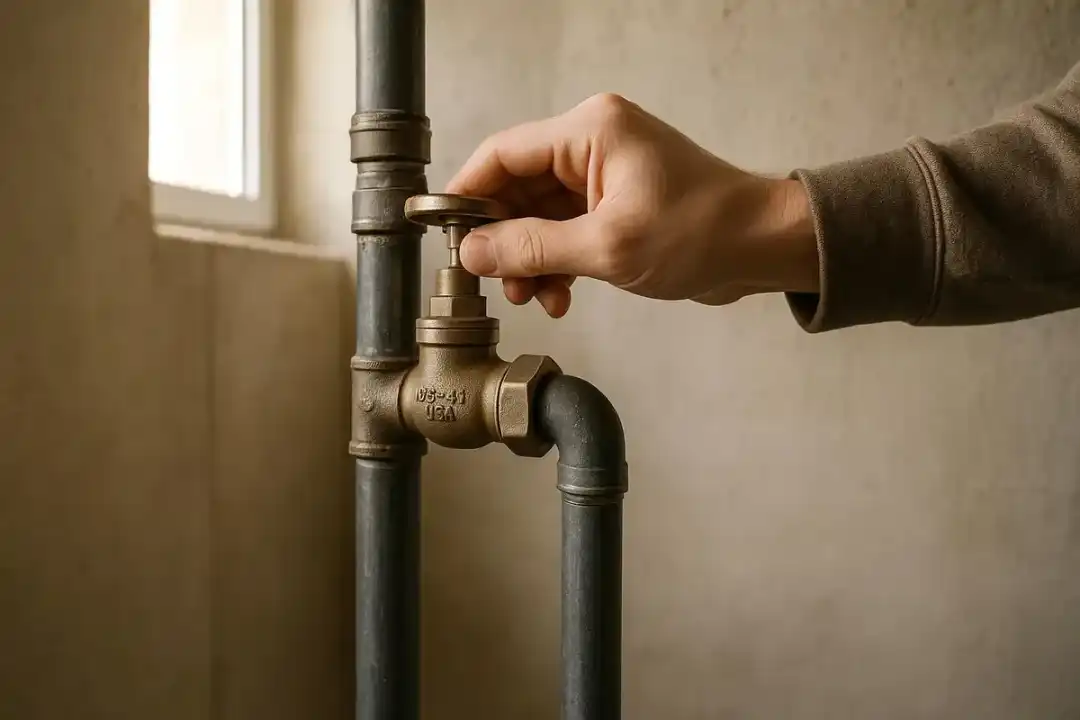 The checklist becomes useful when labels are plain enough that you or another adult can act on them immediately. If you need to "figure it out again" during the emergency, the preparation step was not finished yet.
If your building has older valves, do not treat the label pass as an invitation to force-test every handle aggressively. The purpose here is identification first. If a valve looks badly corroded, frozen in place, or already leaking around the stem, note that in the checklist and bring it up during routine service instead of waiting until the emergency exposes it.
It also helps to add one more note beside each label: easy turn / stiff / unknown. That small detail tells future-you which shutoffs feel reliable and which ones deserve professional attention before you need them.
For condo owners who travel, rent seasonally, or split time between homes, this section is even more important. The person who may need the checklist first is not always you. It may be a spouse, adult child, property manager, or trusted neighbor. A label that makes sense only in your head does not count as preparation.
Where the unit shutoff is usually hiding, and how to verify it carefully
Most condo owners know they probably have a unit shutoff. Far fewer know exactly where it is.
Hernandez Plumbing's shutoff guide says that in condos or apartments, individual shutoff valves are often under sinks, next to water heaters, or in closets. The same guide also says the main valve is usually closest to where the water supply enters the home. In a condo, that often means the answer is not obvious from the front door. The water entry point may be in a utility closet, a panel, or a tucked-away space that gets ignored for years.
The smart way to verify the unit shutoff is during normal conditions, not while a ceiling stain is spreading.
Use a careful process:
- Pick a quiet time when no one is showering, using the dishwasher, or running laundry.
- Turn on one faucet in the unit.
- Close the valve you believe is the unit shutoff.
- Check whether water flow stops at the faucet.
- Reopen the valve and confirm normal flow returns.
That is the basic logic Hernandez Plumbing recommends, and it is useful because it turns a guess into a known control point. Just keep the scope narrow. You are verifying your unit valve, not experimenting with building equipment.
Some boundaries matter here:
- do not test unmarked valves in shared mechanical spaces if you are not sure what they control
- do not operate municipal or street-side valves that may require special tools or professional help
- do not force a stiff or corroded handle just because you want a neat checklist
- do not assume a lever near the water heater is the only important shutoff if multiple supply lines are present
Florida law gives another reason to stay disciplined. Section 718.113 says a unit owner may not do anything within the unit or on the common elements that would adversely affect the safety or soundness of common elements or property maintained by the association. That does not mean you should avoid normal fixture valves in your own unit. It does mean you should be cautious around anything that may serve more than your home or may be part of a shared building system.
If you cannot identify the unit shutoff confidently, your next move should be administrative, not heroic. Ask building management where the unit shutoff is documented, whether the building has a standard location pattern, and whether any valves are association-only. If you do not have the current documents, Florida DBPR's condominium FAQs say the official records of the association include the declaration, recorded bylaws, and amendments, and that owners have the right to inspect and make or obtain copies. That matters because many condo plumbing disputes start with owners working from outdated assumptions instead of current records.
If the answer is still unclear, that is a good time to involve a plumber before the emergency. A service visit that maps the unit shutoff, confirms the fixture valves, and identifies obviously weak valves is much easier than a midnight visit where the first 20 minutes are spent just figuring out how to stop the water.
What belongs on your condo emergency card
Once the valves are labeled, the next useful tool is a one-page condo emergency card.
This is not a legal document. It is a fast-reference sheet you can save on your phone, print for the utility closet, or hand to a family member who may be alone in the unit when something fails.
At minimum, include:
- your unit number and building name
- the building management or front-desk emergency number
- any after-hours engineering or maintenance number
- your preferred licensed plumber
- the location of the unit main shutoff
- the location of the water heater and laundry valves, if you have them
- notes on whether the building requires vendor approval, elevator reservation, or after-hours access coordination
- where photos of labeled valves are stored on your phone
The value of this card is not only speed. It is accuracy under stress.
Hernandez Plumbing's condo guide tells owners to document backups and leaks right away. Its condo leak-from-above advice says to take timestamped photos or video, notify building management, protect belongings, and avoid entering the unit above. Its emergency page adds another useful point: if it is safe to do so, shut off the water and avoid electrical items near standing water while waiting for help. If you want the broader homeowner sequence, Hernandez's how to shut off water during a plumbing emergency guide is a useful companion. A good emergency card turns those scattered reminders into one repeatable sequence.
A simple version can look like this:
| Section | What to save |
|---|---|
| Building contacts | Front desk, management office, after-hours engineer |
| Unit shutoffs | Unit main, kitchen sink, primary bath toilet, washer, water heater |
| Access notes | Gate code, loading dock, elevator policy, guest parking instructions |
| Documentation prep | Where to save photos, ceiling stains, valve photos, water path notes |
| Service notes | Preferred plumber, insurance contact, restoration company if you already have one |
If you live in a building where leaks from neighboring units are common, add a short reporting template to the bottom:
- when the leak started
- where you first saw it
- whether it worsens when neighbors use water
- whether water is warm, cold, clean, or sewage-like
- whether any fixtures in your own unit are also acting strangely
That kind of note helps a plumber and building staff distinguish between a unit supply leak, a ceiling issue tied to the unit above, and a shared-stack problem that is traveling through the building.
Do not underestimate the value of photos either. A photo of the labeled valve inside the actual cabinet is often better than a written note alone. In a condo, space is tight, cabinets are dark, and "left side near the heater" can become meaningless fast when someone else is trying to help.
When the problem looks bigger than your unit
The checklist is not only about finding shutoffs. It is also about knowing when the shutoff checklist is no longer enough.
Hernandez Plumbing's condo article gives several signs that the building system may be involved:
- gurgling drains when neighbors flush or shower
- water rising in your toilet when you did not use it
- sewage odors from a floor drain
- multiple drains slowing at the same time
- water pressure problems affecting more than one unit or floor
Those symptoms matter because they suggest a shared stack, riser, or main-line issue rather than one bad faucet or supply line. In those moments, a condo owner usually needs to do less experimenting and more escalation.
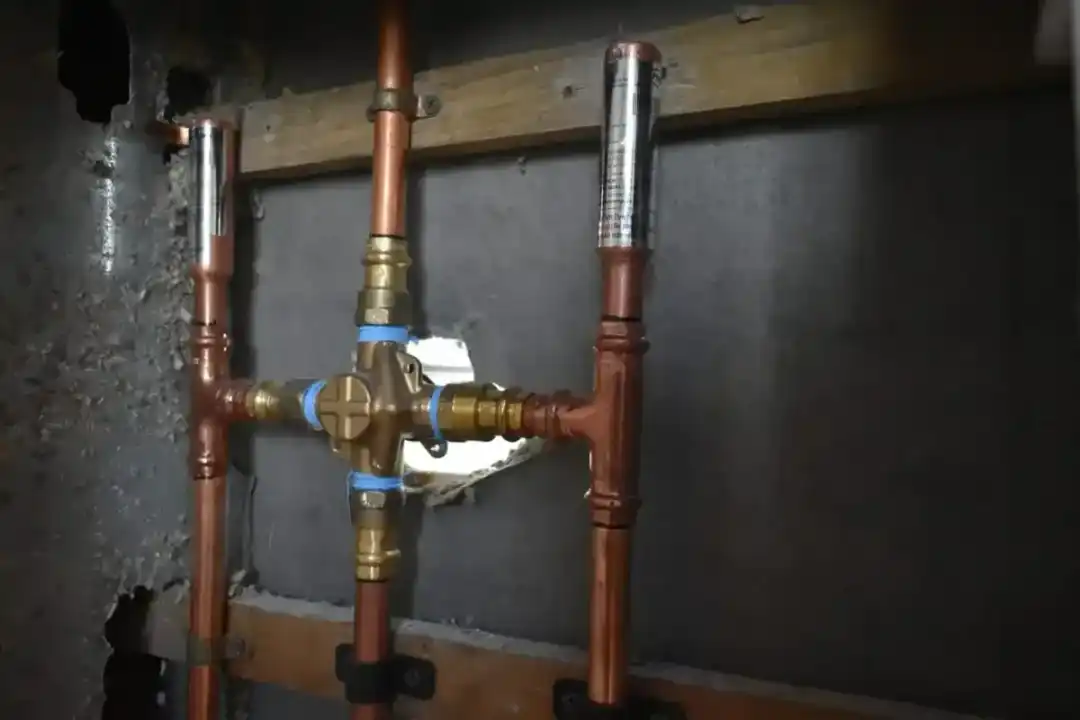 The repair path depends on where the problem actually starts. In condos, the most expensive delays often come from treating a shared-system symptom like a single-fixture nuisance.
The same is true when water comes from the unit above. Hernandez Plumbing tells owners to document immediately, notify building management, protect belongings, and avoid entering the upstairs unit. That is good condo advice because it respects the access and documentation problems that make multi-unit leaks so messy.
Some problems also get larger because the source is hidden. Hernandez Plumbing's Miami leak-detection page says the company uses acoustic and thermal methods to locate leaks behind walls, under floors, and in slabs without destructive testing first. That matters in condos because the visible damage may not line up neatly with the source. A ceiling stain in one room may begin several feet away. A wet wall may reflect a supply line, a drain issue, or migration from another unit. That is exactly when a clean note trail and a known shutoff map become useful.
Here is the practical boundary:
Your checklist is enough to prepare, isolate obvious fixture problems, and communicate clearly. It is not enough to diagnose every shared-building issue on its own.
Call building management first or immediately loop them in when:
- more than one fixture is reacting at once
- there is sewage or wastewater present
- the problem may involve a stack, riser, or common-area line
- you cannot locate the correct unit shutoff
- fire sprinkler piping or building mechanical equipment may be involved
- the symptom appears to affect more than your unit
Call for plumbing help right away when:
- water is actively damaging cabinets, flooring, or ceilings
- you cannot stop a leak at the fixture level
- the source appears hidden behind a wall, under a floor, or above a finished ceiling
- the unit shutoff is seized, corroded, or unreliable
- the building needs a second opinion on whether the issue is inside the unit or in shared infrastructure
This is also where safety beats neatness. Hernandez Plumbing's Miami emergency page says burst pipes, sewage backups, major leaks, no water, and water heater failures count as residential plumbing emergencies. If water is near electrical devices or the leak is actively spreading, the priority is containment and help, not perfect note-taking.
When Hernandez Plumbing is worth calling
The checklist is a preparation tool, not a substitute for service.
Hernandez Plumbing becomes the right next step when you have already done the useful condo-owner work and the problem now needs diagnosis, access coordination, or active repair. The company’s Miami emergency page says it regularly works homes and condos, coordinates with building staff, and treats burst pipes, full stoppages, major leaks, and water heater failures as priority calls. The same page says true emergencies are dispatched immediately and that most Miami locations can be reached in 30 to 60 minutes.
That matters for condo residents because delay gets expensive in different ways than it does in a house. A leak can affect the unit below. A stack issue can multiply into several complaints at once. A hidden line problem can turn from a stain into drywall, flooring, and schedule damage before the paperwork even catches up.
Hernandez Plumbing's residential leak detection in Miami page is especially relevant when the source is unclear. The service is designed for wall leaks, ceiling leaks, slab leaks, and other hidden problems where the right answer is not obvious from the first wet spot. If the issue seems more like an active failure than a mystery, the company’s residential emergency plumbing in Miami page is the better fit.
 A prepared condo owner does not need to know everything. They need to know which valve they can shut, which contact to call, and when a licensed plumber should take over the diagnosis.
If you live in a Miami condo, the best version of emergency prep is simple:
- label the fixture valves you can clearly identify
- confirm the unit shutoff during calm conditions
- keep one emergency card with building and plumber contacts
- document leaks and backups immediately
- escalate fast when the symptom points to a stack, riser, hidden leak, or shared-building problem
That is the difference between panic and process.
This article is general educational guidance, not legal, insurance, or condominium-governance advice. Your declaration, bylaws, house rules, and building procedures control the final details, so confirm them with your association and licensed professionals when a real emergency happens.
Need Professional Help?
Our licensed plumbers are ready to help with your emergency plumbing needs.