How to Shut Off Water During a Plumbing Emergency
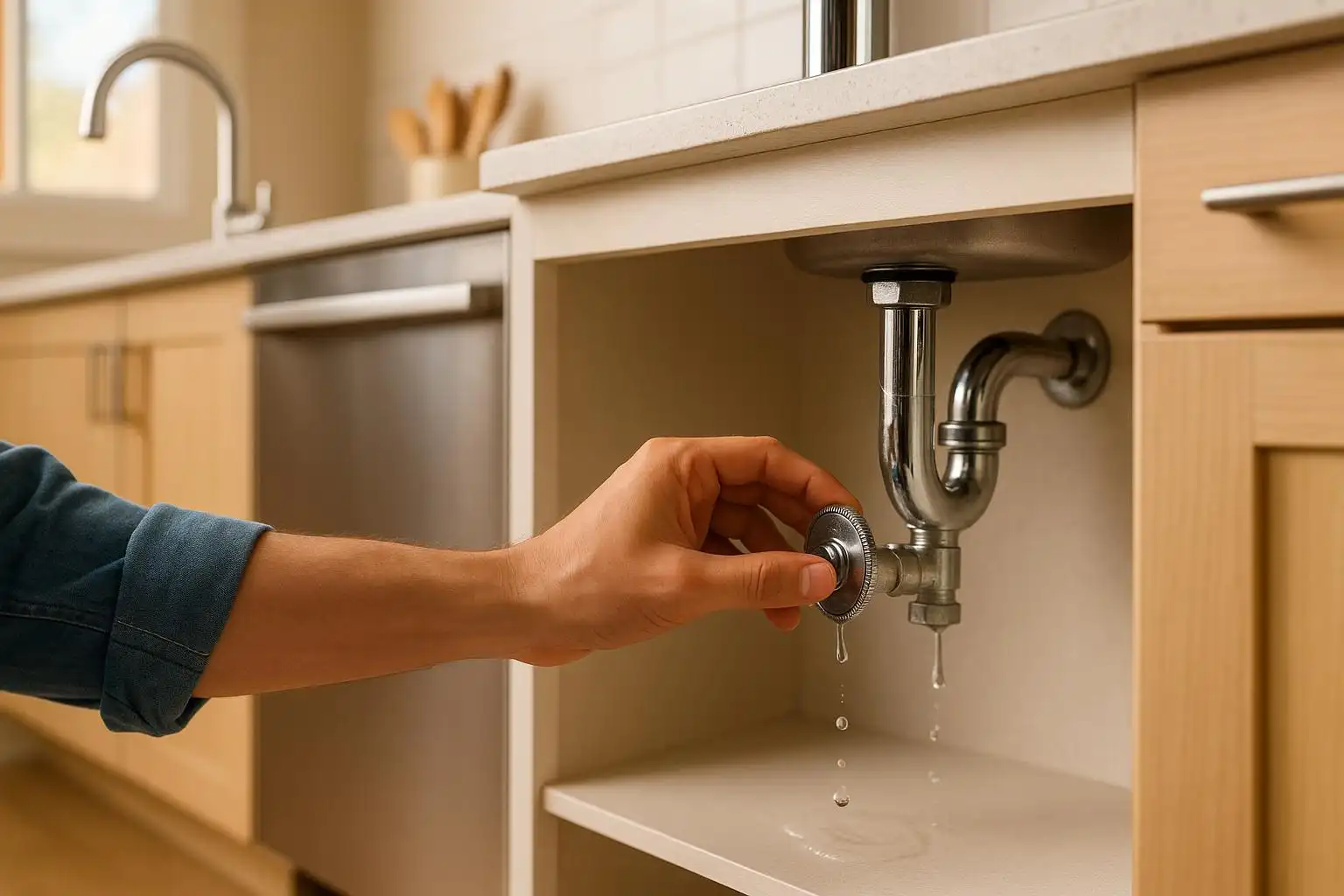
When a plumbing emergency hits, like a burst pipe or major leak, shutting off your water supply quickly can save your home from costly damage. Here’s how to handle it effectively:
- Locate the main shut-off valve: Usually near the water meter, on the side of the house closest to the street. In homes with basements, check the front foundation wall. For slab foundations, look near the water heater or under the sink. In warmer climates, it may be outside near the foundation.
- Turn off the valve: For ball valves, turn the lever 90° to close. For gate valves, rotate the round handle clockwise until it stops.
- Drain your pipes: Open a high-level faucet to let air in, then a lower-level faucet to drain water.
- Check for ongoing leaks: Inspect visible pipes, faucets, and appliances for drips or water flow.
- Shut off the water heater: Turn off power to electric heaters or set gas heaters to "pilot" to avoid damage.
- Call a professional if needed: If the valve is stuck, water continues to flow, or there’s extensive damage, contact a plumber immediately.
Pro Tip: Label your main shut-off valve and test it annually to ensure it works in emergencies. For localized issues, use the individual shut-off valves near sinks, toilets, or appliances.
Knowing these steps can prevent significant water damage and give you time to address the root problem. If you’re in Miami, FL, Hernandez Plumbing offers 24/7 emergency services to assist with urgent repairs.
How to find and turn off your water shut-off valve
Safety Precautions Before Taking Action
Before shutting off your water, it’s important to assess potential hazards. Acting too quickly without considering risks can make a bad situation worse. Safely securing your water system is a key part of managing emergencies effectively. Start by examining your surroundings for any immediate dangers.
Check for Immediate Dangers
Keep water away from electrical sources. The first step is to check for standing water near electrical outlets, light switches, circuit breakers, or appliances like water heaters and HVAC systems. If you notice water pooling near these areas, turn off the main electrical panel before doing anything else, and avoid stepping into water.
If water levels are rising rapidly or you feel unsure about your safety, reach out to professionals right away. This is especially important in basements, where water can quickly collect around electrical equipment.
Use a flashlight to gauge the depth of the water and look for hazards such as broken glass, sharp metal, or other debris before entering flooded areas. Test each step carefully to avoid unseen dangers. If the water is deeper than ankle-level or visibility is poor, it’s best to call a professional plumber to handle the situation safely.
Use Protective Equipment
Wear heavy-duty waterproof gloves to protect yourself from contamination. Thin latex gloves aren’t enough – they can tear easily, leaving you exposed.
Put on waterproof boots with good traction to prevent slipping and to shield your feet. If you don’t have proper boots, avoid stepping into significant standing water until you can get the right footwear.
For severe flooding or sewage backups, wear a face mask to guard against airborne contaminants and unpleasant odors. Safety glasses are also a good idea if there’s a chance of water spraying or debris flying when you turn off the valve. Keep old clothes nearby that you don’t mind getting wet, and change out of them immediately after addressing the issue.
Be alert for signs of contamination, such as foul odors, discolored water, or visible debris. If the water appears contaminated, keep children and pets away from the area. Avoid touching your face, eating, or drinking until you’ve thoroughly washed your hands.
If you’ve taken precautions but hazards remain, don’t hesitate to contact a professional.
When to Contact a Professional Immediately
Some plumbing emergencies are too dangerous or complex for DIY fixes. Call a professional if severe flooding or a burst pipe creates rapid, forceful water flow.
If water reaches electrical panels or the main valve is stuck or inaccessible, do not attempt to fix it yourself. Forcing a stuck valve can cause further damage and complicate the situation.
Signs of sewage backup, such as foul odors or dark water, require immediate professional intervention. Sewage exposure can lead to serious health risks, including infections from bacteria like E. coli and Salmonella, as well as viruses and parasites. If water is entering your foundation or basement in a way that suggests structural damage, professional assistance is critical.
Homeowners who are elderly, disabled, or simply uncomfortable working in wet conditions should call for help as soon as possible. In Miami, FL, Hernandez Plumbing offers 24/7 emergency services to address such situations.
Prepare in advance by locating and clearly labeling your main water valve. Keep essentials like a flashlight, waterproof gloves, and boots in an accessible spot, and post key emergency contacts, including Hernandez Plumbing’s number, where they can be easily found. Being ready ahead of time can help reduce panic and speed up your response, minimizing water damage and keeping everyone safe.
Finding Your Main Water Shut-Off Valve
Knowing where your main water shut-off valve is can save you from costly water damage. Its location varies depending on your home’s design, climate, and water supply system. Fortunately, finding it usually takes just a few minutes once you know where to look.
The valve is almost always located on the same side of your home as the water meter. So, start your search near the water meter – it’s a reliable starting point.
Inside Your Home
For homes with basements: Check the front foundation wall. The main water line usually enters from the street, and the shut-off valve is typically on the wall closest to the street. This is the most common spot in basement homes.
For homes with slab foundations: Look near the water heater. It’s often in a utility closet, mechanical room, or even under the kitchen sink. These areas are more accessible when there’s no basement.
For homes with crawl spaces: The valve is often in the crawl space, especially on the front wall or near the water heater. In older homes, it may be tucked deeper inside the crawl space, making access a bit trickier.
For newer homes or condos: The valve is often in a dedicated mechanical room, typically near the water heater, furnace, or pressure tank. In some cases, it might be behind a covered panel on the same side as the water meter.
If you have a property inspection report, check it – it might include details, pictures, or diagrams showing the valve’s location. If you don’t find it indoors, move your search outside.
Outside Your Property
In warmer climates like Florida or Arizona, the valve is often outside the home, on a pipe leading into the foundation. Since freezing isn’t an issue in these areas, outdoor placement is common.
In colder climates: The valve is usually located inside the house or foundation to prevent freezing and potential damage.
Outdoor valves in general: Look for an underground box near the street or property line. These boxes often have a round or rectangular metal cover flush with the grass or sidewalk, sometimes labeled "water meter." Inside the box, you’ll typically find two valves: one for homeowners and one for municipal use. The valve closest to your home is the one you’ll use to shut off your water.
To open the box, you might need a meter key – a T-shaped tool designed to lift the lid and access the valves. Avoid using the municipal water meter valve in emergencies; it’s not designed for homeowner use and can break easily or require a special wrench.
If your home uses a private well system, the setup is different.
Private Well Systems
For homes with private wells, the main shut-off valve is usually near the pressure tank, not in an underground meter box like municipal systems.
The pressure tank is typically located in a utility room, basement, or mechanical room, depending on your home’s layout. Focus your search near the well pump and pressure tank. Since private well systems don’t have outdoor meter boxes, you won’t need to search outside.
Final Tips for Emergencies
Once you locate your main water shut-off valve, label it with bright tape or a clear sign. This will make it easier to find during emergencies when every second counts. A well-marked valve can prevent confusion and save valuable time during a plumbing crisis.
Make sure everyone in your household knows where the valve is and how to use it. This ensures someone else can act quickly if you’re not home. Test the valve by briefly turning it off to confirm it works properly. Regular maintenance is key – checking it periodically ensures you won’t face a stuck or broken valve when you need it most.
Types of Shut-Off Valves and How to Use Them
Knowing the type of shut-off valve in your home can save you valuable time during an emergency. The two main types – ball valves and gate valves – work differently, and understanding their operation is key. Ball valves feature a lever handle that aligns with the pipe when open and turns perpendicular when closed. Gate valves, on the other hand, have a round, wheel-like handle and use a sliding gate mechanism to stop water flow. You’ll often find ball valves in newer homes, while older homes typically rely on gate valves.
Here’s a quick side-by-side comparison to help you identify your valve:
| Feature | Ball Valve | Gate Valve |
|---|---|---|
| Handle Type | Lever | Round wheel/knob |
| Operating Time | 90° turn | Around six full turns |
| Closed Position | Lever perpendicular | Handle turned clockwise |
| Open Position | Lever parallel | Handle turned counterclockwise |
| Common in | Newer homes | Older homes |
Below, we’ll guide you through using each type of valve and what to do if your valve gets stuck.
Using a Ball Valve
Ball valves are straightforward and quick to operate, making them ideal in emergencies. To shut off a ball valve, turn the lever handle 90 degrees so it’s perpendicular to the pipe. This simple quarter-turn motion stops the water flow immediately. Once closed, test a faucet to ensure the water supply has been successfully shut off. Ball valves are designed for ease, so you won’t need to apply much force or make multiple turns.
Using a Gate Valve
Gate valves require a bit more effort and time. To close a gate valve, rotate the round handle clockwise until you feel resistance. Stop turning as soon as the valve is fully closed – forcing it can damage the internal components or even crack the valve. Typically, it takes about six full turns to shut off a gate valve completely. If the valve feels stiff or difficult to turn, it might not have been used in a while and could be stuck.
If you encounter issues with either type of valve, follow these steps to address stuck valves.
Handling Valves That Won’t Turn
Stuck valves are particularly common in older homes or areas with hard water. If your valve won’t budge, apply a penetrating oil to the valve stem and let it sit for 15–30 minutes. This can help loosen any corrosion or mineral deposits. Afterward, try turning the valve again using steady, even pressure – avoid forcing it, as this can cause damage.
If the valve remains stuck or you’re worried about breaking it, call a professional plumber. In an emergency, such as active flooding, and the main valve won’t turn, you may need to contact your local water utility to shut off the water at the meter or street level.
Outdoor valves are especially prone to rust and mineral buildup due to exposure to the elements, particularly in areas with hard water or frequent freeze-thaw cycles. Indoor valves, often located in basements, crawlspaces, or utility rooms, are generally better protected but can still corrode in damp conditions. To keep your valves in working order, test your main shut-off valve annually and apply penetrating oil to outdoor valves once or twice a year. Regular maintenance ensures these critical components are ready when you need them most.
Shutting Off Water and Confirming It Worked
After finding your main water shut-off valve and identifying its type, the next step is to properly close it and ensure the water flow has stopped. This involves three key tasks: shutting the valve, draining the pipes, and checking for water flow. Doing this correctly helps prevent further damage and ensures the issue is under control.
Close the Valve
How you close the valve depends on its design:
- Ball Valve: Turn the lever 90° so it’s perpendicular to the pipe.
- Gate Valve: Rotate the round handle clockwise until it stops.
- Globe Valve: Turn the handle clockwise until it won’t turn further.
- Butterfly Valve: Move the lever 90° to close it.
Be careful not to use excessive force, as this could damage the valve and make it harder to operate in the future. Once the valve is closed, move on to draining the pipes.
Empty the Pipes
Even after shutting off the valve, water remains in the pipes under pressure. Draining this water is important to release pressure and avoid potential issues when turning the water back on. Start by opening a high-level faucet to let air into the system, followed by a lower-level faucet to drain the water. Keep both faucets open until the water flow stops completely. This process usually takes 5–15 minutes, but the time can vary depending on factors like your home’s layout and pipe size. Opening more faucets on different levels can help speed things up.
Test for Water Flow
Once the pipes are drained, confirm that the water supply is fully shut off. Turn on a faucet on the main floor to check for any flow. If water still runs, adjust the valve and test again.
Your water meter can also help confirm whether the shut-off was successful. Typically located near the main valve – either in a basement or an underground pit near your property line – the meter should stop moving if the water is off. If it continues to run, the valve might not be fully closed, or there could be a hidden leak. To be sure, take a meter reading, wait 15–30 minutes, and then check it again. Any changes signal a potential issue.
Finally, inspect visible pipes throughout your home, such as in the basement, crawlspace, or utility room. Look for drips, listen for running water, and check under sinks and around appliances for signs of leaks. These steps ensure your plumbing system is secure.
If the valve doesn’t fully stop the water, it could be damaged or stuck. Residents in Miami, FL, can rely on Hernandez Plumbing for 24/7 emergency services. Their team can quickly diagnose and repair faulty shut-off valves or other plumbing problems.
Shutting Off Water to Specific Fixtures
If you’re dealing with a water issue in just one area of your home, you can usually isolate the problem by using the specific shut-off valve for that fixture. These valves let you stop the water flow to a single toilet, sink, or appliance without affecting the rest of your plumbing. It’s a good idea to locate and label these valves ahead of time so you’re prepared for emergencies. Also, make sure the area around them is clear for easy access. Having these individual shut-off valves in addition to your main water supply can help you manage localized leaks effectively. Here’s how to handle shut-off valves for common fixtures.
Toilet Valves
Toilet shut-off valves are usually located near the base of the toilet, where the water supply line connects to the tank. You’ll typically find the valve on the wall or floor next to the toilet. Look for a small knob or lever attached to a copper or plastic pipe. In older homes, where multiple fixtures might share a single supply line, the valve could be located under the bathroom sink.
Once you locate the valve, turn it off and flush the toilet to ensure no water is entering the tank. If water continues to flow, the valve might not be fully closed. Gently turn it further, but avoid forcing it. If the valve is stuck, apply penetrating oil and wait 15–30 minutes before trying again. Be cautious – forcing a stuck valve could damage it, and you may need to replace it if it doesn’t work properly.
Sink Valves
Under most kitchen and bathroom sinks, you’ll find two shut-off valves – one for hot water and one for cold. These are located where the water supply lines connect to the faucet. Look inside the cabinet beneath the sink to find them. Turn each valve off, then test the faucet to make sure the water is shut off.
In older homes, individual fixture valves might not be present. If that’s the case, you’ll need to turn off the main water supply to address any issues with the sink.
Appliance Valves
Appliances like washing machines and dishwashers also have individual shut-off valves. For washing machines, these valves are typically located behind the machine, where the hot and cold water supply lines connect. You’ll usually see two separate valves. If necessary, shift the machine slightly to access them.
Dishwasher shut-off valves are often under the kitchen sink near the dishwasher’s supply line or sometimes behind the appliance. Most dishwashers use only cold water, so you’ll usually find a single valve to turn off.
If you encounter a valve that won’t budge even after applying penetrating oil, it’s best to shut off the main water supply and contact a professional plumber. They’ll have the tools and expertise to resolve the issue safely.
To keep your fixture shut-off valves in good condition, turn them on and off once or twice a year. This helps prevent them from sticking due to mineral buildup or corrosion. If you notice any leaks around the valve stem or have trouble turning it, have a professional inspect or replace it. Regular maintenance can save you time and trouble in the long run.
Steps to Take After Shutting Off Water
Once you’ve turned off the main water valve, there are a few important steps to take to minimize damage while waiting for repairs.
Switch Off the Water Heater
Start by turning off your water heater. Without water in the system, the heating element can overheat or even damage the tank. Running the heater dry also wastes energy and could become a safety hazard, especially if water has leaked into the unit.
For electric water heaters, go to your electrical panel and flip the circuit breaker labeled for the water heater to the "off" position. If the breaker isn’t clearly marked, turn it off and check for an indicator light on the heater. For gas water heaters, find the gas control valve and set it to "off" or "pilot." Some units might also have a dedicated gas shut-off valve on the supply line – turn it clockwise until it stops. If you notice a gas smell (often described as a rotten egg odor), leave your home immediately and contact your gas utility company or emergency services.
Once the water heater is secured, focus on electrical safety by addressing appliances exposed to water.
Disconnect Power to Water-Exposed Appliances
Shut off the circuit breakers for any appliances that may have come into contact with water to prevent electrocution or fire. Common appliances to check include washing machines, dishwashers, refrigerators with ice makers, and water heaters.
Important: Do not attempt to use any electrical appliance that has been exposed to water until it has been thoroughly inspected and dried by a professional.
Look for Continuing Leaks
After securing your water and appliances, take time to inspect your home for any lingering leaks. Start by checking the main water line near the shut-off valve for drips or pooling water. Look under sinks, around the water heater, and near laundry appliances. Use a flashlight to check areas that are hard to see.
If water continues to flow after you’ve closed the main valve, the issue might be in the service line between your water meter and your home. In this case, contact your water utility company immediately.
To manage any visible leaks, use buckets and towels to catch and absorb water. A wet/dry vacuum can help remove excess water quickly. Open windows and doors to improve airflow and reduce humidity, which can help prevent mold from developing.
Finally, document the damage. Take photos or videos of leaks, wet areas, and the shut-off valve. Note the time you discovered the issue and when you turned off the water – this information can be critical for insurance claims. If the damage is extensive (covering more than 10 square feet), involves contaminated water, affects electrical systems, or if you spot mold, contact a professional water damage restoration company right away.
When to Call a Professional
Turning off your main water valve is a task most homeowners can manage, but when it comes to repairs, it’s often best to leave it to the professionals. Getting expert help not only saves time but can also prevent costly mistakes. Here are some common situations where calling a plumber is essential.
Problems That Need Professional Repairs
While shutting off the water is a good first step, diagnosing and fixing the issue often requires specialized skills.
Burst pipes are among the most urgent plumbing emergencies. They demand immediate professional attention to assess the damage and make repairs. A burst pipe can release a significant amount of water in a short time, leading to severe damage to your floors, walls, insulation, and even the structural integrity of your home.
System-wide leaks that persist after shutting off the main valve are usually signs of deeper issues, such as corroded pipes, faulty joints, or underground damage. Professional plumbers use tools like pipe locators and thermal imaging cameras to find hidden leaks without tearing apart your home.
If you can’t locate your main shutoff valve, it’s crucial to call a professional. In emergencies, every second counts, and a plumber can quickly identify and operate the correct valve. Additionally, if your shutoff valve is in an underground box or requires special tools to access, leave it to the experts to avoid injury or property damage.
Hidden leaks can be tricky to detect on your own. If your water meter keeps running when all water sources are turned off, it’s a strong indicator of a leak somewhere in your system. Plumbers use advanced acoustic detection equipment to locate leaks behind walls or underground, helping to avoid costly water damage.
Issues with water heaters, sump pumps, or complex fixture installations also require professional expertise. While a quick DIY fix might seem like a good idea, it often leads to recurring problems and higher costs in the long run.
24/7 Emergency Plumbing Services
When time is of the essence, professional plumbers are your best bet for minimizing damage and costs.
Plumbing emergencies don’t wait for convenient hours, and water damage can escalate rapidly. That’s why Hernandez Plumbing offers 24/7 emergency services in Miami, FL, ensuring help is always just a call away.
As mentioned earlier, acting quickly can prevent significant damage. Depending on your location and call volume, response times usually range from 30 minutes to 2 hours. When you call, be ready to share details like the source of the water, whether you’ve turned off the valve, and any visible damage. This helps dispatchers prioritize your case and send a technician equipped to handle the issue.
Emergency plumbers arrive with fully stocked service vehicles, ready to tackle most problems on the spot. Hernandez Plumbing also provides upfront pricing, so you’ll know the cost before any work begins – no surprises.
While emergency services can cost between $150 and $300, this small investment can save you thousands in potential damage. Quick professional intervention is often the most economical choice.
With over 50 years of experience in Miami and nearby areas, Hernandez Plumbing’s licensed technicians handle everything from leak detection and water line replacement to cast iron pipe repairs. They back their work with a satisfaction guarantee and warranties on parts and labor, ensuring peace of mind for critical repairs like your main shutoff valve.
For non-urgent issues, Hernandez Plumbing offers a $49 residential plumbing diagnostic (regularly $97). This service helps identify potential problems early, preventing them from turning into costly emergencies.
If you’re dealing with a plumbing emergency right now, don’t wait. Call Hernandez Plumbing’s 24/7 emergency line to get professional help on the way while you take the immediate steps outlined in this guide.
Conclusion
Knowing how to shut off your main water valve is a critical skill for any homeowner. When a pipe bursts or a major leak occurs, quick action can save your home from extensive water damage and expensive repairs.
The secret to managing plumbing emergencies is being prepared, not panicking. Take a moment now to locate your main water shut-off valve – it’s likely in your basement, crawl space, or outside near an exterior wall. Test it to ensure it’s functioning properly, and make sure everyone in your household knows its location and how to use it. This simple step can make a huge difference in minimizing damage and setting the stage for effective repairs.
Of course, turning off the water is just the beginning. To fix the root of the problem, professional repairs are essential. Whether it’s a burst pipe, a hidden leak, or a faulty water heater, having an expert handle the repairs ensures the issue is resolved correctly.
For Miami, FL residents, Hernandez Plumbing offers 24/7 emergency services to tackle plumbing problems fast. With over 50 years of experience, their licensed technicians provide upfront pricing and a satisfaction guarantee. From water line replacements and leak detection to cast iron pipe replacements and emergency repairs, they deliver comprehensive solutions. For non-urgent concerns, their $49 residential plumbing diagnostic (regularly $97) can help identify potential issues before they escalate into costly emergencies.
If you’re dealing with a plumbing emergency right now, follow the steps in this guide to shut off your main water valve, then contact Hernandez Plumbing’s emergency line at (tel:305-428-3782) for professional assistance.
FAQs
What should I do if I can’t find my main water shut-off valve during a plumbing emergency?
If you can’t find your main water shut-off valve during an emergency, it’s important to act fast. Reach out to a professional plumber right away. Hernandez Plumbing provides 24/7 emergency services and can help you shut off the water quickly to minimize damage. Call them at 305-428-3782 for fast help from skilled experts.
How can I keep my water shut-off valves from sticking or corroding?
To keep your water shut-off valves in good working condition and avoid issues like sticking or corrosion, regular maintenance is key. At least once a year, turn the valves on and off a few times. This quick and easy step helps prevent them from seizing up, ensuring they’re ready to work when you need them.
For added protection, apply a small amount of plumber’s grease or a silicone-based lubricant to the valve stems. This can help guard against corrosion. If you spot any rust or signs of damage, it’s a good idea to have a professional plumber inspect or replace the valve to ensure it functions properly during emergencies.
What should I do if water is leaking near electrical outlets during a plumbing emergency?
If you see water accumulating near electrical outlets, take immediate action to stay safe. Start by shutting off the main water supply to prevent the leak from worsening. Next, go to your circuit breaker and turn off the electricity to the affected area. This step is crucial to avoid the danger of electrical shocks or potential fires.
Do not touch the water or the outlets until you’re absolutely certain the power is off. Once the area is secure, reach out to a professional plumber to fix the problem. For those in Miami, FL, Hernandez Plumbing provides 24/7 emergency services to handle plumbing issues promptly and safely.
Need Professional Help?
Our licensed plumbers are ready to help with your emergency plumbing needs.