How to Safely Use Chemical Drain Cleaners
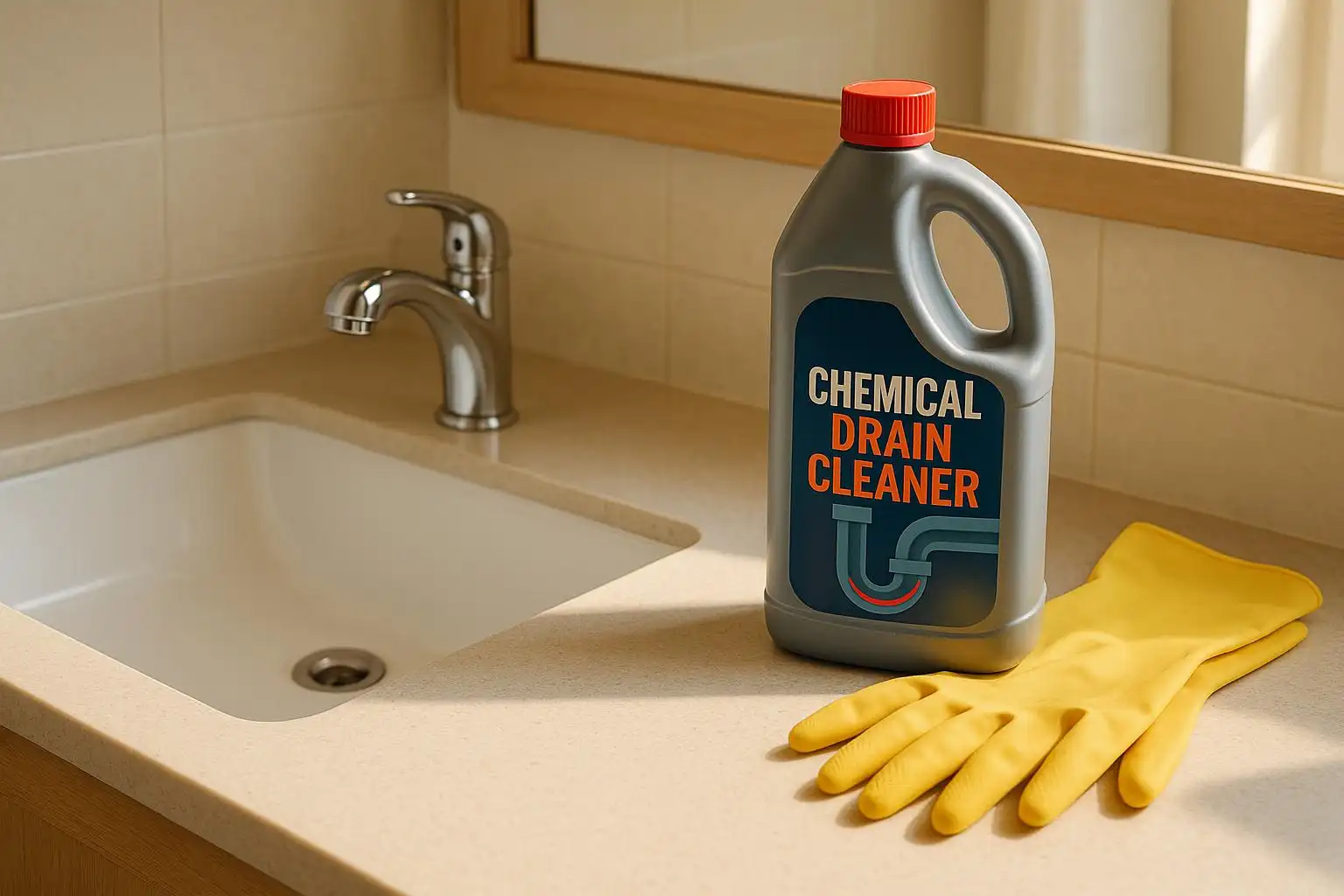
Using chemical drain cleaners can quickly clear clogs, but they come with risks. Improper use can damage pipes, harm your health, or create hazardous fumes. Here’s what you need to know to use them safely:
- Best Practices for Using Chemical Drain Cleaners: Always use gloves, goggles, and ensure proper ventilation.
- Follow instructions: Read the label for application steps, timing, and safety precautions.
- Avoid mixing chemicals: Combining products can lead to dangerous reactions.
- Dispose responsibly: Never pour leftover cleaner down the drain; follow local hazardous waste guidelines.
Chemical cleaners are effective but have limits. They can't fix solid blockages, mineral buildup, or tree root intrusions. Persistent clogs or multiple blocked drains may require professional drain cleaning services. When in doubt, call a plumber to avoid costly damage.
Is It Safe to Use Chemical Drain Cleaners? | Pros and Cons Explained
Preparation and Safety Steps
Getting ready the right way is crucial to avoid accidents and ensure the cleaning process goes off without a hitch. Taking these precautions seriously can make a big difference in both safety and efficiency.
Personal Protective Equipment (PPE)
The first line of defense in safe drain cleaning is using the correct personal protective equipment (PPE). Always wear chemical-resistant gloves, safety goggles or a face shield, and, if needed, a respirator. Before starting, make sure your PPE is in good condition – no tears, cracks, or other damage – and that it’s compatible with the chemicals you’ll be using. After finishing, clean and sanitize your equipment to keep it ready for next time.
Check the product’s Safety data sheet (SDS) for specific PPE requirements. Depending on the chemical and your workspace, additional protection might be necessary, such as aprons or specialized footwear. Don’t skip this step – it’s your guide to staying safe.
Ventilation and Workspace Setup
Good airflow is key when working with chemical drain cleaners. Open windows and doors to create cross-ventilation, and use fans to push fumes out of the area. Make sure the workspace is clear of clutter, and secure any loose items to prevent accidents. Keep children and pets far away from the area, and let others in the household know you’re working with potentially hazardous materials.
For an extra boost, turn on exhaust fans or place additional fans strategically to direct air away from your work area and toward open windows or doors. Always double-check the product instructions to ensure your setup matches the recommended guidelines for ventilation and workspace safety.
Reading Labels and Product Instructions
Understanding the product you’re using is non-negotiable. Carefully read the label and the Safety Data Sheet (SDS) to learn about the required PPE, application steps, dilution ratios, timing, and compatibility with your plumbing system. Pay close attention to warnings about chemical mixing – some combinations can lead to dangerous reactions.
Even if you’ve used a similar product before, never skip reading the instructions. Each brand and formula comes with its own set of requirements, and following these details precisely ensures both safety and effectiveness. Look for specific details like how long to leave the cleaner in the drain, whether it needs to be diluted, and any temperature considerations. These instructions are there to protect you and your plumbing, so stick to them closely.
Step-by-Step Application Guide
Once you’ve set up your workspace safely, it’s time to apply the cleaner. Follow these steps carefully to ensure both effective cleaning and your safety.
Measuring and Applying the Cleaner
Start by measuring the exact amount specified on the product label. Using too much can harm your pipes and create unnecessary risks. To avoid splashing, pour the cleaner slowly and keep the container close to the drain. If you’re working with a powder or granular cleaner, a funnel can help guide the product directly into the drain. For kitchen sinks with garbage disposals, make sure the disposal is turned off to prevent accidental activation. Double-check that you’re applying the cleaner to the correct drain, especially in kitchens with multiple sinks. Timing is key – once applied, follow the label instructions to allow the cleaner to do its job.
Using Water and Timing It Right
After applying the cleaner, let it sit undisturbed for the recommended time, which can range from 15 minutes to overnight depending on the product. Avoid using the drain during this period. Once the waiting time is up, flush the drain with hot water for 5–15 minutes. The hot water helps wash away any loosened debris, leaving your drain clear and functional.
Keeping Chemicals Separate
Never mix different cleaners or combine them with other chemicals. Doing so can lead to dangerous reactions that produce toxic or corrosive substances. If you’ve recently used another cleaner in the same drain, flush it thoroughly with plain water before applying a new product. To stay safe, handle other cleaning agents and clean nearby surfaces either before or after using the drain cleaner – never during the process.
Cleanup and Disposal
Once you’ve How to Handle a Clogged Drain Emergency, it’s important to wrap up the cleaning process carefully. Proper cleanup and disposal not only protect your health but also safeguard your plumbing and the environment.
Rinsing and Cleaning Surfaces
Start by rinsing all surfaces that came into contact with the chemical cleaner. Use plenty of water to wash away any residue from the sink, countertops, and the drain area. If there were any splashes, wipe those spots with a damp cloth. For spills on the outside of the chemical container, clean them thoroughly as well.
Before removing your gloves, rinse them under running water. Then, wash your hands with soap and water for at least 20 seconds to ensure no chemical residue remains. Once that’s done, focus on safely disposing of or storing any leftover cleaner.
Disposing of Chemicals Safely
Avoid pouring leftover cleaner down the drain or toilet – this can harm your plumbing and the environment. If the container is empty, don’t toss it in the trash without proper preparation.
Check with your local waste management service for hazardous waste disposal events. Many communities have specific days for safely getting rid of household chemicals. If recycling is an option in your area, rinse the container thoroughly following the provided guidelines, and remove or cover the label to prevent accidental misuse.
Storing Chemicals Safely
Always store chemical cleaners in their original containers. The label contains critical safety and usage information that you might need later. Choose a storage spot that avoids extreme temperatures, as both heat and cold can impact the stability of the chemicals.
Keep these products in a locked cabinet or another secure area, out of reach of children and pets. The storage space should be dry and well-ventilated to prevent container corrosion. Make it a habit to inspect your stored chemicals every six months for any signs of leaks, damage, or changes in appearance. If you notice anything unusual, such as strange odors or discoloration, dispose of the product according to your local hazardous waste guidelines.
Risks, Limits, and When to Call a Professional
While proper safety and cleanup methods are essential, it’s equally important to recognize the limitations of chemical drain cleaners and Ultimate Guide to Preventing Drain Clogs at Home. These products have specific uses, and understanding their boundaries can save your plumbing – and your wallet – from unnecessary damage.
Potential Hazards of Chemical Drain Cleaners
Chemical drain cleaners come with a host of risks that shouldn’t be overlooked. Direct contact with these products can cause severe burns to your skin and eyes, and inhaling their fumes might irritate your respiratory system. The heat generated during their chemical reactions can also damage older pipes, especially PVC or metal ones that have weakened over time.
Mixing different chemical cleaners is particularly dangerous, as it can trigger reactions that release toxic gases or even create explosive conditions. Additionally, leftover chemical residue in your pipes can complicate future plumbing repairs, putting technicians at risk and potentially increasing costs.
When Chemical Cleaners Fall Short
There are certain clogs that chemical cleaners simply can’t fix. For instance, they won’t help if solid objects like jewelry, toys, or large food scraps are blocking your drain – they can’t dissolve these items, no matter how much product you pour in. Similarly, mineral buildup requires mechanical removal, and tree roots invading your pipes need specialized equipment to address the issue.
Using chemical cleaners in completely clogged pipes is also a bad idea. When the chemicals can’t flow freely, they linger in the pipes, increasing safety hazards and repair costs. Toilets and garbage disposals present their own challenges, as their designs make chemical treatments less effective.
Overusing these products can leave behind residues that trap debris, causing more frequent clogs. Plus, chemical cleaners can’t diagnose deeper plumbing problems. A recurring clog might point to a broken pipe, improper installation, or another underlying issue that requires professional attention.
If clogs persist, it’s time to call in an expert.
When to Contact Hernandez Plumbing
If your first attempt with a chemical cleaner doesn’t work, it’s best to stop there. Using more can worsen the problem and damage your plumbing. Persistent clogs often signal deeper issues that need professional diagnosis. Hernandez Plumbing offers advanced leak detection to uncover problems like damaged pipes or improper drainage – problems that chemical cleaners simply can’t fix. Their licensed technicians use specialized tools to pinpoint the issue without causing further harm to your system.
Multiple clogged drains could mean there’s a serious problem with your main line, such as tree root infiltration or pipe damage. These situations require expert intervention to resolve safely and effectively.
For older plumbing systems, especially those with cast iron pipes, professional evaluation is critical. Hernandez Plumbing specializes in cast iron pipe replacement and can assess whether your pipes can handle chemical treatments or need upgrades.
In emergencies – like sewage backups or completely blocked main lines – don’t wait. Hernandez Plumbing is available 24/7, offering upfront pricing and same-day service to get your plumbing back on track quickly and safely.
Conclusion
Using chemical drain cleaners safely involves a few key steps: proper preparation, careful application, and thorough cleanup. Always follow safety guidelines – wear protective gear, ensure the area is well-ventilated, measure the product accurately, and never mix different chemicals.
After using a cleaner, rinse the treated area, dispose of leftover chemicals following local regulations, and store products securely out of reach of children and pets.
It’s important to note that chemical drain cleaners have their limits. They can’t dissolve solid objects, clear mineral deposits, or tackle tree root intrusions.
Certain warning signs indicate it’s time to call a professional. These include slow drainage, recurring clogs, unpleasant odors, or multiple blocked drains in your home. Such issues often point to more serious plumbing problems that chemicals won’t fix and could even worsen, leading to costly repairs over time.
When chemicals aren’t enough, it’s best to rely on experts like Hernandez Plumbing. Their licensed technicians provide professional, budget-friendly solutions with transparent, flat-rate pricing and a satisfaction guarantee. Serving Miami since 1972, they offer over 50 years of trusted service. For Miami residents, their diagnostic service is available at $49 (a reduced rate from $97), giving you a professional assessment without the risks of repeated chemical treatments.
When chemical cleaners fall short, professional help ensures your plumbing system is handled safely and effectively.
FAQs
What risks should I be aware of when using chemical drain cleaners on older plumbing systems?
Using chemical drain cleaners on older plumbing systems can be risky. The strong chemicals and the heat they generate can corrode or weaken pipes made from materials like cast iron, copper, or PVC. Over time, this could lead to leaks, cracks, or even complete pipe failure.
Plastic pipes face an added risk, as these chemicals can soften or even melt them. For metal pipes, the damage might show up as corrosion or weakened joints, which could result in expensive repairs. If your plumbing system is older, reaching out to a professional plumber is often a safer and more reliable way to handle drain problems without causing further harm.
How do I know if a stubborn clog needs a professional plumber?
If you’re struggling with a clog that just won’t go away or keeps coming back, it might be time to bring in a professional plumber. Warning signs of a more serious issue can include slow drainage across multiple fixtures, unpleasant odors, gurgling sounds, or even water backing up and overflowing. These symptoms often suggest a bigger problem, like a blockage in your main sewer line.
When DIY fixes like 7 Tips To Prevent Clogged Drains At Home don’t work, or if the problem impacts several drains in your home, it’s probably best to call an expert. A plumber can identify and resolve the underlying issue safely, helping you avoid further damage to your plumbing system.
What should I do if I accidentally mix chemical drain cleaners and create dangerous fumes?
If you accidentally combine chemical drain cleaners and detect harmful fumes, act quickly to ventilate the space. Open windows and doors to let in fresh air, and leave the area immediately to avoid inhaling the dangerous vapors.
Should you experience symptoms such as coughing, trouble breathing, or irritation, seek medical help without delay. You can also reach out to poison control or emergency services for advice on how to manage the situation safely.
To avoid these kinds of hazards, always follow the usage instructions on chemical cleaners, wear appropriate protective gear, and store products separately to prevent mixing incompatible substances.
Need Professional Help?
Our licensed plumbers are ready to help with your drain cleaning needs.