How Tankless Water Heaters Connect to Existing Pipes
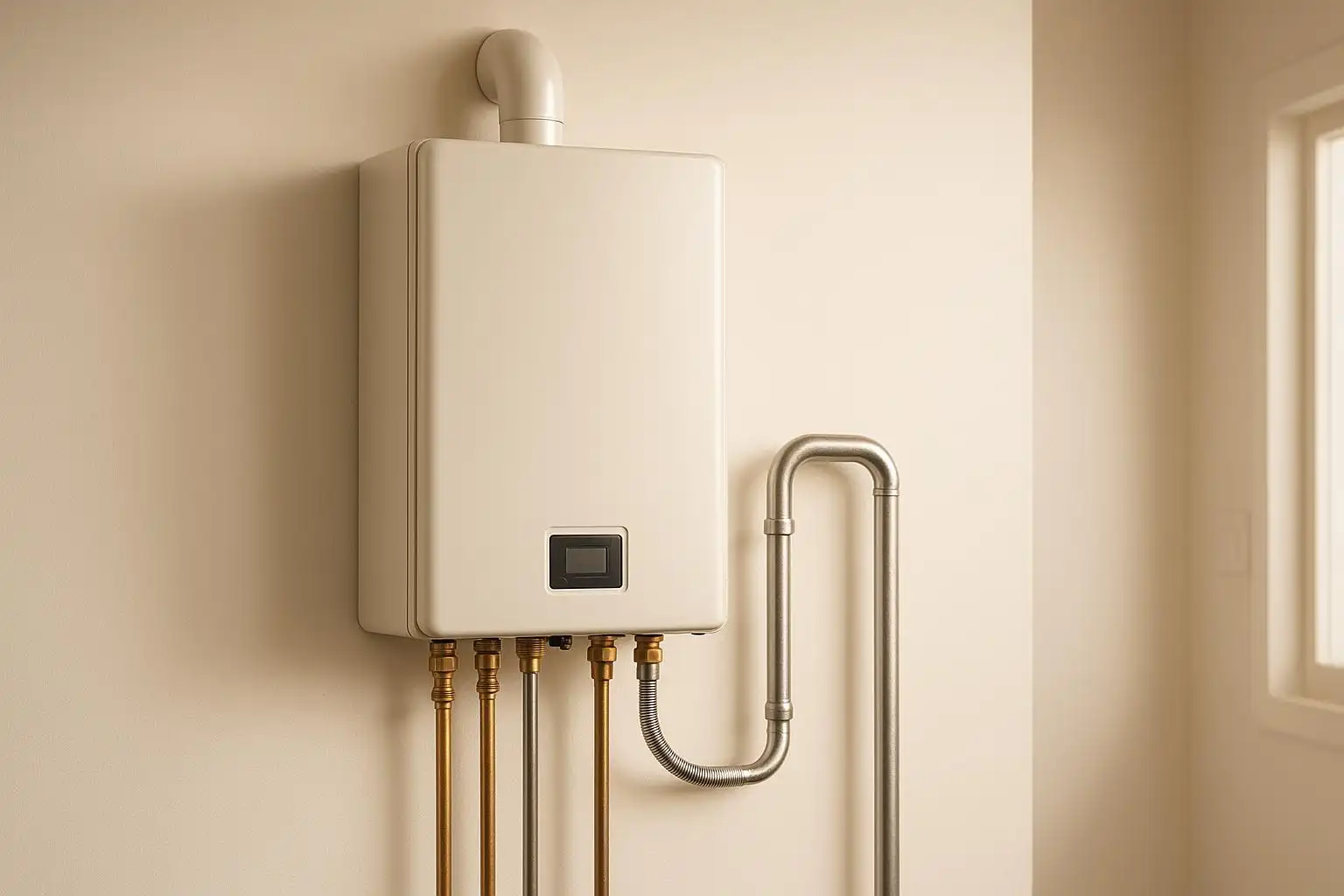
Tankless water heaters heat water only when needed, offering space-saving and energy-efficient solutions. Professional water heater installation services ensure proper connection to your existing system. However, installing one requires adjustments to your home's plumbing, gas, or electrical systems. Key factors include:
- Plumbing Compatibility: Ensure water pressure and pipe materials meet system requirements. Older pipes may need pipe repair or replacement.
- Gas or Electrical Needs: Gas units often require larger gas lines, while electric units may need panel upgrades.
- Water Quality: Hard water can clog tankless systems, making water softeners or filters essential in areas like Miami.
- Local Codes: Proper permits and adherence to local regulations, such as venting for gas units, are critical.
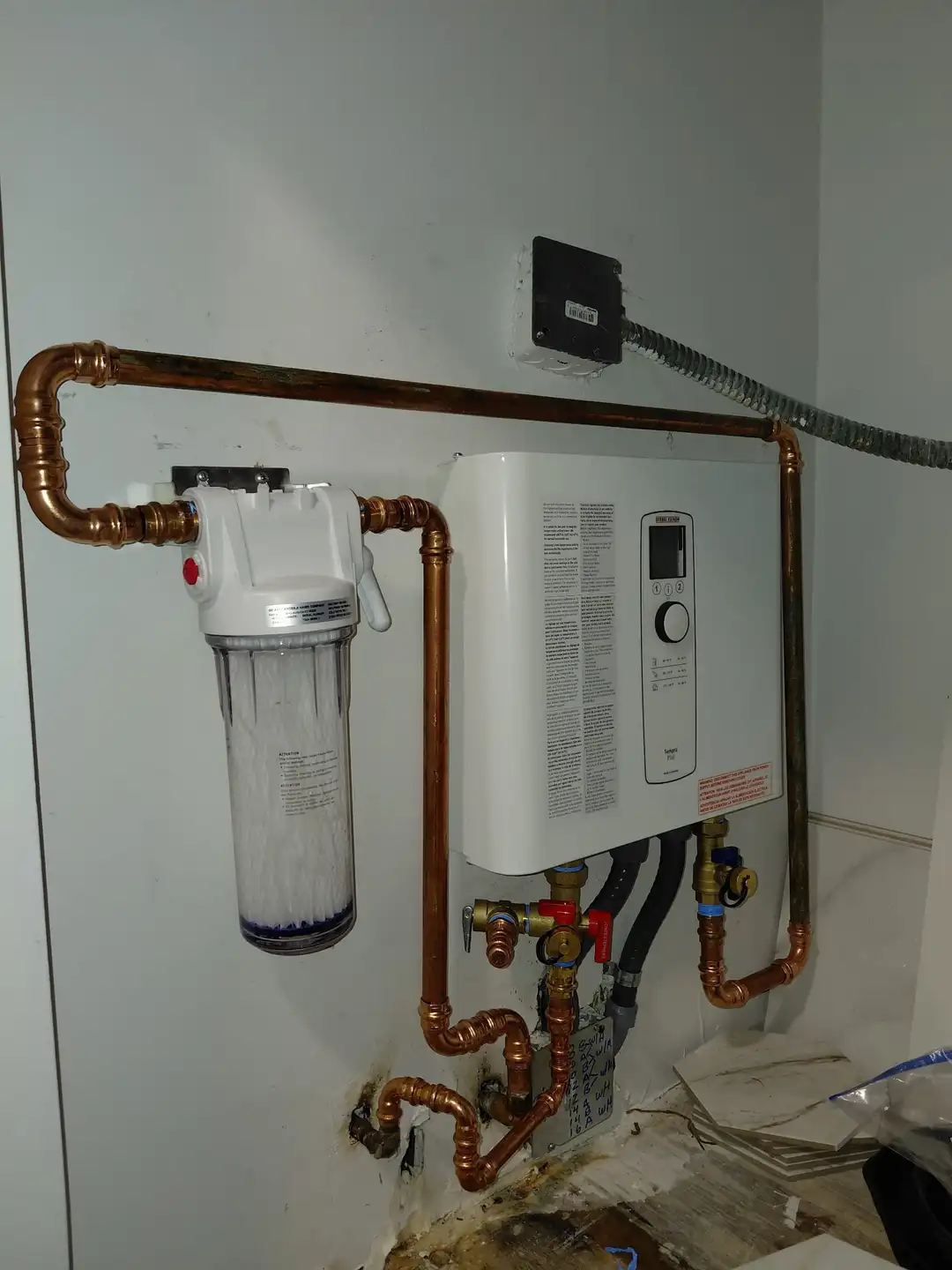 Proper tankless water heater installation with a pre-filter system and copper piping – essential for protecting against Miami's mineral-rich hard water.
Professional installation ensures leak-free connections, compliance with codes, and optimal performance. Partnering with experts like Hernandez Plumbing can simplify the process and help you avoid costly mistakes.
Step by Step Tankless Water Heater Install for Beginners!
Checking Your Existing Plumbing for Tankless Compatibility
Before upgrading to a tankless water heater, it’s important to assess whether your current plumbing system is up to the task. A thorough review ensures your system can handle the demands of a tankless unit while maintaining safety and efficiency.
Checking Water Supply Lines
Start by inspecting the materials and diameters of your water supply lines. Tankless water heaters require consistent water flow, so check for issues like wear, corrosion, or restrictions that might disrupt performance. Homes with galvanized steel pipes, for example, should be evaluated for internal corrosion. If you have PEX (cross-linked polyethylene) piping, confirm that it’s rated to withstand the higher temperatures produced by tankless systems.
Water pressure is another critical factor. Use a pressure gauge to measure your home’s water pressure. If it’s lower than the recommended range for your tankless unit, you’ll need to address this before installation to ensure optimal performance.
Gas Line and Electrical Capacity Requirements
Gas-powered tankless water heaters typically require a higher gas supply than traditional systems. Check whether your existing gas lines can handle the increased demand, and verify that your gas meter has sufficient capacity for the new unit.
For electric tankless systems, evaluate your home’s electrical setup. These units often need dedicated circuits or even an upgrade to your electrical panel to handle the extra load. Calculate your home’s total electrical capacity to ensure the system won’t be overloaded. Both gas and electrical systems must meet the flow and pressure requirements of the tankless unit to operate effectively.
Local Codes and Permits
Once your plumbing and utility systems are ready, it’s essential to ensure compliance with local building codes and permit requirements. Regulations can vary depending on whether you’re replacing an old system or installing a new one. For example, local codes may specify requirements for venting, combustion air supply, and electrical installations.
In regions like Miami-Dade County and South Florida, there may be additional safety standards to account for severe weather conditions. Adhering to these codes not only ensures safety but also enhances the efficiency and longevity of your tankless system.
Partnering with professionals who understand local regulations can simplify the process. The team at Hernandez Plumbing, for instance, is well-versed in Miami’s specific requirements and can streamline the permit process while ensuring your installation meets all standards. This expertise helps you avoid unnecessary delays and ensures your tankless system operates at its best.
How to Connect Tankless Water Heaters to Existing Pipes
Once you’ve confirmed that your plumbing system is compatible with a tankless water heater, the next step is to connect it properly. A precise and careful approach is essential to ensure a secure, leak-free installation. Here’s a detailed guide to help you through the process.
Preparing the Installation Site
Begin by turning off the main water supply and, if applicable, the gas or electrical supply. If you’re replacing an older tank-style water heater, make sure to drain it completely before disconnecting the water lines. Use the appropriate tools to safely remove the old unit.
Clear the area around the installation site to create enough workspace. Most tankless water heaters require at least six inches of clearance on all sides to allow for proper ventilation and easy maintenance. Before proceeding, flush your existing water lines to remove any dirt, debris, or sediment that could harm the new unit’s components.
Gather the necessary tools for the job, including pipe wrenches, pipe cutters, a drill with the correct bits, measuring tape, and a propane torch if you’re working with copper pipes. For copper connections, you’ll also need a deburring tool, pipe fitting brush, and sanding cloth to ensure smooth, clean joints.
Connecting Water Supply Lines
Start by connecting the cold water supply line to the inlet valve marked on the tankless unit. Then, attach the hot water output line to the outlet valve. Refer to the unit’s installation manual to confirm the correct connections.
For a watertight seal, use flexible connectors or copper piping with Teflon tape. Install a manual shutoff valve on the cold water line as required by most local codes. Additionally, add isolation valves to both the inlet and outlet lines. These valves make future maintenance, such as system flushing or repairs, much easier without disrupting the water supply to your entire home.
Check the water pressure in your system. If it exceeds 80 psi, install a pressure-reducing valve to protect the tankless unit. High water pressure can strain internal components and may void the warranty.
Installing Safety and Maintenance Features
Once the water connections are secure, focus on adding essential safety features. Install a pressure relief valve as specified by the manufacturer. This valve is a critical safety component that prevents dangerous pressure buildup and is often required by local codes. Connect the relief valve to a drain line to safely direct any discharged fluids.
For added safety, install a thermostatic mixing valve to regulate the water temperature. This valve blends hot water from the unit with cold water to ensure consistent, safe temperatures at your faucets. It’s generally recommended to set the water temperature to 120°F or lower to reduce the risk of scalding.
Slowly turn on the water supply and carefully inspect every joint for leaks. Start with low pressure and gradually increase it while checking all connection points. Even minor leaks can cause significant damage over time, so this step is critical.
Open all hot water faucets in your home to purge any trapped air from the system. Let the water run until the flow is steady and free of air bubbles. This step prevents air pockets that could disrupt the system’s operation or create noise.
"This is definitely a job for a pro, as it involves making leak-free water, vent, and gas connections." – This Old House
If you’re installing a gas-powered unit, use a gas detector or apply a soapy water solution to the gas line connections to check for leaks.
Taking your time to carefully follow these steps will help ensure a high-quality installation. Double-checking each connection during the process makes it far easier to address any issues before the system is fully operational.
Other Installation Requirements
Venting for Gas Tankless Units
Gas tankless water heaters require proper venting to ensure safe combustion and to remove exhaust gases effectively. This is a non-negotiable safety measure, unlike electric tankless water heaters, which do not need venting. Understanding the venting options is key to making the right choice for your setup.
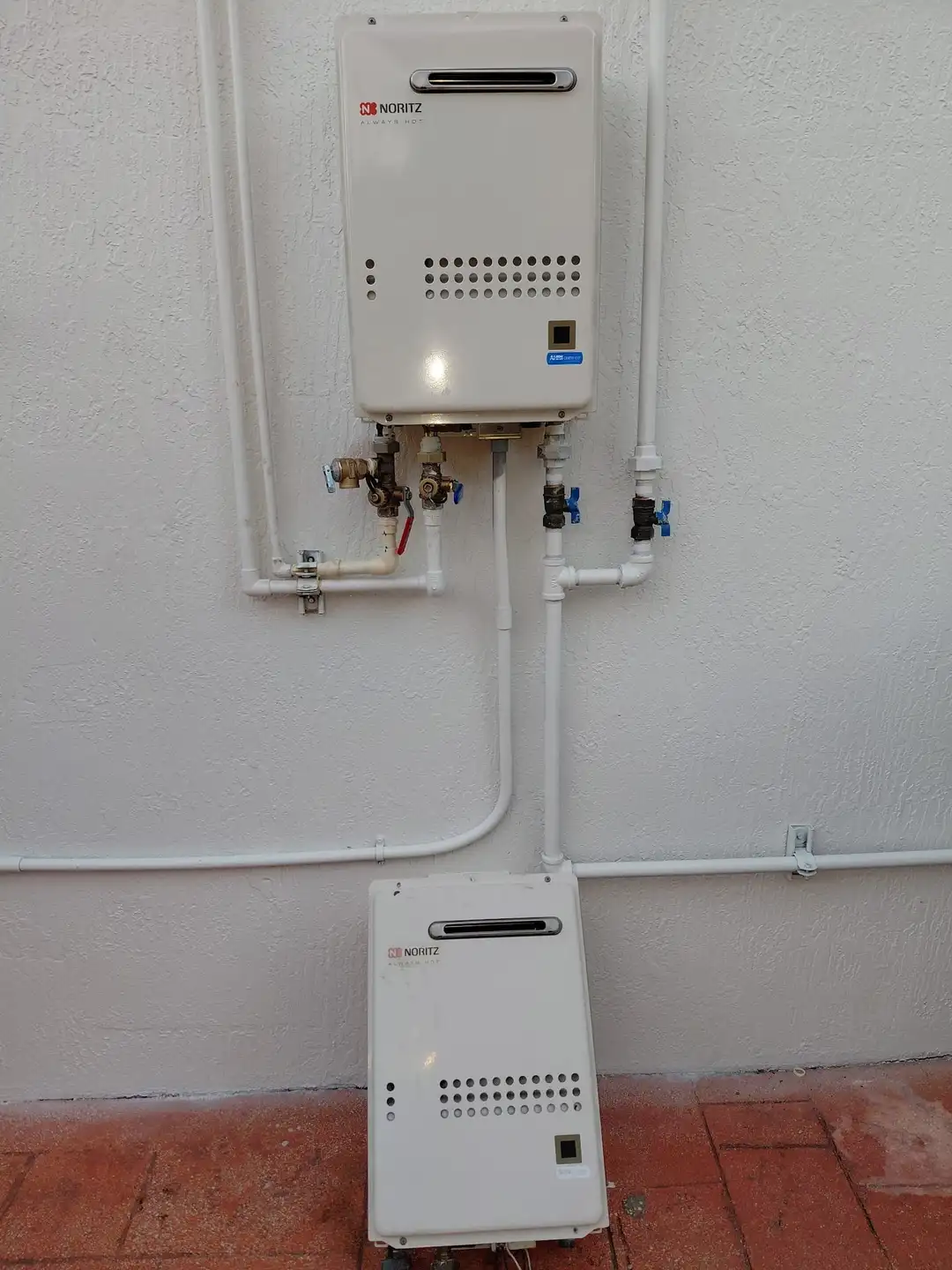 Dual Noritz gas tankless water heaters with outdoor installation – eliminating the need for indoor venting while providing efficient hot water delivery.
There are three main venting options to consider:
- Power vents: These handle exhaust only and rely on indoor air for combustion. They need sufficient indoor airflow to function properly.
- Direct vents: These use separate pipes for intake and exhaust, drawing air from and venting directly to the outside.
- Concentric vents: A popular choice because they combine intake and exhaust into a single pipe, reducing wall penetrations and keeping exterior surfaces cooler.
Vents can be installed either horizontally through a side wall or vertically through the roof. Horizontal installations are typically more affordable.
When setting up, maintain at least 12 inches of vertical and horizontal separation between the intake and exhaust vents. For horizontal venting, make sure the vent pipe slopes away from the unit to prevent condensate from flowing back. If sloping isn’t possible, or if you’re using vertical venting, a condensate drain should be installed to manage moisture.
Sizing and Flow Rate Requirements
Once you’ve sorted out the installation and connection details, the next step is making sure your tankless water heater can meet your household’s hot water needs.
What Is Flow Rate and Why It Matters
Flow rate refers to how much hot water your tankless system can deliver, measured in gallons per minute (GPM). This is key when you have multiple faucets, showers, or appliances running at the same time.
Your plumbing system plays a big role here. Existing pipes have flow limitations based on their size and water pressure. For instance, a 1/2-inch supply line typically delivers around 2-4 GPM, while a 3/4-inch line can handle 4-8 GPM. If your tankless unit is capable of producing 8 GPM but your pipes can only supply 3 GPM, the system won’t operate at full efficiency.
The temperature rise – the difference between the incoming water temperature and the desired hot water temperature – also affects performance. For example, if your water enters at 50°F and you want it heated to 120°F, that’s a 70°F temperature rise. Most residential tankless units handle 3-5 GPM at this level, but colder climates can cause performance to drop significantly, especially when incoming water temperatures dip to 40°F or lower.
Calculating Hot Water Demand
To figure out the right size for your tankless unit, start by identifying your household’s peak usage times, like mornings or evenings when showers, dishwashers, and laundry machines might all be running simultaneously.
Here’s a quick breakdown of typical GPM requirements for common fixtures:
- Showers: 2.5 GPM
- Bathroom sinks: 1.5 GPM
- Dishwashers: 1–2 GPM
- Washing machines: 2–3 GPM
For example, if two people are showering while the dishwasher is running, you’ll need at least 6-7 GPM from your tankless unit to keep up.
Your local climate also matters. In warmer areas like Miami, where incoming water averages 75-80°F, the temperature rise needed is only 40-45°F. This means smaller units can deliver higher flow rates. In contrast, northern climates with colder incoming water (around 45°F in winter) require a larger unit to achieve the same performance.
Getting Professional Sizing Help
A professional evaluation can ensure your tankless system is properly matched to your household’s needs and local plumbing codes. Experts measure water pressure, check pipe diameters, and calculate your family’s actual hot water demand based on usage patterns.
For example, Hernandez Plumbing offers detailed assessments that include testing water pressure at the main line, inspecting pipe sizes throughout your home, and factoring in your peak usage. This ensures your pipes can support the tankless unit you choose or highlights if upgrades are necessary.
Professional assessments also consider future needs and local regulations. For instance, in Miami-Dade County, permits are required for tankless installations, and inspectors verify that the unit is appropriately sized. Using a unit that’s too small can lead to temperature fluctuations and reduced flow rates, while an oversized unit can waste energy and struggle to perform efficiently at lower flow rates.
While a professional evaluation typically costs $150-$300, it can save you thousands by avoiding costly mistakes. Improperly sized systems often result in temperature inconsistencies, reduced performance, and even premature unit failure, all of which can be expensive to fix after installation. Investing in expert advice ensures your system runs smoothly and reliably for years to come.
When to Call a Professional
Installing a tankless water heater isn’t just about plugging in a new appliance – it’s a job that demands precision and expertise. Mistakes during installation can lead to safety risks, expensive repairs, or even code violations. Once you’ve prepared your plumbing and installation site, it’s time to bring in a professional to handle the more complex parts of the process.
Complex Installations and Modifications
Some aspects of tankless water heater installation are best left to the experts. For instance, gas line modifications require specialized skills to ensure proper pressure regulation, leak prevention, and secure connections. In many cases, upgrading gas lines also involves obtaining the proper permits.
If you’re installing an electric tankless unit, you may need to upgrade your electrical panel or install dedicated circuits to handle the increased power demand. These tasks must be carried out by a licensed electrician to ensure compliance with safety codes.
Proper venting is another critical factor. Venting must align with both the manufacturer’s guidelines and local building codes to prevent safety hazards.
Additionally, your current water supply lines might need upgrades to provide the necessary flow and pressure for the new system. This often involves modifying pipe connections and adhering to local regulations. With so many variables, having a professional oversee the work is not just helpful – it’s essential.
Why Choose Hernandez Plumbing
When it’s time to install your tankless water heater, Hernandez Plumbing is the go-to choice for homeowners in Miami, FL. Their licensed technicians specialize in connecting tankless systems to existing plumbing, ensuring everything is done right the first time.
The process starts with a detailed evaluation of your plumbing system. This includes testing water pressure and assessing whether any upgrades are needed. By addressing potential issues upfront, Hernandez Plumbing helps you avoid unexpected costs or complications down the line.
With upfront pricing and a satisfaction guarantee, they provide clear estimates that include all necessary modifications, permits, and labor. Plus, their 24/7 emergency services mean you’re covered if any issues arise after installation, such as leaks or performance problems.
For larger projects, like whole-home upgrades or installations involving multiple fixtures, Hernandez Plumbing assigns dedicated account representatives to coordinate every detail. Choosing professional installation not only ensures optimal performance and durability but also protects your manufacturer warranties, which DIY installations often void.
Conclusion
Installing a tankless water heater into your current plumbing system is no small task. It demands careful attention to your home’s infrastructure, from proper venting and electrical requirements to ensuring compliance with safety codes and obtaining permits.
Start by assessing your plumbing setup. Check the water pressure, measure pipe sizes, and confirm that your gas line can handle the increased demand. It’s also crucial to choose a system that matches your household’s peak hot water needs.
The installation itself often involves modifying gas lines, upgrading electrical systems, and setting up venting – all tasks that require a skilled hand. Safety regulations and permits add another layer of complexity. For these reasons, hiring a professional ensures the job is done right, safely, and up to code.
Professional installation not only guarantees optimal performance but also preserves manufacturer warranties, which can be voided by DIY attempts. Considering the risks – like gas leaks or failing inspections – working with an expert is often the safest and most cost-effective decision in the long run.
For homeowners in Miami considering an upgrade, Hernandez Plumbing offers a complete solution. Their licensed technicians handle everything from initial assessments to final testing, providing upfront pricing and a satisfaction guarantee. With their help, you can enjoy a seamless installation and years of dependable hot water service.
FAQs
What should I check in my plumbing system before installing a tankless water heater?
Before you install a tankless water heater, double-check that your plumbing system is up to the task. Start by making sure your current pipe sizes can support the flow rate the unit requires. If you’re going with a gas-powered model, confirm that your gas line is the right size and delivers enough pressure. For electric units, ensure your home’s electrical system can handle the extra load.
You’ll also need to inspect your venting system to confirm it meets the necessary standards for proper exhaust and clearance. Using the right pipe materials and sizes is key to avoiding leaks and keeping water flowing efficiently. Taking care of these details ahead of time can make the installation process smoother and help your water heater perform reliably.
How can I tell if my current gas or electrical system is compatible with a tankless water heater?
To figure out if your current gas or electrical setup can handle a tankless water heater, start by reviewing the specific requirements of the unit you’re considering.
For electric models, you’ll likely need a dedicated 220-240 volt circuit, paired with 6-gauge copper wiring rated for 65 amps. On the other hand, gas models typically demand a 3/4-inch gas line to ensure adequate fuel supply, proper venting, and a 120 VAC circuit to power the electronic components.
It’s also crucial to confirm that your system aligns with local building codes and can support the flow rate demands of the tankless unit. To ensure a safe and seamless installation, it’s a good idea to consult a licensed plumber or electrician. If you’re located in Miami, FL, Hernandez Plumbing provides professional water heater services to make the switch to a tankless system hassle-free.
What are the risks of installing a tankless water heater on your own?
Installing a tankless water heater on your own might seem like a way to save money, but it can come with serious safety and property risks. Mistakes during installation could lead to gas leaks, electrical issues, or even fire hazards caused by faulty wiring or improper connections. If gas lines are part of the setup, the danger of leaks or explosions becomes even more concerning.
Water leaks are another common problem with improper installation, potentially causing significant property damage and expensive repairs. There’s also the risk of electrical shocks or the system running inefficiently if it’s not set up correctly. For your safety and to ensure the unit operates as it should, it’s always a smart move to hire a licensed professional. If you’re in Miami, FL, Hernandez Plumbing provides expert water heater installation services, backed by a satisfaction guarantee.
Need Professional Help?
Our licensed plumbers are ready to help with your water heater services needs.