Electric Water Heater Codes by State 2025
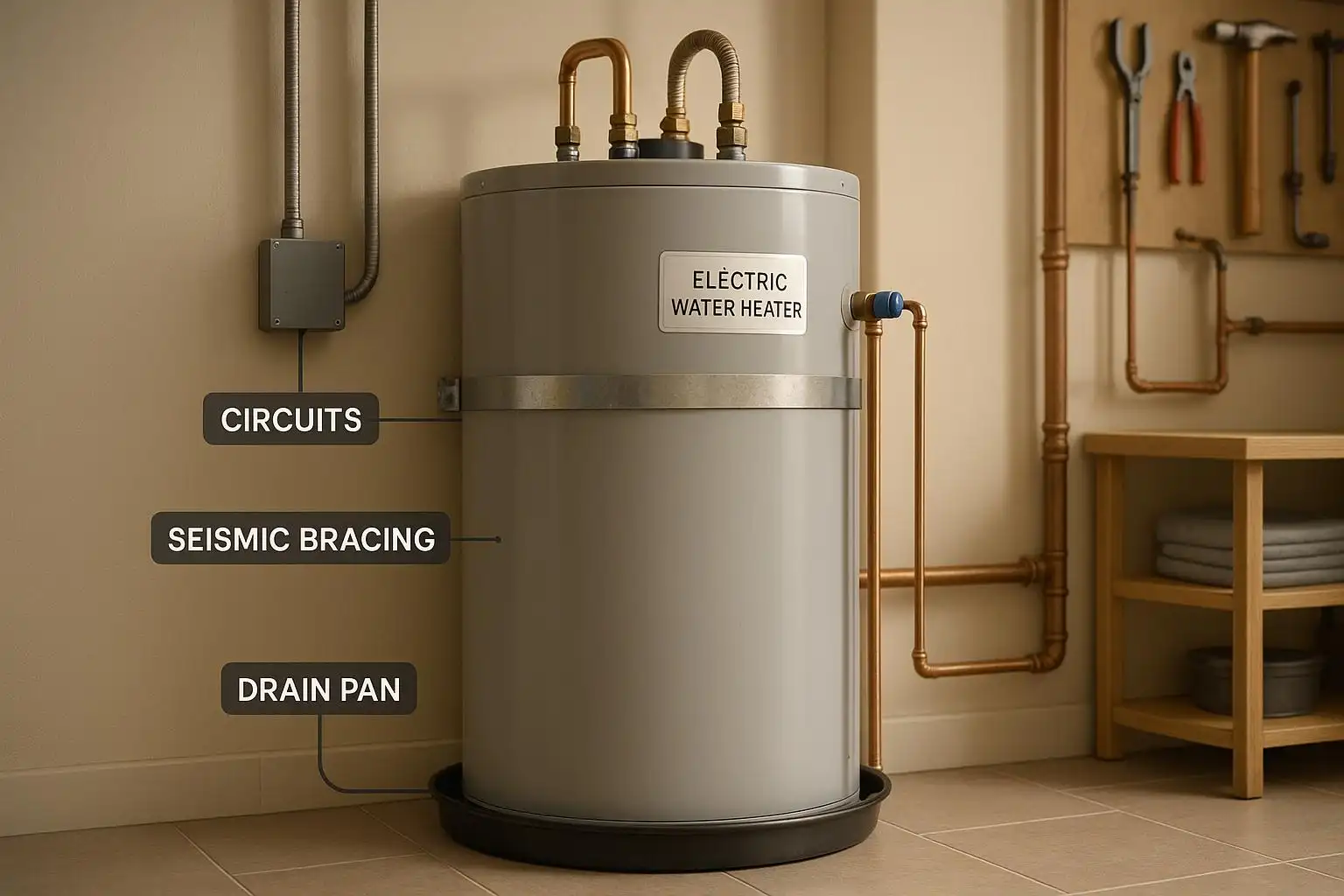
Electric water heater codes keep your home safe and your installation legal. In 2025, state rules build on national standards like the International Residential Code (IRC) and National Electrical Code (NEC). But each state adds its own twists.
Here's a quick look at key state requirements:
- California: Seismic bracing, strict energy codes, permits for all installations
- Texas: Rules vary by city, focus on safety, drainage, and electrical readiness
- Florida: Hurricane safety, corrosion resistance, energy-efficient setups
- New York: Proper clearances, GFCI protection, local amendments
- Michigan: Freeze protection, proper insulation, cold-climate compliance
Skipping compliance can lead to:
- Failed inspections
- Project delays
- Safety hazards
- Fines or penalties
Always check local rules. Hire licensed pros for complex work like electrical upgrades or seismic bracing.
1. California Electric Water Heater Codes
Model Code Adoption
California electric water heaters must follow state-modified national codes:
- Epubs Iapmo (CPC): Uses the Iapmo for plumbing
- Up (CEC): Based on the National Electrical Code
- California Energy Code (Title 24, Part 6): Sets energy efficiency standards from the International Energy Conservation Code
These codes cover:
- Water heater placement
- Seismic bracing
- Electrical circuits
- Efficiency requirements
Installation Requirements
California has strict rules for electric water heater installation:
Location rules:
- Ensure proper access for maintenance
- Keep adequate height above finished floors
- Don't install in living spaces unless enclosed
Electrical setup needs:
- Dedicated 240-volt circuit
- Overcurrent protection
- Correct wire gauge (usually 30-60 amps)
- Visible disconnect switch
- Proper grounding and bonding
Seismic bracing (required in earthquake zones):
- Two straps per unit—one on upper third, one on lower third
- Anchor straps to the structure
- Prevents horizontal movement during earthquakes
Leak protection:
- Corrosion-resistant drain pan under the unit
- Properly sized drain line
- TPR valve discharge piping meeting safety guidelines
Permitting and Inspection Rules
Most California cities require permits for water heater work. You'll typically need:
- Mechanical or plumbing permit for installation
- Separate electrical permit (in some cases)
- Final inspection before use
Common inspection failures:
- Missing or wrong seismic straps
- Incorrect drain pan piping
- Undersized wiring or breakers
- Bad bonding
- Not following manufacturer instructions
Regional or Climate-Specific Provisions
California pushes for electric-ready homes. Modern codes now require:
- Dedicated circuits near water heaters
- Reserved space for future electric or heat pump upgrades
For gas-to-electric conversions, you may need:
- Panel capacity check for increased load
- New 240-volt branch circuit
- Structural or seismic adjustments
- Coordination between plumbing and electrical pros
2. Texas Electric Water Heater Codes
Model Code Adoption
Texas uses national codes like the IRC, IPC, and NEC. But there's no single statewide standard. Each city can modify these codes.
Before any installation:
- Confirm the current code cycle
- Check for local amendments
- Verify requirements with your building department
Installation Requirements
Texas rules come directly from adopted codes:
Placement requirements:
- Maintain service space and clearances
- Follow manufacturer specs
- Don't install in closets, bedrooms, or bathrooms (unless properly enclosed)
Electrical needs:
- Dedicated 240-volt circuit
- Sized per nameplate (usually 30-50 amps)
- Accessible disconnects
- Proper grounding
- Bonded metallic piping
Safety features:
- Drain pans where leakage could cause damage
- TPR valve with proper discharge piping
Special locations:
- Garages: Bollards or curbs to prevent vehicle impact
- Flood zones: Elevated units and protected electrical components
Permitting and Inspection Rules
Most Texas areas require permits. Expect:
- Plumbing and electrical permits
- Licensed plumber for installation
- Licensed electrician for major electrical work
- Final inspection
Common issues flagged:
- Missing or undersized drain pans
- Bad discharge pipes
- Clearance violations
- Undersized circuits
- Inaccessible disconnects
- Improper bonding
Regional or Climate-Specific Provisions
Texas climate affects installation practices:
Hot regions:
- Extra ventilation for heat pump units
- Proper spacing in confined areas
Flood and hurricane zones:
- Elevated water heaters
- Secured tanks to prevent storm movement
- Safe discharge routing
New electric-ready requirements:
- Dedicated 240-volt/30-amp circuit within 3 feet of unit
- 3' x 3' clear area with 7-foot ceiling
- Required even if you install gas initially
3. Florida Electric Water Heater Codes
Model Code Adoption
Florida uses the Floridabuilding (FBC). This builds on the IRC, IPC, and NEC but adds Florida-specific rules for:
- High humidity
- Coastal salt air
- Hurricane risks
Local areas like Miami-Dade, Broward, and Monroe counties may add extra rules. Always check with your local building department.
Installation Requirements
Florida adjusts standard rules for its tropical climate:
Location restrictions:
- No installation in bedrooms or bathrooms
- Critical due to humidity and mold risks
Electrical guidelines:
- Dedicated branch circuit (240V/30A or 120V/20A)
- Circuit within 3 feet of water heater
- Disconnect switch or locking breaker
- 30-50 amp sizing based on specs
- Proper grounding and overcurrent protection
Safety features:
- TPR valve (usually set at 150 psi)
- Discharge piping sloped to approved location
- Drain pan (galvanized steel, stainless steel, or plastic)
- At least 1.5 inches deep with 3/4-inch outlet
Heat pump water heaters:
- Need 3' x 3' x 7' space for ventilation
- Proper condensate drainage for humidity
Permitting and Inspection Rules
Installing a water heater in Florida requires a permit:
- Submit installation plans to local building department
- Get compliance review
- Schedule inspection after installation
Inspectors check:
- Electrical connections
- Clearances
- Drain pan setup
- TPR valve placement
Common failures:
- Missing or wrong drain pans
- Bad TPR discharge routing
- Unpermitted work
- Undersized circuits
- Inaccessible disconnects
Work with experienced pros like Hernandez Plumbing who know Florida codes.
Regional or Climate-Specific Provisions
Florida's climate adds complexity:
Coastal areas:
- Corrosion-resistant materials for straps, fasteners, and pans
- Extra protection from salt air
Hurricane safety:
- Proper strapping and anchoring
- Prevents movement during high winds
Flood zones:
- Elevate above base flood level
- Protect from storm surges
Energy efficiency:
- Electric-ready infrastructure required in new construction
- Heat pump models can reduce energy use by 60-70%
- Potential savings of $200-$400 per year
- Federal incentives and utility rebates may help offset costs
Humidity concerns:
- Proper ventilation around water heaters
- Code-compliant drain pans in attics, garages, or upper floors
4. New York Electric Water Heater Codes
Model Code Adoption
New York uses the IRC (Chapter 28) as its foundation. The 2025 Up adds state-specific changes. Local cities can add their own amendments.
Always confirm local variations with your building department.
Installation Requirements
Electrical requirements:
- Dedicated 240-volt circuit
- 30-50 amp circuit breaker within 3 feet of unit
- GFCI protection as required
- Disconnect switch in sight of unit (or locking breaker)
Location restrictions:
- Not in storage closets
- Not in bedrooms or bathrooms (unless in sealed enclosure)
Safety features:
- TPR valve required
- Discharge pipe to catch pan, outdoors, or floor drain
- No shutoff or check valves on discharge line
- Catch pan if water damage risk exists
Required materials for catch pan:
- Galvanized steel
- Stainless steel
- Plastic
Follow manufacturer guidelines and ensure maintenance clearance.
Permitting and Inspection Rules
New York requires permits for all water heater installations:
- Must use licensed plumbers
- Submit plans to building department
- Pass final inspection before activation
Licensed plumbers handle permits, scheduling, and compliance verification.
Regional or Climate-Specific Provisions
New York's energy codes include electric-readiness measures:
- Features to support future high-efficiency upgrades
- Alignment with federal energy efficiency guidelines
- New construction may need heat pump-ready infrastructure
5. Michigan Electric Water Heater Codes
Model Code Adoption
Michigan follows ICC model codes in its 2025 Residential and Plumbing Codes. Key areas include:
- IRC Chapter 28 (Water Heaters)
- Electrical provisions
- Federal DOE efficiency standards
Efficiency standards:
- Standard electric units: UEF ratings of 0.90-0.95
- Heat pump units: UEF ratings of 3.0 or higher
Electric-ready provisions recommend:
- Dedicated 240-volt circuit
- Adequate space and ventilation for upgrades
Installation Requirements
Electrical setup:
- Dedicated, properly sized circuit
- Usually 240 volts, 30-40 amp double-pole breaker
- Overcurrent protection and grounding
- GFCI protection per NEC requirements
Heat pump specifics:
- Breaker sized 25% above full-load current
- Grounding per NEC Article 250
- Circuit termination within 3 feet of unit
Leak protection:
- Approved drain pan with proper drain line
- TPR valve with own discharge pipe
- No shutoff or check valves on discharge
Location guidelines:
- Not in sleeping areas or storage closets (unless proper enclosure)
- Best locations: basements, utility rooms, garages
- Garages may need barriers for vehicle protection
Cold climate considerations:
- Avoid unconditioned spaces without insulation
- Use freeze protection for attics, crawl spaces, outbuildings
- Pipe insulation, heat tape, and shutoff valves for winterization
Permitting and Inspection Rules
Most Michigan areas require:
- Plumbing or mechanical permit
- Electrical permit for new wiring
- Licensed professional installation
- Inspections by licensed inspectors
Common inspection issues:
- Missing or undersized drain pans
- Wrong TPR discharge termination
- Installations in restricted areas
Pre-inspection checklist:
- Proper pan and drain routing
- Correct valve and piping materials
- Accessible shutoff valves
- Clean workmanship
Regional or Climate-Specific Provisions
Michigan's cold climate requires extra measures:
Heat pump installation:
- Install in areas with sufficient ambient heat
- Basements with working furnaces work well
- Meet ventilation requirements
- Can reduce energy use by about 60%
Future upgrade prep:
- Electric-ready circuit
- At least 3' x 3' working area
- Proper condensate drainage
- Document breaker size, wire gauge, and permit info
Even simple replacements need permits and cold-climate protection. Hire a licensed plumber with local expertise.
Understanding International Plumbing Code 501 and 502
Pros and Cons of State Codes
State codes bring benefits and challenges. Here's a comparison:
| Aspect | Pros | Cons |
|---|---|---|
| Model Code Adoption | Standardized codes streamline permits. Electric-ready provisions save $200–$400/year on energy. | Frequent updates need ongoing training. Complexity can delay projects. |
| Installation Rules | Drain pans, TPR piping, and location rules boost safety. | Extra materials increase costs. Some rules seem excessive in low-risk areas. |
| Electrical Requirements | 240-volt circuits and GFCI protection ensure safety. May qualify for tax credits. | High upfront costs in older homes. Licensed electricians add labor costs. |
| Permitting & Inspection | Ensures compliance and reduces long-term risks. | Fees and delays can discourage timely work. |
| Climate Provisions | Seismic bracing reduces earthquake risks. Freeze protection lowers heating loads. | Extra costs in areas with minimal risks. Space limits in smaller homes. |
For homeowners:
- Strict codes mean lower energy bills and improved safety
- But higher upfront costs and less DIY flexibility
For contractors:
- Stricter codes let you charge more as an expert
- But navigating rules takes extra time
Conclusion
Electric water heater codes vary by state. California, Texas, Florida, New York, and Michigan all start with national codes. But each adds local modifications.
Key takeaways:
- An installation legal in one state may fail inspection in another
- Cities often add amendments to state rules
- Check with your local building office before starting work
These local rules affect every step of installation. That's why hiring knowledgeable pros matters.
In Florida, Hernandez Plumbing offers:
- Permitting assistance
- Professional installation
- Inspection coordination
- 24/7 emergency support
- Upfront pricing
- Satisfaction guarantee
- Warranties on parts and labor
Understanding local codes protects your home and helps you qualify for incentives. Whether replacing an old unit or upgrading to a heat pump, skilled professionals make all the difference.
FAQs
What are the risks of not following state-specific codes?
Non-compliance brings serious risks:
- Safety hazards: Wrong installation can cause electrical fires, water damage, or carbon monoxide leaks
- Legal problems: Fines, penalties, or voided insurance claims
- Sale delays: Code violations must be fixed before selling your home
Make sure your installation meets state codes. For Miami homeowners, Hernandez Plumbing provides expert water heater services that meet local requirements.
What are California's seismic bracing requirements?
California requires approved strapping kits to secure electric water heaters. This prevents:
- Tipping during earthquakes
- Disconnection from utility lines
California's rules are stricter than most other states. Always use a licensed professional who knows local regulations.
How can homeowners ensure code compliance?
To meet local codes:
- Hire licensed professionals who know your area's rules
- Contact your local building department for current requirements
- Get proper permits before work begins
- Schedule required inspections
Hernandez Plumbing helps Miami homeowners handle these requirements stress-free.
Need Professional Help?
Our licensed plumbers are ready to help with your water heater services needs.