DIY vs. Professional Leak Detection: Cost Comparison
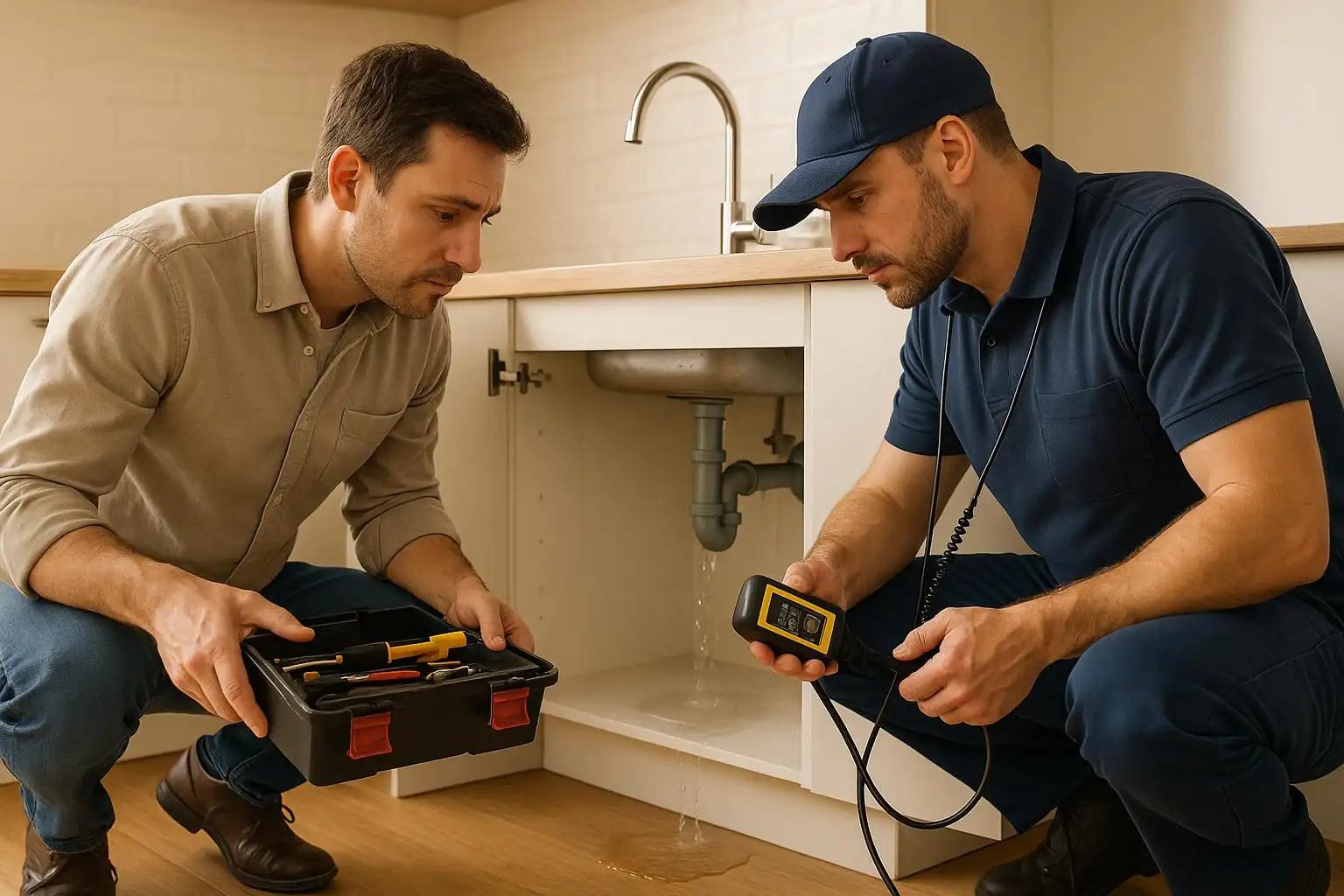
When it comes to detecting water leaks in your home, you have two choices: DIY tools or professional services. Each option has its pros, cons, and costs, depending on your situation. Here’s a quick breakdown:
- DIY Leak Detection: Costs range from $30 to $500 for tools like moisture sensors, dye kits, and smart monitors. It's affordable and gives you control, but it's limited in scope and may miss hidden leaks. Ideal for small, visible problems like a dripping faucet or a leak under the sink. For complex issues, consider our professional leak detection services.
- Professional Leak Detection: Services usually cost $175 to $600, with advanced tools like infrared cameras and acoustic sensors. Professionals can locate hidden leaks with precision, saving you from costly damage later. Best for complex or hard-to-find leaks, like those behind walls or under concrete slabs.
Quick Tip: For minor, accessible leaks, DIY may be enough. But for hidden or severe issues, professional help is worth the investment to avoid long-term damage and repair costs.
Below, we’ll dive into the costs, strengths, and limitations of each method to help you decide which is right for your home.
Should You DIY or Hire a Pro?
DIY Leak Detection: Low Cost but Basic
DIY leak detection is a practical choice for homeowners looking to address plumbing issues without paying for professional labor. From simple moisture sensors to advanced smart monitors, these tools can help protect your home quickly and affordably. However, understanding their capabilities and limitations is essential before diving in. Here’s a closer look at the costs, advantages, and challenges of DIY leak detection.
Costs and Tools You’ll Need
The price of DIY leak detection tools varies widely based on their complexity. Basic moisture sensors are a budget-friendly option, starting at about $20. These can help spot leaks early, making them a great starting point for those on a tight budget. If you’re dealing with toilet leaks or visible fixture issues, dye testing kits are another option, with prices ranging from $20 to $200.
For more advanced needs, moisture meters can measure water levels in walls and floors, with costs between $100 and $1,000. If you’re ready to spend a bit more, acoustic listening devices – used to detect the sound of water escaping from pipes – fall in the same price range. At the top end, smart water monitors, which provide continuous tracking and send real-time alerts for unusual water usage, often cost over $300. Overall, a complete DIY setup can range from $30 to $500, and since you’re doing the work yourself, there are no labor fees to worry about.
Benefits of DIY Leak Detection
One major perk of DIY leak detection is saving on labor costs. Once you’ve purchased the tools, they’re yours to use indefinitely, with no ongoing subscription or monitoring fees. This makes it a cost-effective solution, especially for long-term home maintenance.
DIY methods also give you flexibility and control. You can place sensors wherever you think they’re needed and move them around as your home’s needs change. This adaptability is particularly useful for targeting areas prone to leaks, like under sinks or near appliances.
Another big advantage is convenience. You can inspect your plumbing system whenever it fits your schedule, without waiting for a professional appointment. If you notice a damp spot or suspect a leak, you can act immediately, potentially preventing more extensive damage. Plus, handling these tasks yourself can boost your confidence in managing home maintenance.
Drawbacks of DIY Leak Detection
Despite its affordability, DIY leak detection does come with some downsides. The biggest challenge is the limited expertise and tools. While a moisture meter might show dampness near a visible pipe, it often can’t pinpoint hidden leaks behind walls or under concrete slabs.
Without access to professional-grade equipment like infrared cameras or ground-penetrating radar, DIY detection is typically restricted to areas you can easily see – under sinks, near appliances, or around exposed pipes. Missed leaks can lead to significant water damage and costly repairs down the line.
There’s also the time investment to consider. Learning how to use the tools, inspecting your plumbing system, and diagnosing issues can take a lot of effort. Additionally, DIY systems might face reliability issues, such as battery failures or connectivity problems, especially in larger homes. These challenges can make DIY detection less effective for more complex or widespread leak issues.
Professional Leak Detection: Precision and Training
When basic tools fall short, professional leak detection steps in with advanced expertise and tools designed to tackle complex plumbing issues. These services go beyond simple visual inspections, offering solutions for challenges that require precision and specialized equipment. Knowing what professionals bring to the table – and how much it costs – can help you determine when it’s time to call in the experts.
Service Costs and What Affects Pricing
The cost of professional leak detection typically ranges from $175 to $350, with more complicated cases exceeding $500. Several factors influence these prices, including the location of the leak, the detection methods used, and how urgent the situation is.
For instance, a leak under a sink is easier (and cheaper) to locate than one hidden beneath a concrete slab or multiple layers of walls. The tools required also play a role in pricing. Simpler methods like using moisture meters or infrared cameras generally cost less, while advanced techniques such as hydrostatic water testing or acoustic detection can push costs higher.
Geographic location is another key factor. Areas with a large number of service providers often have more competitive pricing and faster availability. On the other hand, regions with fewer professionals may charge more due to limited options. Urgency also impacts costs – emergency services, especially outside regular business hours, typically come with higher fees.
For example, in Miami, Florida, companies like Hernandez Plumbing offer professional leak detection services starting at $49 for residential diagnostics (regularly $97). They also provide 24/7 emergency availability, making it easier for homeowners to address leaks quickly and affordably. These pricing factors highlight the value of professional services, as explored below.
Benefits of Professional Leak Detection
One of the primary advantages of hiring professionals is their access to advanced tools and technology. Unlike basic DIY equipment, professionals use tools like infrared cameras, acoustic sensors, ground-penetrating radar, and other specialized systems to detect leaks that are otherwise undetectable.
Another key benefit is accuracy. Professionals can locate leaks in hard-to-reach areas, such as behind walls, beneath concrete slabs, or in underground pipes – places where DIY methods often fail.
Professional services also offer comprehensive coverage. They can monitor your entire plumbing system using advanced sensor networks, whereas DIY tools typically focus on specific areas. Many professional systems even include automatic water shutoff features, which not only alert you to a leak but also prevent further damage by cutting off the water supply immediately.
Certified technicians bring years of experience to the job, allowing them to identify and address complex plumbing issues effectively. This reliability is particularly helpful for larger homes or properties with intricate plumbing layouts.
Additionally, early detection through professional services can help avoid costly damage. Hidden leaks left unchecked for weeks or months can lead to structural issues or mold growth, resulting in repairs that could cost thousands of dollars. By catching these problems early, professionals can save you significant money in the long run.
Drawbacks of Professional Leak Detection
The most obvious drawback is the higher upfront cost. Professional services typically start at $175 and can exceed $500, whereas DIY tools range from $30 to $500. For more advanced professional systems that include installation and monitoring, costs can climb to $500 to $3,000 or more. These prices reflect the expertise, training, and specialized equipment professionals bring to the table.
Another challenge is scheduling and availability. Unlike DIY methods, which you can use at your convenience, professional services require appointments. Depending on the demand in your area, you might face delays in getting someone to your property, which can be problematic if an active leak is causing immediate damage.
Reliance on external scheduling can also feel restrictive. With DIY methods, you control the process entirely. Professional services, however, require you to adapt to someone else’s availability, pricing, and timing – something that can be frustrating for homeowners who prefer a hands-on approach.
Despite these drawbacks, the higher upfront cost of professional services often pays off in the long run. Early detection and prevention of major damage can save you from expensive repairs, making the investment worthwhile. This analysis of professional leak detection sets the stage for a closer look at how it compares to DIY solutions in terms of cost and effectiveness.
DIY vs. Professional Leak Detection: Cost Breakdown
When deciding between DIY and professional leak detection, it’s essential to weigh the upfront costs, long-term value, accuracy, and the time each method demands.
Upfront and Long-Term Costs
The cost difference between DIY and professional leak detection is clear at first glance, but it’s the long-term impact that often tips the scales.
| Cost Category | DIY Range | Professional Range |
|---|---|---|
| Basic tools/service | $20–$500 | $150–$350 |
| Advanced equipment | $100–$1,000 | $175–$600+ |
| Installed systems | $30–$500 | $500–$3,000+ |
DIY tools, such as simple moisture sensors, start at around $20, while smart monitors can exceed $300. These options avoid labor and scheduling costs, but more advanced equipment, like acoustic devices or high-grade moisture meters, can run between $100 and $1,000.
Professional services, on the other hand, typically cost $175 to $350 for a standard inspection. Complex cases can exceed $500. For instance, Hernandez Plumbing in Miami is known for offering competitive, transparent rates.
While DIY might seem like the cheaper route upfront, hidden risks lurk beneath the surface. A $50 moisture sensor may fail to detect a hidden leak behind a wall, leading to costly water damage repairs down the line. Professional detection, though more expensive initially, can save you from such hefty repair bills by addressing issues before they escalate.
Beyond the monetary aspect, the accuracy of your chosen method plays a significant role in preventing future expenses.
Accuracy and Risk of Missing Leaks
When it comes to precision, professional leak detection is hard to beat. Trained technicians use advanced tools like infrared cameras, acoustic devices, moisture meters, and ground-penetrating radar to locate leaks – even in hard-to-reach places like underground pipes, behind walls, or under concrete slabs.
DIY methods, while accessible, often fall short in accuracy. A basic moisture sensor might signal the presence of water but fail to pinpoint the exact location of the leak. This can lead to ineffective repairs and, worse, allow the problem to persist unnoticed. A hidden leak left unchecked for weeks or months can turn a minor issue into a major financial headache.
While accuracy is key to avoiding future damage, the time and skill involved in each approach are also critical factors to consider.
Time, Convenience, and Skill Level
DIY leak detection gives you the freedom to work on your schedule, but it demands time, effort, and a certain level of skill. You’ll need to research methods, purchase tools, and interpret results, which can be overwhelming for some.
Professional services, on the other hand, are designed for convenience. With just one appointment, a technician arrives equipped with everything needed, conducts a thorough inspection, and provides a detailed report. This streamlined process is particularly valuable in emergencies or when dealing with larger, more complex properties.
Ultimately, the choice between DIY and professional leak detection depends on your comfort with technology, the complexity of your plumbing system, and your willingness to take on potential risks. Balancing cost, accuracy, and time will help you decide which approach fits your situation best.
When to Choose DIY vs. Professional Leak Detection
Deciding between DIY and professional leak detection depends on several factors, including your home’s layout, your budget, and the type of leak you’re dealing with. It’s not a one-size-fits-all situation, so understanding your specific needs is key.
What to Consider Before Deciding
Before making a choice, it’s important to weigh a few critical factors.
DIY methods are often suitable for smaller homes or simpler plumbing systems. On the other hand, larger homes with intricate layouts typically require professional expertise to ensure thorough detection.
Cost considerations are also important. While DIY can save money upfront, professional services may prevent costly repairs down the line if the problem isn’t fully addressed .
Urgency plays a big role. If water is spreading quickly or you discover a leak in the middle of the night, waiting to gather tools or troubleshoot on your own might not be feasible. In these cases, professional help is often the fastest and safest option.
Your technical skills are another factor. Some homeowners are comfortable using tools like moisture meters and interpreting the results, while others may find the process overwhelming. Misjudging your abilities could lead to incomplete detection and unresolved issues .
Finally, think about the location and accessibility of the leak. Fixing a dripping faucet is straightforward, but a leak behind a wall or under a concrete slab is a different story entirely.
Considering these factors can help you decide whether to tackle the issue yourself or call in the pros.
When DIY Makes Sense
There are situations where DIY leak detection can be a practical and effective approach.
For small, visible leaks – like those under a sink, behind a toilet, or around an exposed pipe – a quick visual inspection or basic tools might be all you need to identify the problem .
If you’re working with a tight budget and feel confident in your skills, DIY can save you money. With some effort and the right tools, you might avoid the cost of hiring a professional.
In cases of minor leaks in simple plumbing systems, especially if you’ve handled basic home repairs before, DIY detection can be a quick and efficient solution. You can often resolve the issue without waiting for a professional to arrive .
DIY is a good fit for straightforward, manageable leaks. But if the situation seems more complex, it’s better to call a professional.
When Professional Services Are Needed
For larger or hidden leaks, professional leak detection is often the best choice due to the tools and expertise required.
Homes with complex plumbing systems – such as multi-story properties or those with extensive pipe networks – often require a professional touch to ensure no issues are missed.
Hidden or severe leaks are another case where professionals excel. Leaks behind walls, under slabs, or in underground pipes often require specialized equipment that DIY tools simply can’t match .
In emergencies, professional services are invaluable. Whether it’s late at night, on a weekend, or during the holidays, professionals with 24/7 availability can step in to prevent worsening water damage.
Time-sensitive situations also warrant professional help. Whether you’re selling your home, dealing with insurance claims, or trying to prevent structural damage, the speed and accuracy of professional leak detection can save you time and money in the long run.
For Miami residents, Hernandez Plumbing offers professional leak detection services with 24/7 availability. They provide upfront pricing starting at $49 for residential diagnostics and back their work with a satisfaction guarantee. With over 50 years of experience, their licensed technicians use advanced equipment to handle everything from hidden slab leaks to urgent late-night calls. Their warranty on parts and labor adds extra peace of mind.
When precision, speed, or guaranteed results are essential, professional services are the way to go. While the upfront cost may be higher, it often prevents more expensive repairs in the future, making it a smart investment.
Conclusion
Deciding between DIY and professional leak detection comes down to your specific situation, budget, and skill level. Both options have their merits, and neither is inherently better – it all depends on what you’re dealing with.
DIY tools, which can cost as little as $30, are perfect for tackling straightforward leaks like a dripping faucet or a problem under the sink. Plus, the ability to work on your own schedule is a big perk for minor issues that don’t demand immediate attention. However, when it comes to hidden or more complicated leaks, DIY solutions often fall short.
Without advanced tools like thermal imaging cameras or acoustic leak detectors, it’s easy to overlook leaks behind walls, under concrete slabs, or in underground pipes. Missing these can lead to major repair bills later on, making DIY detection a risky choice for anything beyond the basics.
On the other hand, professional leak detection offers specialized expertise and cutting-edge equipment designed to find even the most elusive leaks. Professionals can identify issues you might never notice on your own, often saving you money in the long term by catching problems early and avoiding unnecessary damage.
For anything more complex than a visible, minor leak – such as gas leaks, slab leaks, or hidden water damage – professional help is the safest and most cost-effective option. Their accuracy and ability to prevent future complications make them invaluable.
If you’re in Miami, Hernandez Plumbing provides 24/7 professional leak detection with upfront pricing and a satisfaction guarantee. Whether it’s an urgent late-night issue or a hidden plumbing problem, their advanced tools and local expertise ensure precise results while minimizing structural damage.
Choosing professional detection is an investment in peace of mind, helping you avoid costly repairs and ensuring the job is done right the first time.
FAQs
What are the risks of missing hidden leaks when using DIY detection methods?
Missing hidden leaks with do-it-yourself detection methods can end up costing you more than you might think. Leaks that go unnoticed can lead to serious problems like structural damage, mold infestations, and skyrocketing water bills. Over time, these issues tend to escalate, often resulting in expensive repairs that could have been avoided.
While tackling the problem yourself might seem like a money-saver at first, DIY approaches often fall short compared to the precision and reliability of professional tools. Experts, such as the team at Hernandez Plumbing, rely on advanced technology to pinpoint leaks quickly and accurately. This not only helps to minimize potential damage but also saves you from unexpected repair costs down the road.
Why are professional leak detection services more accurate than DIY methods?
When it comes to finding leaks, professional services rely on cutting-edge tools like thermal imaging cameras, acoustic sensors, and specialized pressure tests to locate the problem with pinpoint accuracy. These methods go well beyond the capabilities of typical DIY tools, which often depend on guesswork or basic technology.
What sets professionals apart isn’t just their equipment – it’s their expertise. They’re skilled at uncovering leaks in tricky spots, such as behind walls or even underground, where DIY solutions often fall short. This level of precision not only saves time but also minimizes the risk of further damage or expensive repairs later on.
When should homeowners opt for professional leak detection instead of DIY solutions?
If your do-it-yourself attempts don’t uncover the leak or the problem seems more complicated – like a hidden leak behind a wall or underground – it’s a good idea to bring in the professionals. They have specialized tools and methods to locate leaks with precision, helping you save time and avoid additional damage.
Calling in experts is especially crucial if you’re dealing with ongoing leaks, unexplained spikes in your water bill, or visible signs of water damage that you can’t trace. Tackling these issues early can prevent expensive repairs later on.
Need Professional Help?
Our licensed plumbers are ready to help with your leak detection needs.