Best Practices for Using Chemical Drain Cleaners
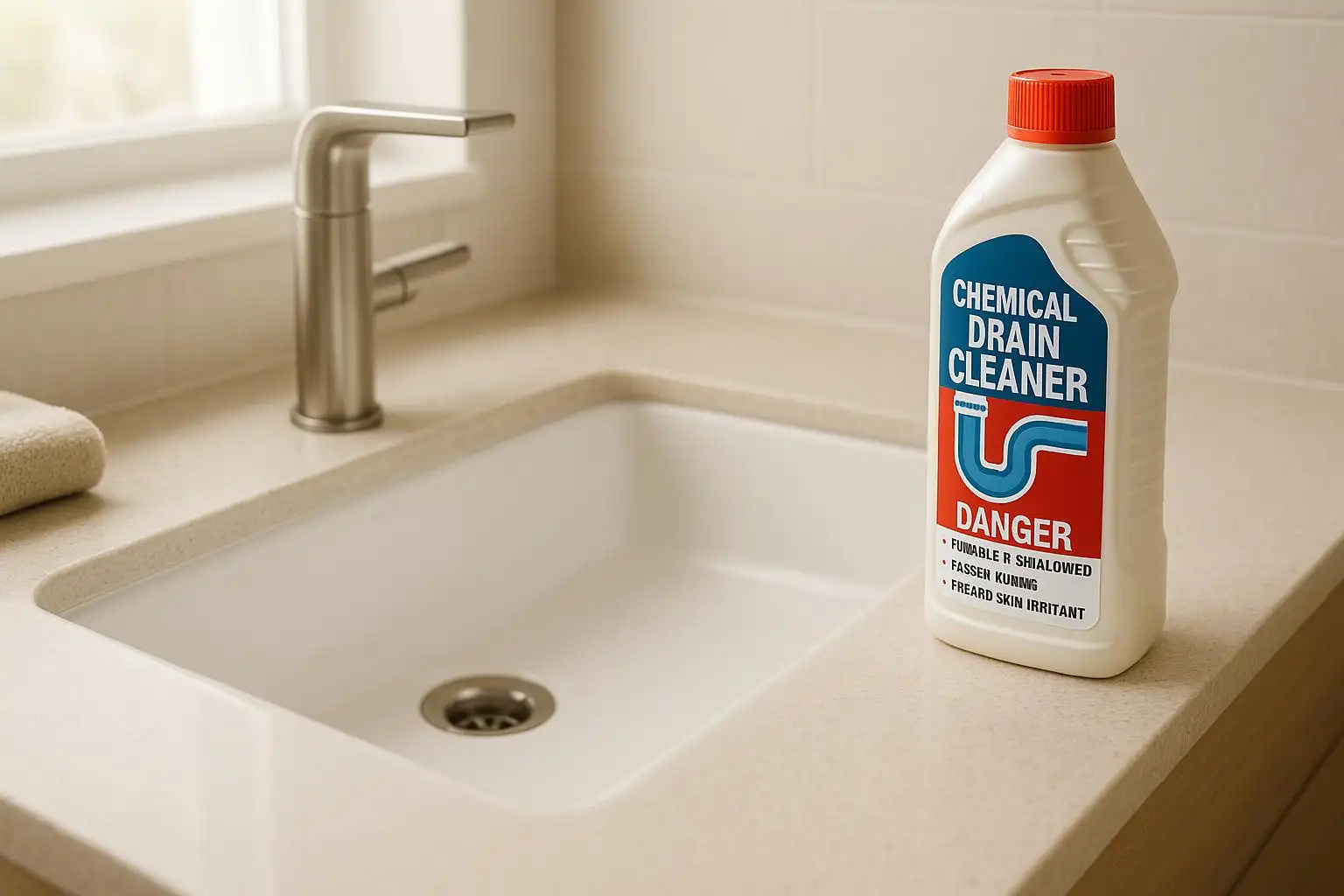
Chemical drain cleaners are effective but come with risks. They can dissolve tough clogs but may harm your health, damage your plumbing, or even release toxic gases if misused. For stubborn clogs, professional drain cleaning services are a safer and more effective option. Here's what you need to know:
- Types of Cleaners: Includes caustic (for grease), oxidizing (for food), acidic (for hair), and enzymatic (gentle, long-term maintenance).
- Safety First: Always wear gloves, goggles, and work in a ventilated area. Never mix cleaners or use them with hot water unless directed.
- Plumbing Risks: Overuse can corrode pipes, especially older PVC or metal ones. Avoid using these products repeatedly for recurring clogs.
- When to Stop: If one attempt fails, don’t add more chemicals. Call a professional to avoid worsening the issue.
While chemical cleaners can be helpful for minor clogs, they're not always the best solution. For tougher or recurring problems, mechanical tools or professional sewer line repair services are safer and more effective.
Are Chemical Drain Cleaners Safe to Use? The Brutal Truth!
What Are Chemical Drain Cleaners
Chemical drain cleaners are specially formulated products designed to tackle blockages in pipes. These cleaners use strong acids or alkalis to break down common clogging materials like hair, food scraps, grease, and other organic debris. Available in liquid, gel, and powder forms, they can be purchased at most hardware stores, though some industrial-grade options are restricted to licensed plumbers. The chemical reaction they trigger generates heat, which helps dissolve clogs. However, this process can be dangerous, with around 3,000 injuries reported each year in the U.S.. Let’s take a closer look at the main types of chemical drain cleaners.
Types of Chemical Drain Cleaners
Chemical drain cleaners fall into four main categories, each suited for specific clogging issues and plumbing needs:
- Caustic Cleaners: These cleaners use alkaline substances like lye (sodium hydroxide) or caustic potash. When applied, they produce hydroxide ions that react with clogs, generating heat and turning grease into a soap-like material that can be rinsed away. For example, some caustic cleaners combine low concentrations of sodium hydroxide with household bleach, making them effective against grease and soap buildup.
- Oxidizing Cleaners: These cleaners rely on chemicals like household bleach, peroxides, or nitrates to oxidize organic materials. The reaction releases heat and gas, which help dislodge clogs. Oxidizing cleaners are particularly effective for removing food-based blockages.
- Acidic Cleaners: Packed with high concentrations of sulfuric or hydrochloric acid, these cleaners break down clogs by releasing heat and attacking proteins, fats, and cellulose. Due to their strength, they are often restricted to professional use and are typically sold only to licensed plumbers.
- Enzymatic Cleaners: Unlike the others, enzymatic cleaners work through natural processes, using bacteria and enzymes to digest organic material. Although slower-acting, they’re a gentler, eco-friendly choice that won't damage pipes or harm septic systems. Enzymatic cleaners are available in both liquid and powder forms, with powder versions often preferred for their longer shelf life and concentrated formula.
Eco-Friendly Powder Drain Cleaners
For homeowners seeking safer alternatives to harsh chemical drain cleaners, eco-friendly powder options offer an effective middle ground. These products clear clogs without the toxic fumes, pipe damage, or environmental concerns associated with caustic and acidic cleaners.
Types of Eco-Friendly Powder Cleaners
Enzyme-Based Powders: Products like Bio-Clean, Green Gobbler, and Earthworm Drain Cleaner use concentrated bacterial cultures in powder form. When activated with water, these bacteria multiply and digest organic matter in your pipes. They're particularly effective for:
- Hair and soap buildup in bathroom drains
- Grease accumulation in kitchen sinks
- Ongoing maintenance to prevent future clogs
- Septic system-safe applications
Oxygen-Based Powders: These cleaners use sodium percarbonate (oxygen bleach) to break down organic clogs through oxidation. Unlike chlorine bleach, oxygen-based powders are biodegradable and won't produce toxic fumes. They work well for:
- Food particle buildup
- Mild soap scum deposits
- Deodorizing drains
Plant-Derived Formulas: Some eco-friendly powders combine natural enzymes with plant-based surfactants. These products avoid petroleum-derived chemicals while still providing effective cleaning action.
How to Use Eco-Friendly Powder Cleaners Safely
While eco-friendly powder cleaners are gentler than chemical alternatives, you should still follow these safety precautions:
- Wear gloves – Even natural enzymes can irritate sensitive skin
- Ensure ventilation – Open a window or turn on the exhaust fan
- Use cold water only – Hot water can kill beneficial bacteria in enzyme-based products
- Remove standing water first – Powders need direct contact with the clog
- Allow adequate time – Most eco-friendly powders need 4–8 hours or overnight to work
- Don't mix with chemical cleaners – Never use after or before harsh chemicals
Application steps for powder drain cleaners:
- Remove any standing water from the drain
- Add 1–3 tablespoons of powder directly into the dry drain
- Pour one cup of cold water slowly to activate the powder
- Wait the recommended time (usually overnight for best results)
- Flush with cold water for 2–3 minutes
Limitations of Eco-Friendly Cleaners
Eco-friendly powder cleaners work best for maintenance and minor clogs. They won't resolve:
- Complete blockages with no water flow
- Tree root intrusions
- Mineral scale buildup
- Foreign objects lodged in pipes
- Severe grease blockages in commercial kitchens
For these situations, professional drain cleaning services with hydro jetting or mechanical snaking are more effective.
Best Powder Drain Cleaners by Clog Type
Choosing the right powder cleaner depends on what's causing your clog and where it's located. Here's a breakdown of the best options for common household drain problems:
| Clog Type | Best Powder Option | Why It Works | Wait Time |
|---|---|---|---|
| Hair (showers, bathroom sinks) | Enzyme-based powder | Bacteria digest protein-based hair without damaging pipes | 6–8 hours |
| Grease (kitchen sinks) | Enzyme-based or caustic powder | Breaks down fats into water-soluble compounds | 4–8 hours |
| Soap scum buildup | Oxygen-based powder | Gentle oxidation lifts soap residue | 2–4 hours |
| Food particles | Oxidizing or enzyme-based powder | Dissolves organic matter effectively | 4–6 hours |
| Ongoing maintenance | Enzyme-based powder (monthly) | Prevents buildup, safe for regular use | Overnight |
For Shower and Bathtub Drains
Hair is the primary culprit in shower clogs. Enzyme-based powders are the best choice because they:
- Digest hair proteins without harsh chemicals
- Won't damage older pipes or corrode metal fixtures
- Are safe for septic systems
- Can be used monthly for prevention
For stubborn hair clogs, consider using a drain snake first to remove the bulk of the blockage, then follow up with an enzyme powder treatment to clear remaining residue.
For Kitchen Sink Drains
Grease and food particles require a different approach:
- Light grease buildup: Enzyme-based powders work well and are safest for regular use
- Heavy grease clogs: Caustic (lye-based) powders are more effective but require careful handling
- Garbage disposal drains: Use enzyme-based products to avoid damaging disposal components
Pro tip: Run cold water (not hot) when using your garbage disposal. Hot water liquefies grease, which then re-solidifies further down the pipe. Cold water keeps grease solid so the disposal can chop it up.
How to Choose the Right Product
Selecting the right drain cleaner depends on several factors. Start by identifying the source of the clog. For grease clogs in kitchen sinks, caustic cleaners are the go-to option. Hair clogs in bathroom drains respond better to acidic cleaners, while food blockages in garbage disposals are best handled by oxidizing cleaners.
The type of pipes in your home also matters. Caustic cleaners are safe for modern PVC pipes and cast iron pipes with protective coatings. Acidic cleaners, on the other hand, are typically reserved for commercial or industrial plumbing systems with robust metal pipes that can handle acidic exposure. For older plumbing systems, enzymatic cleaners provide a safer, long-term solution.
Additionally, consider your waste system. If you have a septic tank, make sure to use a product labeled as septic-safe. Some municipalities even ban the use of emulsifiers – chemicals that temporarily liquefy fats and oils – because they can re-solidify in sewer systems and lead to larger blockages.
Lastly, never mix different types of drain cleaners. If one product doesn’t work, avoid trying another, as combining chemicals can create dangerous reactions. Always match the cleaner to the specific fixture – what works for a sink might not be suitable for a toilet or shower drain. And, as always, carefully follow the manufacturer’s instructions for safe and effective use.
Safety Precautions You Must Take
Handling chemical drain cleaners isn’t something to take lightly. These products contain powerful chemicals that can cause serious harm if swallowed, inhaled, or if they come into contact with your skin or eyes. The risks include burns, respiratory issues, and severe irritation to the eyes and throat .
Before you even open the container, it’s crucial to prepare both yourself and your workspace. Following these safety measures can mean the difference between a smooth cleaning process and a hazardous situation.
Personal Protective Equipment (PPE)
Protecting yourself from chemical splashes and harmful fumes is a must. Start with gloves – thick rubber or nitrile gloves that extend past your wrists are ideal. Thin latex gloves won’t cut it when dealing with these potent chemicals.
Don’t stop at gloves. Protect your eyes with safety goggles, preferably ones with side shields, as regular glasses won’t provide adequate protection. If fumes are a concern, especially in tight spaces, wear a respirator or an N95 mask to filter out harmful vapors.
Clothing matters, too. Wear long sleeves, long pants, and closed-toe shoes made of durable fabric. Old clothes are a good choice since they might get stained or damaged.
Andrew Lohbihler, CEO/CTO at Laser Stuff Inc., emphasizes the risks involved:
"Inhaling chemicals from common drain cleaners like Drano or Liquid Plumbers can be incredibly dangerous. Among the chemicals in these products is sodium hydroxide, which is incredibly toxic. Sodium hydroxide can cause dangerous symptoms if inhaled or if it comes into contact with your skin."
Always keep running water nearby in case of accidental contact with your skin or eyes. If this happens, flush the area with water immediately.
Once you’re geared up, turn your attention to your environment to ensure it’s as safe as possible.
Ventilation and Workspace Setup
A well-ventilated workspace is key to reducing your exposure to harmful fumes. Open a window or door and, if possible, use an exhaust fan to circulate air. Chemical drain cleaners can release toxic vapors that build up quickly in enclosed spaces.
"When dealing with chemical drain cleaners, adequate ventilation is paramount. Ensure your workspace is well-ventilated by opening windows and doors. Proper airflow helps dissipate fumes, reducing your exposure to potentially harmful chemicals. Additionally, consider using fans to improve ventilation, creating a safer environment while working on your drain cleaning tasks."
Position a fan to direct air away from you and toward an open window or door, creating a cross-breeze. If you’re working in a bathroom without windows, turn on the exhaust fan and leave the door open to allow for better airflow. If you start to feel lightheaded, step outside immediately for fresh air.
Before you begin, clear the area around the drain. Remove any clutter or obstacles to avoid accidents, especially since wet floors from spills can increase the risk of slipping. Keep children and pets out of the area by closing doors or putting up warning signs.
Finally, have all your tools – gloves, goggles, a bucket, and old clothes – within easy reach. Proper preparation ensures a safer, more efficient cleaning process.
Taking these precautions not only protects you from injuries but also minimizes the risk of damaging your plumbing. Safety should always come first when working with chemical drain cleaners.
Step-by-Step Safety Checklist
Taking a careful, structured approach when using chemical drain cleaners can help you stay safe while ensuring the treatment works as intended. Here’s a breakdown of the process into clear, manageable steps.
Check and Prepare the Drain
Start by examining the drain. If there’s standing water, remove it using a cup, ladle, or wet vacuum. This step is especially important for powder or crystal cleaners, which need to make direct contact with the clog to work effectively.
If you have a septic system, confirm that the product is safe to use with it. Also, make sure the drain is free of any other cleaning agents to avoid potentially hazardous reactions.
Remove any covers or stoppers that might obstruct the application, and clear the area around the drain of items that could be damaged by spills. Once everything is prepped and the product is confirmed safe for use, you’re ready to apply the cleaner.
How to Apply and Time the Treatment
For liquid drain cleaners, carefully pour the recommended amount directly into the drain. Go slow to avoid splashing.
If you’re using a powder cleaner, add 1–3 tablespoons to a dry drain. Then, immediately pour in one cup of cold water – never use hot water, as it could cause a dangerous reaction.
Let the cleaner sit undisturbed for up to 30 minutes. Afterward, flush the drain thoroughly. Use hot water for liquid cleaners and cold water for powders, running the water for 2–3 minutes to wash away any remaining residue.
Once the treatment is complete, secure the cleaner to wrap up the process.
Safe Storage After Use
Immediately secure the container by tightly closing the lid or cap. Clean up any spills right away to avoid accidents.
Store the cleaner in a cool, dry, and shaded place. To keep it out of reach of children and pets, use a locked cabinet or place it on a high shelf. Double-check that any childproof caps are functioning as intended.
If the product expires or you no longer need it, contact your local waste management facility for proper disposal instructions. Never pour leftover chemicals down drains, toilets, or storm drains, as this can harm water sources and the environment.
Risks and Potential Damage
Building on the safety precautions discussed earlier, this section delves into the dangers associated with improper use of chemical drain cleaners, both to personal health and to plumbing systems. While these products are known for their quick results, they come with serious risks.
Health Hazards
Each year in the United States, chemical drain cleaners are responsible for around 3,000 severe injuries. Common issues include chemical burns, eye injuries, and respiratory problems, with heat burns making up about one-third of these cases. Prof. Dr. Rüştü Uçan explains:
"During the use of similar products, there is a very severe acid-base reaction. As a result of the blistering and explosion reaction, caustic and cauterizing chemical splashes can occur on the skin and eyes, and even toxic chlorine gas is released that can cause the death of the user."
Mixing drain cleaners with other chemicals, as mentioned earlier, can release lethal gases. Children and pets are particularly vulnerable, with cleaning products being linked to 8.3% of all pet poisoning incidents. Even brief exposure can lead to severe harm. Mustafa Cüneyt Gezen emphasizes:
"Contact with drain opener products can lead to severe skin burns and eye damage."
In case of exposure, rinse the affected area with water for at least 15 minutes and contact emergency services immediately.
Plumbing Damage
The risks of chemical drain cleaners extend beyond personal injury – they can also damage your plumbing. These cleaners rely on corrosive reactions that generate intense heat, which can weaken or destroy pipes. PVC pipes are especially at risk, as the heat can soften or even melt the plastic. Older metal pipes face similar threats, becoming brittle and more likely to burst. Additionally, these chemicals can disrupt septic systems by destroying the beneficial bacteria necessary for breaking down waste.
For example, products like Liquid-Plumr Industrial Strength contain 3–7% household bleach and less than 2.5% sodium hydroxide (lye), while Drano Max Professional Strength includes less than 5% lye and 3–10% household bleach. Acid-based cleaners are even more aggressive, capable of dissolving materials like plastic, metal, and ceramic pipes.
Given these risks, consulting a professional, such as Hernandez Plumbing, is often the best course of action when plumbing damage is suspected.
Chemical vs. Mechanical Methods Comparison
Comparing chemical and mechanical drain cleaning methods highlights why opting for mechanical solutions may be a better choice:
| Feature | Chemical Drain Cleaning | Mechanical Drain Cleaning |
|---|---|---|
| Effectiveness | Quick for minor clogs | Better for tough, widespread clogs |
| Long-Term Impact | May corrode or weaken pipes | Maintains plumbing integrity |
| Safety | Poses health risks from fumes and chemicals | Safer for users and the environment |
| Cost | Lower initial cost but higher repair risks | Higher upfront cost but reusable tools |
| Environmental Impact | Chemicals can harm ecosystems | More eco-friendly |
While chemical cleaners are convenient and affordable in the short term, they often offer only temporary relief and can lead to long-term plumbing and environmental issues. On the other hand, mechanical tools like plungers or drain snakes may require more effort and time but provide a more thorough and lasting fix. Plus, they help protect your plumbing system, potentially saving you from expensive repairs down the line.
When to Call a Professional
It’s important to recognize when chemical cleaners aren’t enough to tackle a clog. Knowing when to bring in a professional can save you from costly repairs and potential hazards down the line.
Signs Chemical Cleaners Won’t Work
Chemical drain cleaners are typically effective for minor, surface-level blockages. But if you’re dealing with recurring clogs, foul odors, or strange gurgling noises, it’s a sign that the problem runs deeper. These symptoms may indicate that the chemicals have only pushed the blockage further down or failed to dissolve tougher clogs, potentially causing pipe corrosion or other damage. If your drains are still slow, clogs return frequently, or odors persist after using a cleaner, it’s time to stop and call in a professional.
Avoid pouring additional chemicals down the drain if the first attempt doesn’t work. Doing so can worsen the damage to your pipes and create a dangerous situation for anyone trying to resolve the issue later.
Emergency Situations and What to Do
Certain plumbing issues call for immediate action. Burst pipes, a complete loss of water, or sewer clogs are clear emergencies. In these cases, shut off your main water supply immediately and contact a plumber. For an overflowing toilet, turn off its water supply right away to prevent unsanitary flooding.
Other warning signs that demand professional attention include persistent sewage odors, water backing up in unexpected places, gurgling sounds from toilets, or visible water leaks. Make a note of any unusual symptoms, such as changes in water pressure, strange noises, or lingering smells. Sharing these details with your plumber can help them diagnose and fix the problem more efficiently .
When these issues arise, calling a professional isn’t just a good idea – it’s absolutely necessary.
Professional Drain Cleaning Services by Hernandez Plumbing
When DIY methods fall short, professional drain cleaning services provide a safer and more effective solution. Hernandez Plumbing, based in Miami, FL, offers a range of services designed to tackle even the toughest clogs. Using advanced tools like video inspection cameras and high-pressure water jetting, their team can clean pipe walls thoroughly and address blockages that chemical cleaners simply can’t handle. This approach not only resolves current issues but also helps identify and prevent underlying drainage problems.
Hernandez Plumbing offers 24/7 emergency services, so help is always available when you need it. Their licensed and certified technicians provide upfront pricing and a satisfaction guarantee, ensuring you know what to expect before any work begins. Regular professional drain cleaning can extend the life of your plumbing system by reducing stress on pipes and connections, ultimately preventing costly repairs. Hernandez Plumbing recommends scheduling annual cleanings, though homes with older plumbing or larger families might benefit from more frequent service – every 6 to 8 months .
For those dealing with repeated clogs or multiple blocked drains, professional assistance becomes invaluable. Hernandez Plumbing’s experts can also share maintenance tips to help you avoid future issues. Beyond drain cleaning, they offer services like water line replacement, leak detection, and cast iron pipe replacement, ensuring your entire plumbing system stays in excellent condition. Their diagnostic service, available for $49 (regularly $97), provides a thorough assessment of your plumbing system’s health, giving you peace of mind and a clear path forward.
Conclusion: Key Points for Safe and Effective Use
Using chemical drain cleaners effectively starts with proper preparation. Understand the type of clog you’re dealing with and the material of your pipes. For instance, hair and grease clogs are best addressed with caustic cleaners, while mineral deposits often require acidic solutions. Be cautious with older pipes made from plastic, aluminum, or steel, as acidic cleaners can cause damage. These steps lay the groundwork for a safe and efficient cleaning process.
Always prioritize safety. Wear appropriate personal protective equipment (PPE), work in a well-ventilated area to avoid inhaling dangerous fumes, and never mix chemicals. Following the product’s instructions – particularly regarding timing and dilution – helps ensure effective results and reduces the risk of accidents.
If a single application doesn’t resolve the issue, stop immediately. Using more chemicals can worsen the problem. As Oatey advises, "When dealing with complex blockages or uncertainty regarding the appropriate course of action, it is best to avoid using sulfuric acid-based drain cleaners altogether. Instead, we suggest using a snake or other mechanical tool to clear the blockage".
Recognize when it’s time to call a professional. If one attempt fails or if you’re dealing with recurring clogs, professional plumbers have the expertise and specialized equipment to handle the situation safely and effectively.
Lastly, regular maintenance is key. Routine upkeep can reduce the need for harsh chemical cleaners. When professional assistance is required, services like Hernandez Plumbing offer advanced tools and techniques that not only resolve issues but also help protect your plumbing system in the long run.
Chemical drain cleaners can be helpful when used correctly, but they aren’t a one-size-fits-all solution. By prioritizing safety, following proper application guidelines, and reaching out to professionals when necessary, you can safeguard both your plumbing system and your well-being.
FAQs
What safety tips should I follow when using chemical drain cleaners?
When handling chemical drain cleaners, prioritizing safety is key to preventing accidents or health issues. Start by wearing protective gear like gloves, safety goggles, and a mask to shield your skin, eyes, and lungs from harsh chemicals. To reduce exposure to fumes, make sure the area is well-ventilated – open windows or turn on exhaust fans.
Take the time to carefully read and follow the instructions on the product label, and always keep children and pets out of the area while using the cleaner. If you’re uncertain about using a chemical drain cleaner or dealing with a stubborn clog, it’s a good idea to contact a professional plumber, such as Hernandez Plumbing, for reliable help.
What’s the best way to choose a chemical drain cleaner for my specific clog?
Choosing the right chemical drain cleaner depends on both the nature of the clog and your plumbing system. For organic blockages like grease or food buildup, enzyme-based cleaners are a safer, more environmentally friendly choice. When facing more stubborn clogs, lye-based cleaners can be effective, but they require careful handling. If hair is the culprit, opt for products specifically formulated to tackle hair clogs.
It’s crucial to ensure the cleaner is suitable for your pipes – whether they’re plastic, metal, or part of a septic system. Be especially cautious with stronger solutions, such as those containing sulfuric acid, as they can damage certain materials if misused. If you’re uncertain, reaching out to a professional plumber is a smart move to prevent potential damage or safety hazards.
When should I call a plumber instead of using chemical drain cleaners?
If a chemical drain cleaner doesn’t fix the clog, or you’re dealing with multiple slow or backed-up drains, it’s probably time to bring in a professional. Other red flags to watch for include ongoing bad odors, visible leaks, or clogs that keep returning no matter what you try.
Keep in mind that using chemical cleaners repeatedly can harm your pipes over time. If you suspect there’s pipe damage or a bigger plumbing issue at play, it’s wise to have a licensed plumber take a look. They can pinpoint the root problem and help you avoid expensive repairs later.
Are there eco-friendly powder drain cleaners, and how do I use them safely?
Yes – there are several eco-friendly powder drain cleaners available that offer safer alternatives to harsh chemical products. Enzyme-based powders like Bio-Clean, Green Gobbler, and Earthworm Drain Cleaner use natural bacteria to digest organic clogs without toxic fumes or pipe damage. Oxygen-based powders containing sodium percarbonate provide another eco-friendly option that's biodegradable and septic-safe.
To use eco-friendly powder cleaners safely:
- Wear gloves to protect sensitive skin from enzyme irritation
- Remove standing water so the powder contacts the clog directly
- Use cold water only – hot water kills beneficial bacteria in enzyme products
- Allow 4–8 hours or overnight for the product to work
- Never mix with chemical cleaners, as this can neutralize the enzymes or create hazardous reactions
- Flush with cold water for 2–3 minutes after treatment
While eco-friendly options are gentler on pipes and the environment, they work best for minor clogs and maintenance. For complete blockages or severe buildup, professional drain cleaning services are more effective.
What's the best powder drain cleaner for clearing clogged sinks and showers?
The best powder drain cleaner depends on what's causing your clog:
For shower and bathroom sink clogs (usually hair):
- Enzyme-based powders are the top choice – they digest hair proteins safely without damaging pipes or corroding fixtures
- Products like Bio-Clean or Green Gobbler work well and are safe for regular monthly use
- For stubborn hair clogs, use a drain snake first, then follow up with enzyme powder
For kitchen sink clogs (grease and food):
- Enzyme-based powders handle light grease buildup safely
- Caustic (lye-based) powders work faster on heavy grease but require careful handling – always use cold water and wear protective gear
- For garbage disposals, stick to enzyme-based products to avoid damaging components
General tips for powder drain cleaners:
- Add 1–3 tablespoons to a dry drain
- Pour one cup of cold water immediately after
- Wait the recommended time (usually overnight for best results)
- Flush thoroughly with cold water
If powder cleaners don't resolve your clog after one application, avoid adding more product. Instead, contact a professional plumber to diagnose the underlying issue and prevent pipe damage.
Need Professional Help?
Our licensed plumbers are ready to help with your drain cleaning needs.